Steel Metal Plate remains a critical purchasing category for construction, shipbuilding, energy, machinery, and infrastructure projects worldwide. Demand is shaped by capacity, emissions, freight costs, and increasingly strict project specifications. The World Steel Association reported global crude steel production of approximately 1.84 billion tonnes in 2024. That scale explains the wide range of plate grades, from carbon steel and HSLA plate to stainless, pressure-vessel, shipbuilding, and wear-resistant products.
Specifications matter. The right selection depends on strength, toughness, corrosion exposure, welding requirements, thickness, and service temperature. The International Energy Agency estimates that the iron and steel sector produces about 2.6 billion tonnes of CO2 annually, representing roughly 7% to 9% of global energy-related emissions. Buyers now examine more than price. They increasingly request recycled-content evidence, production-route details, environmental product declarations, and reliable mill traceability.
This guide compares the most practical Steel Metal Plate types for global buyers in 2026. It considers ASTM, EN, JIS, and other commonly used standards. It also discusses mill certificates, ultrasonic testing, dimensional tolerances, surface condition, and export documentation. A low quotation may look attractive. Yet unsuitable chemistry or poor flatness can increase welding, machining, and installation costs.
No single ranking fits every project. A shipyard may prioritize impact toughness, while a mining contractor may need abrasion resistance. Some procurement decisions remain imperfect because regional supply and certification quality vary. Traceability matters. Buyers should verify test reports, heat numbers, coating requirements, and supplier experience before committing to volume orders.
What Is a Steel Metal Plate and Why Does Its Type Matter?
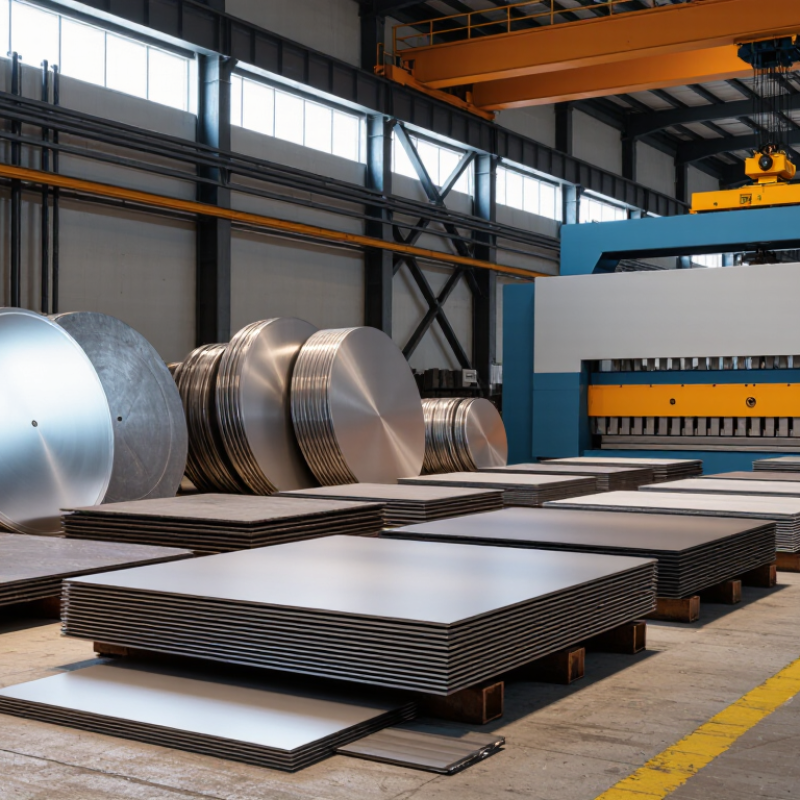
A steel metal plate is a flat, rolled steel product, often thicker than 6 millimeters, although definitions vary by standard and mill. It is made by reheating steel slabs and controlling rolling, cooling, and cutting. The result may look simple: a heavy rectangular sheet with a dull gray surface. Its internal chemistry matters more than its appearance.
Global demand makes correct selection important. The World Steel Association reported about 1.89 billion tonnes of crude steel production in 2023, showing the scale of this supply chain. Yet steel plate is not one universal product. Carbon steel plates suit general structures and machinery. High-strength low-alloy plates reduce weight while maintaining strength. Abrasion-resistant grades handle repeated contact with rock, sand, or scrap. Stainless plates provide stronger corrosion resistance through chromium content. Pressure-vessel and shipbuilding plates require tighter testing and traceability.
Small choices can become expensive. A plate with high yield strength may resist deformation, but it can require stricter welding controls. A corrosion-resistant grade may reduce maintenance, yet its purchase price and fabrication behavior can challenge a budget. Thickness alone proves little. Buyers should review chemical composition, yield strength, impact-test temperature, dimensional tolerance, surface condition, and mill-test documentation. The World Steel Association and international standards provide useful reference points, but a report does not replace application-specific engineering review. That is where many purchasing decisions remain imperfect.

Minimum specified yield strength of widely used structural and pressure-vessel steel plate grades
Yield strength indicates the stress a steel plate can withstand before permanent deformation begins. Higher-strength grades can reduce plate thickness and structural weight, while lower-carbon grades such as ASTM A36 are commonly selected for general fabrication because they offer broad availability and easy welding. Actual requirements vary with plate thickness, temperature, welding method, design code, and applicable regional standards.
Reference values shown are typical minimum specified yield strengths at standard thickness ranges: ASTM A36: 250 MPa, EN 10025 S275JR: 275 MPa, ASTM A516 Grade 70: 260 MPa, ASTM A572 Grade 50: 345 MPa, and EN 10025 S355JR: 355 MPa.
For global buyers, steel metal plates should be classified by grade, shape, and production method. Grade describes chemistry and performance. Carbon steel suits general fabrication, while high-strength low-alloy steel supports lighter structures. Stainless plate resists corrosion through chromium content. ASTM A36, ASTM A572, and EN 10025 grades are common references, but names are not interchangeable. Always check yield strength, tensile strength, impact requirements, and chemical limits.
Shape also affects purchasing decisions. Standard flat plates support bridges, pressure vessels, machinery, and ship structures. Floor plates include raised patterns for improved walking traction. Cut-to-length plates reduce workshop waste, while wider plates can lower welding time. Thickness matters too. Many markets treat plate as material above about 6 millimeters, but definitions vary by standard and region. Small differences can create large price changes.
Production method reveals how the plate may perform. Hot-rolled plate is widely used for structural applications. Normalized and controlled-rolled plates offer more consistent grain structure. Quenched-and-tempered grades provide higher strength and hardness, but welding procedures require closer control. The World Steel Association reported approximately 1.88 billion tonnes of global crude steel production in 2024, showing the scale of this supply chain. The OECD’s steel market analysis also highlights continuing pressure from excess capacity and uneven demand. A practical warning: the cheapest plate is not always the best value. Mill certificates, ultrasonic testing, surface condition, and traceability deserve equal attention. Classification helps, but it is never perfect.
| Steel Plate Category | Representative Grades | Common Standard | Typical Shape or Supply Form | Primary Production Method | Key Characteristics | Typical Global Applications | Important Buyer Checks |
|---|---|---|---|---|---|---|---|
| General Structural Carbon Steel | ASTM A36 EN S235JR JIS SS400 | ASTM A36; EN 10025-2; JIS G3101 | Flat hot-rolled plate, cut-to-length sheet, floor plate | Basic oxygen furnace or electric arc furnace, followed by hot rolling | Good weldability, formability, and general-purpose strength; normally selected for moderate-load structures | Frames, brackets, platforms, buildings, tanks, machinery bases, and general fabrication | Confirm yield strength, tensile strength, impact requirements, thickness tolerance, surface condition, and mill test certificate |
| High-Strength Low-Alloy Structural Plate | ASTM A572 Grade 50 EN S355JR EN S355J2+N | ASTM A572; EN 10025-2 | Hot-rolled flat plate, normalized plate, cut plate | Controlled alloying with elements such as manganese and microalloying additions; hot rolling or normalized rolling | Higher strength-to-weight ratio than basic structural grades; suitable for welded load-bearing structures | Bridges, cranes, construction equipment, industrial structures, trailers, and heavy frames | Check minimum yield strength by thickness, impact class, welding procedure, delivery condition, and dimensional tolerances |
| Quenched and Tempered High-Strength Plate | ASTM A514 EN S690QL | ASTM A514; EN 10025-6 | Heavy flat plate, cut-to-size plate | Hot rolling followed by quenching and tempering | Very high yield strength with reduced structural weight; welding and forming require controlled procedures | Mobile cranes, mining equipment, pressure-support structures, lifting equipment, and heavy machinery | Verify hardness range, heat-treatment condition, preheating requirements, weldability, and minimum impact energy |
| Pressure Vessel and Boiler Plate | ASTM A516 Grade 60 ASTM A516 Grade 70 EN P355GH | ASTM A516/A516M; EN 10028-2 | Normalized or as-rolled pressure-vessel plate; custom-cut plate | Controlled carbon-manganese steel produced for elevated-temperature pressure service; often normalized | Boilers, storage tanks, pressure vessels, heat exchangers, and process equipment | Confirm design temperature, impact testing, ultrasonic testing, plate thickness, heat treatment, and pressure-vessel certification | |
| Weathering Steel Plate | ASTM A588 EN S355J2WP | ASTM A588/A588M; EN 10025-5 | Hot-rolled weathering plate, structural sections, cut plate | Alloyed hot rolling with copper, chromium, nickel, or phosphorus depending on the grade | Forms a protective patina in suitable environments, reducing the need for repeated painting; not suitable for continuously wet or marine conditions without assessment | Bridges, outdoor sculptures, rail infrastructure, facades, containers, and architectural structures | Evaluate climate, wet-dry cycling, chloride exposure, drainage design, patina requirements, and welding consumables |
| Abrasion-Resistant Plate | AR400 AR500 | Manufacturer or project specification; hardness commonly stated in Brinell HBW | Quenched and tempered flat plate, wear liners, formed panels | Alloyed hot rolling followed by quenching and tempering | High surface hardness and improved resistance to sliding or impact wear; lower formability than mild structural plate | Hoppers, chutes, dump bodies, crushers, conveyor liners, mining machinery, and recycling equipment | Confirm actual hardness, impact condition, thickness tolerance, minimum bending radius, welding procedure, and cutting method |
| Shipbuilding and Offshore Plate | AH36 DH36 EH36 | IACS or classification-society rules; commonly supplied to marine specifications | Marine hot-rolled plate, bulb-flat components, cut-to-shape plate | Controlled hot rolling, normalized rolling, or thermo-mechanically controlled processing | Designed for welded marine structures with specified yield strength and, for higher grades, low-temperature impact toughness | Ship hulls, decks, offshore platforms, marine structures, and port equipment | Check approval route, impact-test temperature, ultrasonic testing, heat number traceability, and classification documentation |
| Stainless Steel Plate | 304/304L 316/316L 430 | ASTM A240/A240M; EN 10088-2; JIS G4304 | Hot-rolled plate, cold-rolled sheet, bright or brushed finish plate | Electric arc or induction melting, hot rolling, annealing, pickling, and optional cold rolling | Corrosion resistance varies by grade; 316/316L generally provides better resistance to chlorides than 304/304L | Food processing, chemical equipment, architectural panels, medical equipment, tanks, and marine-related components | Specify alloy grade, surface finish, thickness, corrosion environment, welding condition, passivation, and intergranular-corrosion requirements |
| Electrical Steel Plate | Non-oriented electrical steel Grain-oriented electrical steel | IEC 60404-8-2; ASTM A677/A876 families | Thin cold-rolled strip or sheet, usually supplied in coils or slit-to-width form | Specialized steelmaking, hot rolling, cold rolling, decarburizing annealing, and surface insulation coating | Low core loss and controlled magnetic properties; thickness and grade are selected according to frequency and equipment design | Transformers, motors, generators, reactors, and power-distribution equipment | Check core loss, magnetic induction, thickness, coating type, stacking factor, burr height, and test frequency |
| API Line Pipe Plate | API 5L X52 API 5L X65 | API Specification 5L; project pipeline specifications | Heavy plate or coil used for longitudinally or helically welded pipe production | Thermo-mechanically controlled rolling, followed by plate or coil forming and pipe welding | Strength and toughness are controlled for pipeline service; plate is normally converted into line pipe rather than used as a final flat product | Oil, gas, water, and other long-distance pipeline systems | Confirm product specification level, sour-service requirements, fracture toughness, HIC testing, weldability, and pipe manufacturing route |
| Cold-Rolled Forming and Automotive Sheet | DC01 DX51D HSLA Grades | EN 10130; EN 10346; relevant automotive specifications | Cold-rolled sheet, galvanized sheet, slit coil, blank, and stamped panel | Hot rolling followed by pickling, cold rolling, annealing, and optional galvanizing or coating | Excellent surface quality and dimensional control; formability depends on the specific grade and processing condition | Automotive panels, appliances, cabinets, furniture, HVAC components, and light-gauge fabrication | Specify coating mass, surface finish, forming class, r-value or elongation where applicable, oiling, flatness, and edge condition |
Buyer note: “Best” depends on load, corrosion environment, operating temperature, fabrication method, required certification, available processing equipment, and total delivered cost. Grade names are not always directly interchangeable across standards; confirm the applicable standard and technical datasheet before purchase.
Choosing the right steel plate begins with the working environment, not just the price. In construction, structural carbon steel plates suit columns, bridges, frames, and heavy platforms. They offer practical weldability and dependable strength for routine projects. Weather-resistant grades can reduce maintenance on exposed structures. However, coating and drainage still matter.
Manufacturing requires a more specific approach. Low-carbon plates are easier to cut, form, and weld for tanks, machinery bases, and fabricated parts. Wear-resistant plates perform better in crushers, loaders, and material-handling systems. They may resist abrasion well, but they can require controlled welding and careful machining. A hard plate is not automatically the best plate.
Energy projects often demand pressure-vessel or heat-resistant steel plates. These materials must tolerate pressure, temperature changes, and repeated service loads. Buyers should review certified test results, impact toughness, thickness tolerance, and heat-treatment records. Small documentation gaps can create large procurement risks.
Marine applications need plates with strong toughness, reliable weld performance, and resistance to corrosive conditions. Ship structures, offshore platforms, and coastal equipment may require special testing and protective systems. Saltwater is unforgiving. Even a suitable grade can fail early if surface preparation is poor. Buyers should confirm design loads, service temperature, welding procedures, inspection requirements, and delivery traceability before ordering. The lowest quoted price may hide extra cutting, repair, or coating costs. Forecasting every condition is difficult, so technical review remains essential.
Global buyers should compare steel plates through evidence, not polished brochures. The World Steel Association reported approximately 1.89 billion tonnes of crude steel production in 2023. That scale creates wide differences in chemistry, rolling practice, and inspection discipline. A practical comparison begins with the required application, thickness range, yield strength, tensile strength, impact toughness, and corrosion environment.
Standards provide a common language. ASTM A36 supports general structural applications, while ASTM A572 includes higher-strength grades. EN 10025 defines European structural steel requirements. Buyers should request the exact grade, edition, heat number, and applicable test temperature. A mill test certificate should show chemical analysis, mechanical results, heat treatment, and dimensional tolerances. ISO’s 2023 survey recorded more than 1.4 million ISO 9001 certificates worldwide, yet certification alone does not prove plate quality. It indicates a management system, not perfect production.
Ask for traceability from the plate back to the heat. Check ultrasonic testing when internal lamination could create risk. Independent inspectors can witness sampling, testing, marking, and loading. Compare reported values with the standard’s minimum requirements, not only average results. This detail matters.
Some buyers still compare only price and thickness. That is a costly shortcut. Coating condition, flatness, edge quality, and packing can affect fabrication losses. I have found that even clear certificates may leave questions about test frequency or laboratory independence. Buyers should challenge those gaps politely and record every acceptance point before shipment. Standards reduce uncertainty, but they never remove the need for technical judgment.
Before ordering steel metal plates in 2026, importers should verify more than price and delivery promises. Start with the working environment: load, temperature, moisture, welding method, and expected service life. A plate for a bridge component needs different toughness from one used for a warehouse floor. Request the exact grade, thickness tolerance, surface condition, and heat-treatment status. Ask whether test results represent the shipped batch, not an earlier production run. This distinction is easy to miss.
Reliable purchasing also depends on traceability. Require a material test certificate with heat number, chemical analysis, tensile results, impact data, and dimensional records. Compare the certificate with independent inspection findings when the order is large or technically critical. Confirm the agreed standard and edition in writing. Standards can change quietly. Packaging deserves attention too. Use edge protection, moisture-resistant wrapping, and clear plate markings for long ocean routes. In practical inspections, rust has appeared under damaged wrapping before unloading. Dispatch photographs are worth keeping.
Tips: Build a pre-shipment checklist and approve one sample plate before mass production. Check ultrasonic testing requirements if internal laminations could affect performance. Clarify claims procedures, inspection windows, and replacement responsibilities before payment. Leave room for reality: port delays, measurement differences, and minor surface marks may occur. However, define acceptable limits precisely. Cheap plates are not always economical. A missed tolerance can create cutting waste, rework, and weeks of delay.
Content © 2025 Komatsu. All Rights Reserved