three part picture of forklifts

2026 Top CNC Spring Machine Manufacturers for Global Buyers

Choosing a reliable Cnc Spring Machine manufacturer requires more than comparing prices or polished product photos. Global buyers need evidence from real production environments, technical documents, and long-term service records. A machine producing small compression springs may not suit heavy wire, complex torsion forms, or high-volume automotive components. These differences matter.

This guide reviews leading manufacturers for 2026 through practical purchasing criteria. We examine forming accuracy, wire diameter range, production speed, CNC control systems, tooling flexibility, and energy use. Factory testing also deserves attention. Ask for sample springs, dimensional reports, cycle-time data, and videos from comparable applications. Strong suppliers should explain maintenance intervals, spare-part availability, operator training, and remote support clearly.

Details reveal reliability.

A trustworthy manufacturer should provide traceable quality procedures and consistent communication across regions. Certifications can support credibility, but they should not replace factory visits, reference checks, or independent testing. Shipping arrangements, installation planning, voltage requirements, and local technical assistance may affect the real project cost. These practical issues are often underestimated.

No ranking can fit every factory. Some published performance claims remain difficult to verify without customer feedback or production trials. That limitation deserves honest consideration. Buyers should compare documented results against their own material grades, spring dimensions, tolerance targets, and expected output. The best choice is not always the fastest machine. It is the manufacturer that can support stable production after installation.
2026 Top CNC Spring Machine Manufacturers for Global Buyers

What CNC Spring Machines Are and How They Work

2026 Top CNC Spring Machine Manufacturers for Global Buyers

What CNC Spring Machines Are and How They Work

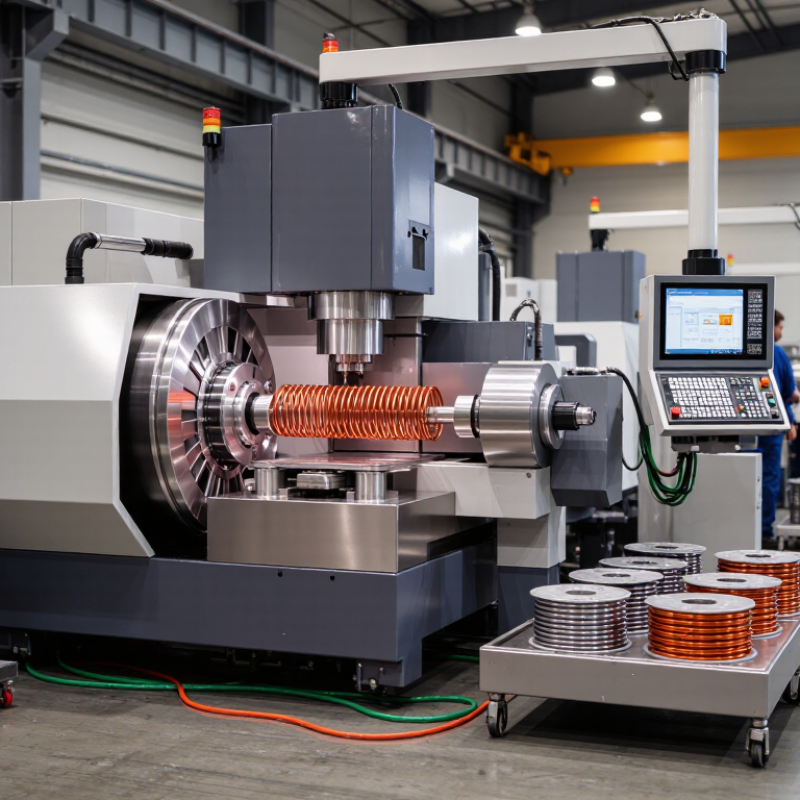
A CNC spring machine converts digital instructions into repeatable wire shapes. Servo motors control wire feeding, rotation, cutting, and forming tools. The operator enters pitch, diameter, coil count, and material settings. The machine then bends wire around forming tools with precise timing. It can produce compression, extension, torsion, and specialized springs.

The process begins with straightening and controlled feeding. Forming slides create each coil, while cutters separate finished parts. Sensors monitor feed length and tool position. According to the International Federation of Robotics’ World Robotics 2024 report, 4.28 million industrial robots operated worldwide in 2023. This growth reflects broader demand for automated, measurable production. However, automation does not remove every risk. Wire hardness, lubrication, tool wear, and temperature can still change spring performance. Testing remains essential. Manufacturers should verify dimensions, load force, and fatigue behavior against relevant specifications, such as ASTM A313 for stainless spring wire.

Tips: Start with a small batch. Check free length, coil diameter, and force after setup. Record corrections instead of trusting the first program. A useful habit is measuring tools before production, not after defects appear. Cutting speed may look efficient, but excessive speed can damage wire surfaces. That lesson is easy to overlook.

Key Features to Compare in CNC Spring Machine Manufacturers

For 2026 global buyers, comparing CNC spring machine manufacturers requires more than checking maximum wire diameter. A reliable supplier should publish forming speed, pitch accuracy, tooling life, and repeatability under continuous production. MarketsandMarkets estimates the global machine tools market will grow from about USD 86.8 billion in 2023 to USD 115.8 billion by 2028. This growth increases supplier choices, but it also makes technical verification more important.

Look for documented factory experience with compression, extension, torsion, and specialty springs. Ask for sample parts using your actual wire grade and diameter. A strong manufacturer should provide inspection records, calibration procedures, software training, and spare-part response times. ISO 9001 certification supports process control, but certification alone proves little. I would still request a live trial. A polished brochure can hide slow setup changes or unstable feeding. That weakness deserves honest review.

Tips: Compare cycle time with scrap rate, not speed alone. Check whether the control system stores job recipes and supports remote diagnostics. Request three customer references from similar industries. The International Federation of Robotics recorded 541,302 industrial robot installations in 2023, showing the wider shift toward automated production. However, automation is not always the best investment for short runs. Calculate labor savings, tooling costs, maintenance intervals, and operator training before choosing. Also inspect the machine during a long test, because performance after ten minutes may not match an eight-hour shift.

Leading CNC Spring Machine Manufacturers for Global Buyers in 2026

Leading CNC spring machine manufacturers for global buyers in 2026 are judged by more than attractive catalogs. Experienced buyers examine forming accuracy, wire-feeding stability, production speed, and service response. A reliable manufacturer should provide clear machine specifications, sample parts, factory videos, and maintenance guidance. Ask for test results using your actual wire diameter and spring design.

Small details matter. Operators notice whether the control panel is easy to adjust during a long production run. They also check tool changes, lubrication points, electrical standards, and replacement-part availability. Manufacturers serving international customers should offer practical installation support and training across different time zones. Documentation should be readable, complete, and translated accurately.

No supplier is perfect. A polished website can still hide slow communication or limited engineering support. Buyers should compare sample quality, delivery records, warranty terms, and after-sales procedures before signing an agreement. Factory visits or live video inspections can reveal housekeeping, calibration routines, and operator skill. These observations often provide more value than broad performance claims. I would also leave room for improvement: some manufacturers focus heavily on machine output while underestimating software training. That weakness can increase setup errors, especially for new operators. The strongest CNC spring machine manufacturers combine stable hardware, responsive technical teams, and honest communication about production limits.

2026 Top CNC Spring Machine Manufacturers for Global Buyers - Leading CNC Spring Machine Manufacturers for Global Buyers in 2026

Anonymous Supplier Tier Typical Machine Focus Common Wire Diameter Range Typical CNC Axis Configuration Suitable Spring Types Automation Features Quality and Compliance Factors Best Fit for Global Buyers
Tier 1: Precision Micro-Spring Specialist High-speed CNC coiling for miniature compression, tension, and torsion springs Approximately 0.10–1.00 mm 8–12 programmable axes Micro compression, extension, torsion, and wire-formed parts Automatic wire feeding, digital length control, inline vision inspection ISO 9001 quality management; dimensional inspection records recommended Electronics, medical devices, sensors, and precision instruments
Tier 1: High-Performance CNC Coiler Specialist Multi-axis production systems for complex spring geometries Approximately 0.20–2.60 mm 8–16 programmable axes Compression, extension, torsion, conical, barrel, and irregular springs Servo wire rotation, automatic pitch control, recipe storage, fault alarms ISO 9001; capability studies and traceability are important for export projects Automotive components, industrial equipment, and high-volume production
Tier 1: Heavy-Duty CNC Spring Machine Specialist Large-wire forming and spring coiling for demanding load applications Approximately 1.00–8.00 mm 6–10 programmable axes Heavy compression, extension, torsion, and formed wire products Motorized decoiler, straightening unit, programmable cut-off, safety guarding ISO 9001; material certificates and load-testing procedures recommended Construction equipment, energy systems, transportation, and machinery
Tier 2: Flexible General-Purpose Manufacturer Standard CNC spring machines for mixed-batch production Approximately 0.30–4.00 mm 4–8 programmable axes Compression, extension, torsion, and simple wire forms Touchscreen control, digital tooling settings, automatic counting Documented inspection process; ISO 9001 certification should be verified Custom manufacturers, distributors, and small-to-medium production runs
Tier 2: Servo-Controlled CNC Specialist Servo-driven machines emphasizing repeatability and fast setup changes Approximately 0.20–3.20 mm 6–12 programmable axes Compression, extension, torsion, conical, and variable-pitch springs Servo feeding, closed-loop positioning, stored tooling programs, remote diagnostics Positioning accuracy, repeatability data, and preventive-maintenance support Buyers seeking reduced setup time and consistent multi-product output
Tier 2: Cost-Efficient Export Manufacturer Value-oriented CNC equipment for standard spring production Approximately 0.30–2.60 mm 4–8 programmable axes Standard compression, extension, and torsion springs Basic automatic feeding, programmable counter, touchscreen interface Confirm electrical standards, factory acceptance testing, and spare-parts availability Price-sensitive buyers, replacement equipment, and emerging markets
Tier 3: Integrated Spring-Line Provider Complete production cells combining coiling, heat treatment, testing, and packing Approximately 0.50–6.00 mm 6–12 programmable axes per forming machine Compression, extension, torsion, wire forms, and selected specialty springs Conveyors, automatic sorting, load testing, camera inspection, production data collection System-level validation, traceability, safety documentation, and operator training Large factories requiring turnkey production and centralized process control
Tier 3: Custom Engineering and Retrofit Provider Modified CNC machines, tooling packages, and upgrades for existing production lines Application-dependent; commonly 0.20–5.00 mm Existing machine dependent; commonly 4–12 axes Application-specific springs and special wire-forming processes Control retrofits, customized tooling, sensor integration, and production monitoring Engineering documentation, software compatibility, and long-term service capability Factories modernizing older equipment or producing non-standard spring designs
Global Buyer Evaluation Benchmark Recommended comparison category rather than a manufacturer classification Match the machine range to the buyer's actual wire specifications More axes generally support more complex forming operations Confirm spring geometry, tolerance, material, and required output rate Evaluate feeding, inspection, data recording, and changeover automation Verify ISO certification, CE requirements where applicable, FAT, warranty, and service response Compare total cost of ownership instead of purchase price alone

Technical ranges are representative industry benchmarks for CNC spring equipment and should be confirmed against the selected machine configuration, wire material, spring geometry, required tolerance, production volume, electrical standard, and local safety requirements before purchase.

How to Evaluate Quality, Capacity, and Technical Support

Choosing a CNC spring machine requires more than comparing prices or brochure photographs. Quality starts with repeatable forming, stable wire feeding, and accurate pitch control. Ask for sample parts made from your material and inspect coil diameter, free length, surface marks, and spring-back. Request calibration records, inspection procedures, and material traceability documents. A capable manufacturer should explain tolerance limits clearly, not hide behind vague claims. Numbers need context.

Capacity should be verified against your actual production plan. Review monthly output, machine utilization, workforce skills, and maintenance schedules. A large workshop may still struggle with urgent orders if its production planning is weak. Ask whether the factory can handle different wire diameters without excessive setup time. Check how it controls tooling wear and rejects. A site visit, live trial, or independent inspection can reveal details that spreadsheets miss. Do not guess.

Technical support often decides whether equipment becomes productive or expensive. Confirm installation guidance, operator training, remote troubleshooting, spare-part availability, and response times before signing an agreement. Technical documents should include wiring diagrams, parameter lists, maintenance intervals, and safety instructions. Support staff should understand spring geometry, not merely reset alarms. One uncomfortable lesson is that a polished demonstration proves limited value. It may use an easy material and an experienced operator. Ask for a trial using difficult specifications, and record the results under agreed acceptance criteria. That matters.

What Global Buyers Should Check Before Placing an Order

2026 Top CNC Spring Machine Manufacturers for Global Buyers

Before placing an order, global buyers should verify more than machine speed. Request a live demonstration using your actual wire grade, diameter, coil size, and production pattern. A brochure may show maximum output, but stable output matters more. Ask for sample springs, dimensional reports, and defect rates from a sustained test run. Short trials can hide heat buildup, vibration, or feeding problems.

Check the manufacturer’s engineering experience through drawings, case records, and maintenance procedures. Confirm whether the machine supports your required tolerances, tooling changes, control system, and future upgrades. Do not trust polished brochures alone. Verify quality certificates with the issuing organization, and review electrical safety requirements for your destination market. Export documents should match the machine model, origin, and declared specifications.

Inspect the service plan before discussing the final price. Ask about spare-part availability, remote diagnosis, technician response times, installation, and operator training. Get warranty exclusions in writing. Clarify who owns production programs and whether software access depends on annual fees. Calculate shipping, duties, installation, tooling, energy use, and downtime. The cheapest quote may not be the lowest cost. One overlooked detail can delay production for weeks. Buyers should also request independent pre-shipment inspection. It adds expense, but it can expose alignment errors, incomplete accessories, or weak packaging. Perfect planning is unlikely. Careful verification is still practical.