
three part picture of forklifts

2026 Top Heavy Duty Truck Radiator Types for Buyers

Choosing a Heavy duty truck radiator in 2026 means matching the part to the truck’s actual work, not just its model name. A long-haul tractor, a vocational dump truck, and a delivery vehicle face different cooling demands. Even two trucks with the same engine may use different radiator dimensions, connections, or cooling-package layouts. Small mismatches matter. A hose outlet positioned a few inches off can turn an apparent fit into workshop delays.

This guide introduces common radiator types buyers may encounter, including aluminum and copper-brass construction, along with crossflow and downflow designs. Each has practical trade-offs in weight, heat transfer, repairability, and compatibility. There is no universal winner. Not always. Selection should account for engine specifications, operating conditions, available airflow, and the manufacturer’s fitment data. Buyers should also check core dimensions, mounting points, inlet and outlet locations, pressure requirements, and warranty terms before ordering. These details are easy to overlook when comparing prices alone.

The sections ahead offer a clear framework for evaluating options and asking suppliers more precise questions. Confirming the exact truck configuration is essential; year, make, and model may not be enough. Product specifications and vehicle requirements should guide the final choice, rather than broad claims about one material being best for every fleet. That sounds simple, but it rarely is. A careful comparison can help reduce installation problems and support dependable cooling under demanding service.
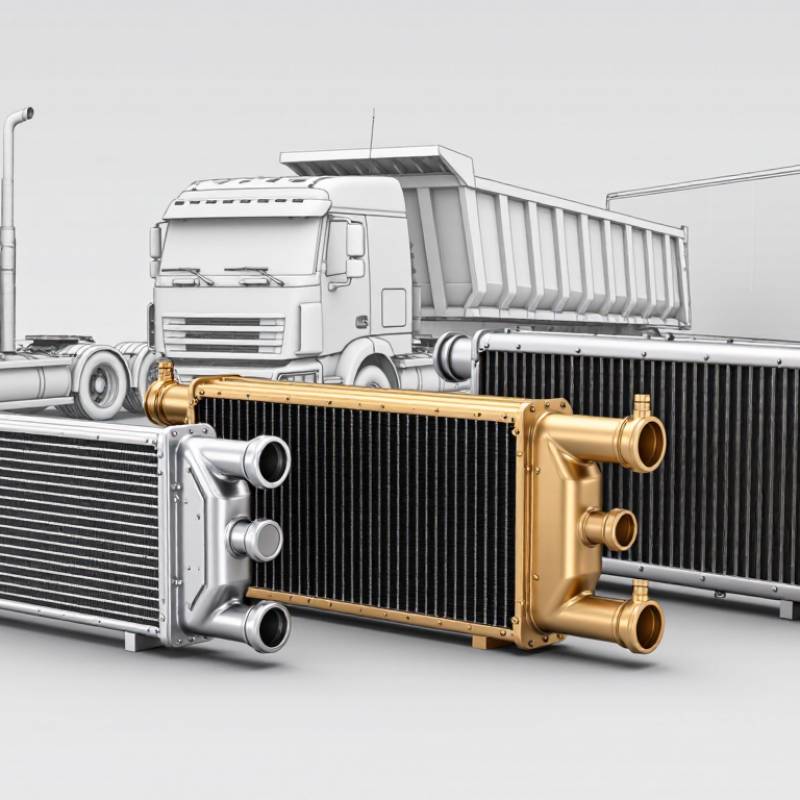
2026 Top Heavy Duty Truck Radiator Types for Buyers

How Heavy-Duty Truck Radiators Control Engine Temperature

2026 Top Heavy Duty Truck Radiator Types for Buyers

A heavy-duty truck radiator controls engine temperature by moving heat from circulating coolant into passing air. The water pump sends hot coolant from the engine through narrow radiator tubes. Fins attached to those tubes spread heat across a larger surface. Heat has to leave. The fan and forward motion draw air through the core, carrying warmth away before the coolant returns to the engine. A thermostat helps regulate when coolant flows through the radiator.

Core materials and construction affect heat transfer, durability, weight, and repair options. Aluminum radiators are generally lighter, while copper-brass designs can offer different repair characteristics. Either choice needs to suit the truck’s engine, cooling package, and working conditions. A radiator that looks large enough may still struggle if its tubes are clogged, fins are bent, or airflow is restricted by debris. Dust, chaff, and oily film can build up between the fins.

For buyers, compare the radiator’s fit, core dimensions, tube and fin construction, and compatibility with the existing cooling system. Check operating temperatures under realistic loads, such as a slow climb with a full trailer, rather than relying only on idle performance. Also inspect the fan, thermostat, coolant condition, and hoses; a new radiator cannot correct every overheating cause. It is easy to overlook airflow. Even a well-built core may perform poorly when the fan shroud is damaged or the fins are packed with dirt.

The Main Radiator Types Used in Heavy-Duty Trucks

Heavy-duty truck radiators mainly differ by core material and construction. Copper-brass cores use brass tubes and copper fins, often joined with solder. They are relatively heavy, but damaged sections can sometimes be repaired by specialist shops. That can help fleets operating older trucks far from parts centers. Repairs are not always practical.

Aluminum radiators use brazed tubes and fins. Their lower weight can reduce front-end mass, while broad fin area supports heat transfer in a compact package. But thin passages can be vulnerable to impact, debris, or poor coolant maintenance. A leak may require replacement rather than a straightforward repair. Not always.

Core layout matters too. Tube-and-fin designs provide many air-contact surfaces and are common in truck cooling packages. Plate-and-bar construction uses stacked passages and solid bars, offering a sturdy core for demanding heat loads, though designs vary. Buyers should compare core thickness, fin density, tank material, and mounting points—not just outside dimensions. A dense core can collect dirt on dusty routes and restrict airflow if neglected. Fit matters. Check service access and compatibility with engine output, fan, and operating climate. There is no single best type; duty cycle, repair access, and maintenance habits can change the sensible choice.

Copper-Brass and Aluminum Radiators: Key Differences

Copper-brass radiators pair copper tubes with brass tanks, a traditional design found in many heavy-duty trucks. Copper transfers heat efficiently, while the radiator’s tube size, fin density, and airflow also shape cooling performance. Weight matters. These units are generally heavier than comparable aluminum designs, which can affect payload and installation handling. Their construction may allow practical repairs, depending on damage and local service capability. Still, an old, corroded core may not be worth rebuilding. A clean specification sheet cannot reveal its full condition.

Aluminum radiators are typically lighter and often use brazed tube-and-fin cores. That can reduce vehicle weight, but it does not automatically mean better cooling. Core design, fan performance, airflow, and fit must work together. Aluminum can be more sensitive to poor coolant maintenance or unsuitable repair methods, so check service guidance and inspect for leaks or damage. Not always. Buyers should compare pressure ratings, dimensions, hose connections, and cooling requirements against the truck’s actual duty cycle. Long idling in hot weather differs from steady highway hauling. There is no universal winner; the right choice depends on operating conditions, repair access, and the value placed on lower weight.

2026 Top Heavy Duty Truck Radiator Types for Buyers — Copper-Brass and Aluminum Radiators: Key Differences

Comparison Dimension Copper-Brass Radiator Aluminum Radiator What Buyers Should Check
Core construction Typically uses copper tubes and fins with brass tanks or headers. The core is commonly assembled with soldered joints. Typically uses aluminum tubes, fins, and headers joined by furnace brazing. Tank construction varies by design. Confirm the actual materials and joining method; construction can differ between models.
Heat-transfer characteristics Copper has higher thermal conductivity than aluminum as a base material. Overall cooling performance still depends on core design, airflow, coolant flow, and operating conditions. Aluminum has lower thermal conductivity by mass of material, but thin, brazed cores can provide effective heat transfer with suitable surface area and airflow. Compare application-specific cooling capacity or test data rather than judging performance by material alone.
Weight Generally heavier than a comparable aluminum design, although the difference depends on core dimensions and construction. Generally lighter than a comparable copper-brass design, which may help reduce vehicle component weight. Request the radiator’s listed dry weight and compare units with the same fitment and capacity requirements.
Repairability Soldered copper-brass cores can often be repaired by a qualified radiator specialist, depending on damage and core condition. Brazed aluminum cores can be more difficult to repair reliably; repair feasibility depends on the damage and specialist capability. Check local repair options, warranty terms, and replacement availability before purchase.
Corrosion considerations Requires suitable coolant and maintenance. Copper, brass, solder, and other connected metals can be affected by corrosion or galvanic interactions. Requires compatible coolant and maintenance. Aluminum can corrode when exposed to unsuitable coolant, contamination, or incompatible metals. Follow the truck and radiator manufacturer’s coolant specifications and service intervals.
Pressure and durability Durability depends on tube thickness, joint quality, vibration, pressure, and maintenance; soldered joints may be repairable if damaged. Durability depends on tube and fin design, braze quality, vibration, pressure, and maintenance; physical damage may require replacement. Verify pressure rating, vibration suitability, and fitment for the truck’s engine and cooling system.
Cost factors Price varies with material, core size, manufacturing, repair needs, and parts availability. Repair may be an option in some cases. Price varies with design, capacity, manufacturing, and availability. A damaged core may be less practical to repair in some locations. Compare total ownership cost, including purchase price, installation, warranty, service, and expected parts availability.
Typical buyer priorities May suit buyers who value a repairable design and have access to experienced copper-brass radiator service. May suit buyers who prioritize lower component weight and a compact, brazed-core design. Choose based on the truck’s duty cycle, approved fitment, service environment, and maintenance capability.

Note: These are general material and construction comparisons, not specifications for every radiator. Actual cooling performance, weight, pressure rating, service life, and cost vary by model and application. Confirm compatibility with the truck’s engine, cooling system, and operating requirements.

How Truck Duty and Climate Affect Radiator Selection

2026 Top Heavy Duty Truck Radiator Types for Buyers
How Truck Duty and Climate Affect Radiator Selection

Heavy-duty truck radiator choice starts with the work cycle, not the catalog label. A highway tractor moving steadily sheds heat differently from a dump truck crawling under load. Long idling, frequent hill climbs, and heavy towing keep coolant temperatures elevated. In dusty yards, packed fins restrict airflow; at altitude, thinner air can reduce heat rejection. That matters. Assess payload, engine output, fan arrangement, and available space before comparing core designs.

Climate changes the balance. Hot, humid routes call for adequate cooling reserve and clean airflow, while freezing starts make coolant protection and a sound pressure cap essential. In mixed climates, check that the radiator, coolant, thermostat, and fan system match the truck maker’s specifications. A thicker core may look reassuring, but it can restrict airflow if the fan and shroud were not designed for it. Fit is not capacity. Verify dimensions, hose positions, mounting points, and performance against service data. One caveat: route logs can miss sudden changes in load.

Tips: Record coolant temperatures on a demanding route, then inspect fins for mud, oil, or damage. Confirm pressure-cap rating and coolant type from service documentation. If overheating happens mainly at idle, check airflow and fan operation before blaming the radiator.

2026 Top Heavy Duty Truck Radiator Types for Buyers — How Truck Duty and Climate Affect Radiator Selection

Core-metal thermal conductivity is one useful comparison when considering radiator construction.

How to use this: Copper conducts heat more readily than aluminum or brass, but conductivity alone does not determine a radiator’s cooling capacity. For heavy-duty trucks, match the complete radiator to engine heat load, airflow, available space, serviceability, and expected ambient temperatures. Values shown are approximate material properties at around 20°C, not radiator performance ratings.

What to Check Before Buying a Replacement Radiator

2026 Top Heavy Duty Truck Radiator Types for Buyers

What to Check Before Buying a Replacement Radiator

A replacement radiator must match more than the truck’s model year. Check the core dimensions, mounting points, inlet and outlet positions, and hose diameters against the original unit. Confirm the required cooling capacity and pressure rating in the vehicle service specifications. A radiator that fits the frame but restricts coolant flow can still cause overheating under load. Small mismatches matter. Also check whether the assembly includes an integrated transmission cooler or requires a separate connection.

Downtime has a real cost. The American Transportation Research Institute’s 2024 Operational Costs of Trucking report estimated average operating costs at $2.27 per mile in 2023. That figure covers many expenses, not radiator repairs alone, but it shows why fit and reliability deserve careful attention. Before installation, inspect hoses, clamps, the cap, and the thermostat; a new radiator cannot correct faults elsewhere in the cooling system. Verify the system for leaks after filling and follow the vehicle maker’s bleeding procedure.