Choosing the right Cut And Die Machine is rarely about buying the most expensive model. Global buyers must examine material compatibility, cutting accuracy, production speed, safety features, and after-sales support. A machine that performs beautifully on thin paper may struggle with laminated cartons, adhesive labels, foam, or thicker board. Small differences become expensive during long production runs.
Packaging machinery consultant Michael R. Wilson says, “Reliable die cutting begins with matching the machine to the material, not chasing impressive specifications.” That principle deserves attention. The best machine on paper may still disappoint when spare parts arrive slowly or operators receive limited training. Real factory conditions matter.
This guide reviews seven Cut And Die Machine options for international buyers. Each selection considers practical details, including pressure consistency, tooling flexibility, waste removal, energy use, and maintenance access. Some machines offer excellent automation, while others provide a simpler and more economical setup. There is no universal winner.
Look closely.
Buyers should also question attractive performance claims. Published speed may reflect ideal stock, skilled operators, and uninterrupted feeding. Your materials may behave differently. Before ordering, request sample testing, inspect finished edges, and confirm voltage requirements for your facility. A thoughtful comparison can prevent costly downtime, especially when production schedules cross borders and technical support is not nearby.
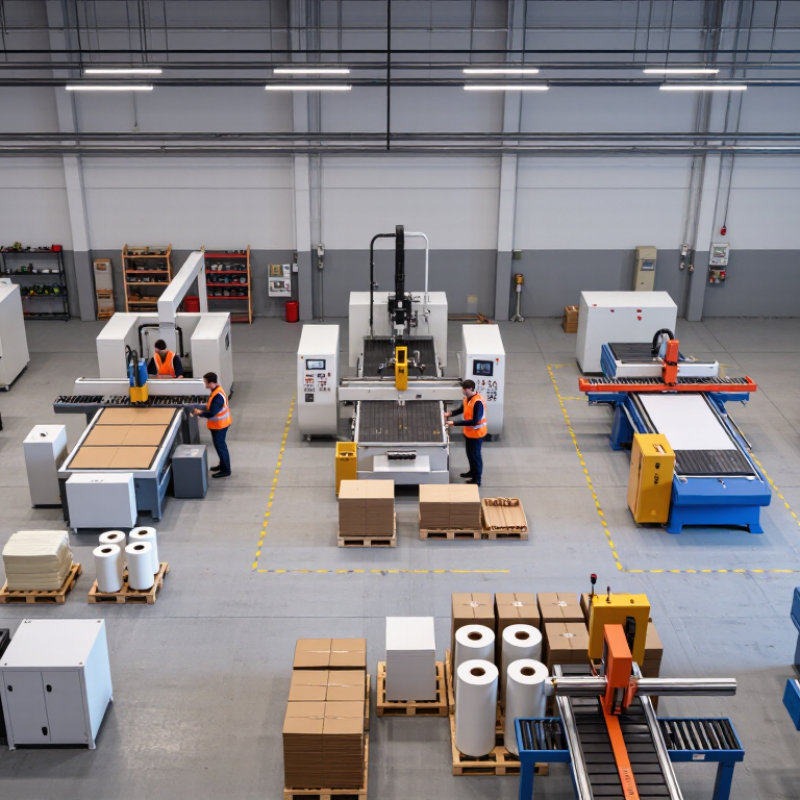
Cut-and-die machines shape flat materials into accurate forms. They process paperboard, corrugated sheets, labels, foam, rubber, and thin plastics. The machine uses a shaped die, usually fitted with cutting rules and creasing rules. Cutting rules separate the material, while creasing rules create clean folding lines.
The principle is simple. A feeder moves each sheet into a fixed position. The machine then applies controlled pressure between the die and a supporting surface. This action cuts, scores, or embosses the sheet in one cycle. Some models use a flatbed motion, while rotary systems feed material continuously through rotating cylinders. Afterward, a stripping section removes unwanted pieces and separates finished parts.
Good results depend on more than pressure. Operators adjust sheet alignment, die height, cutting depth, speed, and waste removal. A small alignment error can produce uneven edges or weak folds. Small errors matter. Experienced users inspect the first samples under bright light and test folded corners by hand. Material thickness also changes the setup, so one universal setting rarely works.
Modern machines may include sensors, guarded work zones, emergency stops, and automatic registration controls. These features improve consistency, but they do not replace training or routine inspection. Keep blades secured, follow the machine’s operating instructions, and isolate power before maintenance. In practice, setup is sometimes slower than expected. That is not necessarily a failure; careful adjustment often prevents expensive material waste.

Cut-and-die machines shape materials by applying a blade, die, beam, or high-pressure cutting stream. The chart compares typical working thickness ranges for commonly used machine types across packaging, signage, textiles, automotive components, and industrial fabrication.
Thickness values are typical industry ranges in millimeters. Actual capacity depends on material density, tool configuration, cutting speed, machine power, and product design.
7 Best Cut And Die Machines for Global Buyers
Machine Types for Different Cutting and Die-Making Applications
Choosing a cutting machine starts with the material, not the machine name. A flatbed die cutter suits cartons, foam, and layered sheets. It delivers clean pressure cuts with repeatable registration. A rotary die cutter supports high-volume labels, gaskets, and thin films. It runs quickly, but tooling costs can rise. Laser cutters handle intricate patterns without physical dies. They work well on paper, textiles, acrylic, and selected boards. However, heat may discolor sensitive materials. CNC knife cutters provide flexible cutting for foam, leather, insulation, and composite sheets. They reduce tooling changes and support short production runs.
Digital cutting tables are useful for samples, prototypes, and variable designs. A guillotine cutter handles straight stacks of paper, film, or board. It needs careful clamping and blade maintenance. For metal die components, CNC milling machines offer controlled shaping and accurate cavities. Wire-cut electrical discharge machines can produce narrow slots and fine profiles. They are precise, but slower than standard milling.
Tips: Test real material samples before ordering. Check cutting tolerance, maximum thickness, software compatibility, power requirements, and local safety certification. Ask for recorded cycle tests, not only showroom demonstrations. Inspect finished edges under bright light. Small burrs can become costly later. My own evaluation would include waste rate and setup time, because advertised speed often ignores both. Also confirm spare-part access and operator training. A cheaper machine may become expensive when support is distant.
| Rank | Machine Type | Best For | Primary Cutting Method | Typical Materials | Typical Material Thickness | Common Working Area | Typical Cutting Accuracy | Typical Production Speed | Die-Making Capability | Main Buyer Considerations |
|---|---|---|---|---|---|---|---|---|---|---|
| 1 | Flatbed Digital Cutting Machine | Short runs, prototypes, samples, packaging, signage and customized products | Computer-controlled tangential knife, oscillating knife, creasing wheel or pen tool | Corrugated board Foam Rubber Gaskets Textiles Leather | Up to approximately 50 mm, depending on tool and material | 600 × 900 mm to 2,000 × 3,000 mm | Approximately ±0.1 to ±0.3 mm | Approximately 20–60 m/min tool speed | Creates cut and crease patterns digitally; does not normally require a physical die | Excellent for variable designs and low tooling cost; throughput is usually lower than rotary or platen production systems |
| 2 | CNC Oscillating-Knife Cutter | Thick, soft and layered materials used in industrial fabrication | High-frequency reciprocating blade with optional routing, creasing or drilling tools | Foam Carpet Insulation Felt Gasket sheet Composite board | Approximately 1–100 mm, depending on material density | 1,500 × 3,000 mm to 2,500 × 8,000 mm | Approximately ±0.2 to ±0.5 mm | Approximately 10–40 m/min cutting speed | Produces digital profiles without steel-rule dies; suitable for trial parts and small batches | Strong choice for thick materials; blade selection, compression control and dust management affect results |
| 3 | CO₂ Laser Cutting Machine | Sealed edges, intricate shapes, non-contact cutting and fine engraving | Focused infrared laser beam that melts, vaporizes or chars the material | Acrylic Wood Paper Fabric Leather Rubber | Approximately 0.1–25 mm, depending on material and laser power | 600 × 900 mm to 2,000 × 3,000 mm | Approximately ±0.05 to ±0.15 mm | Approximately 300–1,500 mm/s travel speed | Cuts digital die outlines and can engrave registration marks; physical dies are not normally required | Provides clean detail and low mechanical force; requires ventilation and may discolor or thermally affect some materials |
| 4 | Flatbed Die-Cutting Press | Medium- to high-volume packaging, labels, gaskets and shaped sheet products | A reciprocating platen applies force through a prepared steel-rule or solid cutting die | Paperboard Corrugated sheet Foam Felt Leather Thin plastics | Approximately 0.2–10 mm, depending on press force and die design | 400 × 600 mm to 1,600 × 2,500 mm | Approximately ±0.1 to ±0.3 mm | Approximately 1,500–8,000 sheets or strokes per hour | Uses interchangeable steel-rule or solid dies for cutting, creasing, embossing and perforating | High repeatability and fast cycle times; tooling cost and changeover time should be included in total cost calculations |
| 5 | Rotary Die-Cutting Machine | Continuous web production of labels, seals, medical components and flexible packaging | A cylindrical engraved or flexible rotary die cuts material as it moves through the machine | Labels Adhesive films Paper web Thin foil Flexible laminates | Approximately 0.05–3 mm | Web widths of approximately 100–1,600 mm | Approximately ±0.05 to ±0.2 mm | Approximately 20–150 m/min web speed | Uses rotary dies for high-speed continuous cutting, kiss-cutting, creasing, perforation and waste stripping | Best for long runs and consistent repeat work; cylinder tooling and setup are less economical for frequent design changes |
| 6 | Hydraulic Traveling-Head Press | Leather goods, footwear components, seals, foam parts and layered sheet cutting | A hydraulic-powered cutting head travels across the worktable and presses a cutting die into the material | Leather Rubber Foam EVA Synthetic materials | Approximately 1–100 mm, depending on material and layer count | 1,000 × 1,500 mm to 2,000 × 3,000 mm | Approximately ±0.2 to ±0.5 mm | Approximately 15–40 cutting cycles per minute | Uses replaceable profile dies and can cut multiple layers in one operation | Offers broad material coverage and strong cutting force; energy use, die height and operator loading affect productivity |
| 7 | Waterjet Cutting Machine | Hard, heat-sensitive or multi-material parts requiring cold cutting | High-pressure water, with abrasive particles added when cutting hard materials | Metal Stone Glass Composites Rubber Plastic | Approximately 1–150 mm, depending on material and pump capacity | 1,000 × 2,000 mm to 2,000 × 6,000 mm | Approximately ±0.05 to ±0.2 mm | Approximately 50–600 mm/min cutting speed | Produces digital profiles without physical dies; useful for prototypes, replacement parts and low-volume production | Creates a minimal heat-affected zone; water treatment, abrasive disposal, noise and operating cost require planning |
| Data note: Specifications are typical industry ranges for commercially available equipment and vary according to machine configuration, tool type, material properties, cutting geometry, power rating and production conditions. Actual performance should be confirmed with application-specific testing. | ||||||||||
Global buyers now compare seven leading cut-and-die machines: flatbed die cutters, rotary die cutters, digital cutting tables, laser die cutters, platen presses, sheet-fed die cutters, and rotary creasing systems. Each machine suits different materials, volumes, and finishing demands. Smithers’ report, The Future of Global Packaging to 2028, forecasts the packaging market will exceed 1.2 trillion dollars by 2028. That growth increases demand for accurate, faster converting equipment. However, speed alone is not enough. A flatbed machine offers strong precision for cartons and thick board. Rotary systems support long production runs. Digital cutters reduce tooling costs for short batches and prototypes. Laser systems create detailed patterns, but heat-sensitive materials require careful testing.
Tips: Check actual samples before purchasing. Measure cutting tolerance, setup time, waste percentage, and operator training needs. Ask for test runs using your own board, film, or label stock. The right machine should match your workflow, not only its catalogue speed.
From my production-floor observations, sheet-fed equipment often gives better control for mixed orders. Platen presses remain useful where pressure consistency matters. Rotary creasing systems can improve repeatability in high-volume packaging. Still, no option wins every job. Buyers sometimes trust impressive hourly figures too quickly. In practice, maintenance access, local service, spare-part availability, and electrical standards can affect output more than advertised speed. PMMI’s 2024 State of the Industry report also highlights automation and labor efficiency as continuing investment priorities. Yet automation adds complexity. A slower machine with stable uptime may outperform a faster machine that frequently stops. Testing, documentation, and honest cost modelling remain essential.
Choosing a die-cutting machine starts with the material, not the brochure. Paperboard, corrugated stock, labels, foam, and flexible films require different pressure control. Smithers’ 2024 packaging outlook places global packaging demand above $1 trillion, increasing pressure on converters to reduce waste. Ask for measured tolerances, not vague claims. A practical benchmark is registration within ±0.1 mm for detailed cartons, although every job differs. Test your own substrate.
Speed matters, but usable output matters more. Compare strokes per minute, setup time, changeover time, and reject rates. A machine running quickly can still lose money when operators stop it for adjustments. PMMI’s automation research continues to identify labor availability as a major investment driver in packaging operations. Servo feeding, automatic stripping, and camera inspection can reduce repetitive work. They also add maintenance points. More automation is not always better.
Tips: Request a live trial using your material, artwork, and tooling. Record output after one hour, not only during a demonstration. Check noise, access, cleaning time, and spare-part availability. ISO 12647-based color control may help printed registration, but it does not replace mechanical testing. I have found supplier data useful, yet imperfect. Your own samples reveal the uncomfortable truth. Compare total cost over five years, including tooling, training, energy, downtime, and rejected sheets.
7 Best Cut And Die Machines for Global Buyers
Choosing among flatbed die cutters, rotary die cutters, digital cutters, platen presses, slitting machines, scoring machines, and oscillating-knife systems requires more than comparing prices. The best machine depends on material, thickness, shape, order volume, and cutting tolerance. A higher tonnage is not automatically better. Ask for verified samples using your own material. Request cycle-time data, blade specifications, maintenance schedules, and test videos. I still treat impressive supplier promises cautiously. Specifications can look perfect on paper.
Tips: Confirm voltage, frequency, plug type, and safety standards before ordering. Check whether manuals are available in your operators’ language. Clarify export packaging, customs documents, installation support, and spare-part delivery times. Ask who will train your team remotely or on site. A machine may meet local requirements but fail your workplace rules. Review electrical protection, guarding, emergency stops, and noise levels with a qualified technician.
During operation, calibrate the machine before each production shift. Inspect cutting pressure, die alignment, waste removal, and material feeding. Keep a simple log for faults and replaced parts. It helps technicians diagnose problems across time zones. Test several materials before accepting full production. Small errors often appear near corners, folds, or adhesive areas. Do not ignore them. A slower setting may produce cleaner results and fewer rejected packages. International purchasing is not finished when the machine arrives; reliable support, careful training, and realistic operating costs matter just as much.
Content © 2025 Komatsu. All Rights Reserved