
Choosing a Female Android Smartwatch is no longer only about color, shape, or fashionable straps. Women increasingly expect one small device to manage calls, fitness data, sleep routines, and daily reminders. The global smartwatch market reflects this shift. Grand View Research valued the market at approximately USD 33.58 billion in 2023 and projects strong growth through 2030. Meanwhile, IDC’s Worldwide Quarterly Wearable Device Tracker continues to identify smartwatches as a major wearable technology category. These figures suggest opportunity, but they do not make every model suitable for every wrist.
A practical choice begins with Android compatibility. Check the supported operating system, companion app quality, notification controls, and connection stability. A watch that looks elegant may still disappoint when messages arrive late. Battery life also matters during real routines. Charging beside a bathroom mirror every night can become irritating. Consider case diameter, strap adjustment, screen brightness, GPS accuracy, water resistance, and the clarity of health dashboards. Counterpoint Research’s Global Smartwatch Shipment Tracker has repeatedly shown strong competition among Apple, Huawei, Samsung, and other brands, giving shoppers more options but also more specifications to compare.
Health features deserve careful judgment. Heart-rate, sleep, menstrual-cycle, and activity tracking can support personal awareness, yet they are not medical diagnoses. Privacy policies should receive equal attention. Sadly, many buyers skip them. That may be a mistake. This guide presents seven practical tips for comparing comfort, software, sensors, battery performance, privacy, and long-term value. Some recommendations will depend on personal habits, wrist size, and budget. There is no perfect Female Android Smartwatch—only a more suitable one for your everyday life.
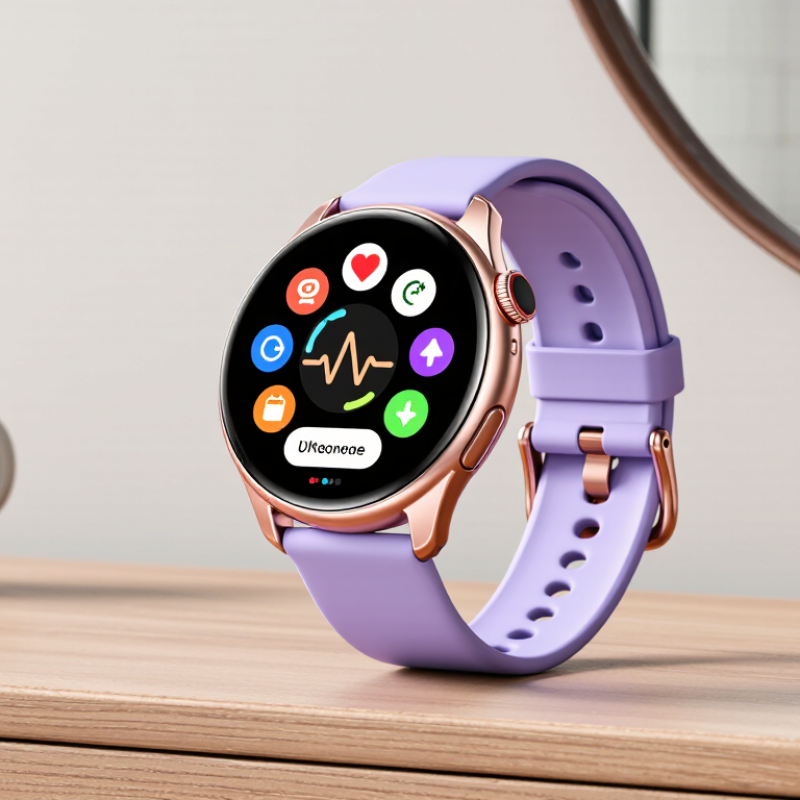
7 Tips for Choosing a Female Android Smartwatch
Phone compatibility deserves attention before design. StatCounter’s GlobalStats data has shown Android above 70% of worldwide mobile operating-system share in recent readings. That figure confirms Android’s scale, but it does not guarantee every watch will pair smoothly. Check the required Android version, Bluetooth standard, and companion-app permissions before purchasing.
The International Data Corporation reports continued growth in wearable-device shipments, with smartwatches remaining a major category. More choices can mean more compatibility gaps. Test practical functions, not only pairing. Send a notification, answer a call, sync step data, and confirm health measurements update correctly. A smaller case, adjustable strap, and bright screen can also improve daily comfort on a narrower wrist.
Do not trust one statistic completely. StatCounter measures broad phone usage, not every device configuration. I would compare its data with the watch’s technical sheet and recent user feedback. Some features may disappear when background permissions are restricted. Battery-saving settings can also delay messages. That is easy to miss. A careful buyer should test the exact phone model, Android version, and preferred apps before relying on the watch during commuting, exercise, or a busy workday.

A useful smartwatch should feel comfortable before it looks attractive. Women’s wearable-use research often highlights fit, weight, comfort, and daily convenience. Measure your wrist carefully, then check the case dimensions. A large case may press against a desk during typing. A stiff strap can irritate skin under a sweater. Try wearing the watch for several hours, not just five minutes.
Accessibility deserves equal attention. Choose clear text, adjustable font sizes, strong vibration, and simple touch controls. These features help users with small screens, limited vision, hearing differences, or reduced finger mobility. Check whether the watch responds well to voice commands in noisy rooms. Test the screen outdoors. Tiny icons become frustrating in bright sunlight. Do not assume a “women’s” model automatically provides a better fit.
Health functions also require careful judgment. Research suggests that women may value cycle tracking, sleep insights, stress tools, and safety features, but personal needs differ widely. Check how data is explained, stored, and shared. Health readings can be useful clues, not medical diagnoses. I once trusted a compact design too quickly and ignored its awkward charging routine. That mistake mattered after a long workday. Look for dependable battery life, secure charging, and settings you can change without opening several confusing menus. A return period is practical, because comfort often becomes clear only after repeated daily use.
7 Tips for Choosing a Female Android Smartwatch
Separate Wellness Metrics from Medical Claims Under FDA Guidance
A female Android smartwatch should support daily wellness, not replace clinical care. The FDA’s General Wellness: Policy for Low Risk Devices explains that basic activity, sleep, and relaxation features may remain low risk when marketed for general wellness. Look for careful wording such as “estimates” or “trends.” Avoid claims promising diagnosis, treatment, or prevention. Check Android compatibility, notification support, and battery life before purchase. Small details matter.
Review cycle, skin-temperature, heart-rate, and sleep features with healthy skepticism. These readings can vary with fit, movement, skin contact, and software updates. A 2023 IDC report recorded 520.7 million wearable-device shipments worldwide, showing how widely these tools are used. Popular does not mean clinically accurate. Read the methods, not only the dashboard. Check whether measurements are continuous, manually triggered, or inferred. Confirm data export, privacy controls, and deletion options.
Choose a comfortable band. Test it during sleep. Examine emergency features, charging time, and water resistance. For menstrual or pregnancy-related insights, treat predictions as estimates, especially when cycles change. The FDA’s guidance focuses on intended use, so marketing language deserves close attention. I have found that bright screens and many alerts can undermine wellness. More data is not always better. When symptoms concern you, share relevant records with a qualified healthcare professional instead of trusting a wrist display alone.
| Tip | Feature or Data Dimension | Typical Wellness Use | Medical-Claim Boundary | What to Check Before Buying |
|---|---|---|---|---|
| 1 | Heart-rate tracking Optical wrist sensor with resting and exercise heart-rate readings. | Monitoring workout intensity, resting trends, and changes from a personal baseline. | A displayed heart-rate value is not, by itself, a diagnosis of a heart condition. Accuracy can vary with fit, motion, skin contact, and activity. | Confirm whether readings are described as estimates, whether continuous tracking is available, and whether the product provides clear limitations. |
| 2 | Sleep and recovery metrics Sleep duration, bedtime consistency, movement, and overnight heart-rate trends. | Identifying routines, comparing sleep duration over time, and supporting lifestyle changes. | Sleep-stage scores and “recovery” ratings are wellness estimates; they do not diagnose insomnia, sleep apnea, or another sleep disorder. | Look for transparent definitions of each score, data export options, and warnings that the feature is not a substitute for clinical evaluation. |
| 3 | Menstrual-cycle features Period logging, cycle-length history, symptoms, and optional fertile-window estimates. | Organizing personal records and recognizing recurring patterns in cycle-related symptoms. | Calendar-based fertile-window predictions are estimates and should not automatically be treated as contraception, infertility diagnosis, or pregnancy detection. | Check whether predictions use only entered dates or also use validated sensor data, and review privacy controls for reproductive-health information. |
| 4 | Blood-oxygen and breathing-related readings Spot readings or overnight oxygen-saturation estimates. | Observing personal trends during rest or exercise when the device is used as directed. | A consumer wearable reading should not be used alone to diagnose low oxygen, respiratory disease, or sleep apnea. Poor fit and motion can affect results. | Read the intended-use statement, measurement conditions, and whether the feature is explicitly labeled for wellness rather than diagnosis or treatment. |
| 5 | ECG or irregular-rhythm functions Some devices can record a single-lead electrocardiogram when specifically designed and authorized for that use. | Capturing a personal recording for review when the device instructions support that use. | Do not assume that every watch with a pulse sensor can detect arrhythmias. ECG or rhythm claims require appropriate regulatory authorization and labeling. | If a product makes a medical claim, verify its intended use, FDA clearance or authorization details, compatible phone requirements, and clinician-review limitations. |
| 6 | Android compatibility and data control Operating-system support, notifications, app permissions, synchronization, and data export. | Maintaining consistent activity, sleep, and cycle records without losing historical data. | A wellness app should not imply that connected data is automatically reviewed by a healthcare professional or suitable for emergency decisions. | Confirm the minimum Android version, required permissions, account requirements, export format, cloud-retention policy, and deletion controls. |
| 7 | Regulatory language and evidence Clear distinction between general-wellness functions and medical-device claims. | Using activity, sleep, stress, and lifestyle insights for general health and fitness goals. | Under FDA policy, low-risk general-wellness functions are different from products intended to diagnose, cure, mitigate, prevent, or treat disease. Marketing language and intended use matter. | Read the official intended-use statement, look for supporting validation information, and treat unsupported claims such as “diagnoses,” “guarantees,” or “replaces a doctor” as warning signs. |
Practical rule: Use wellness metrics to observe trends and support healthy habits. Seek professional medical advice for symptoms, abnormal readings, pregnancy-related concerns, or any decision involving diagnosis or treatment.
The female smartwatch market deserves careful comparison. IDC’s Worldwide Quarterly Wearable Device Tracker recorded 537.1 million wearable-device shipments in 2024, an 11.7% annual increase. That scale shows strong demand, but shipment volume does not guarantee useful battery life or accurate GPS.
Battery claims need practical testing. A watch promising seven days may last only two or three days with continuous location tracking, notifications, and sleep monitoring enabled. Check capacity, charging time, and low-power modes. A smaller case may feel comfortable on a narrow wrist, yet it often leaves less room for a large battery. I have found that a dependable three-day result can be more valuable than an impressive laboratory number.
GPS needs equal attention. Look for multi-system positioning, route recording, and stable tracking near tall buildings or trees. GPS.gov explains that civilian GPS performance depends on satellite visibility, signal conditions, and the receiver itself. Indoor accuracy will remain limited. Compare recorded walking routes, not just advertised accuracy. Counterpoint Research’s smartwatch shipment analysis also shows a competitive, changing market, so specifications can vary quickly. My own mistake was trusting peak battery claims without checking GPS usage. A simple weekend test reveals more.
When choosing a female Android smartwatch, privacy should sit beside comfort, battery life, and health features. A smaller case, readable display, and adjustable strap matter during commuting, workouts, and sleep. Yet the companion app may collect more personal information than the watch itself. Check its Google Play listing before purchase. Read the developer’s data safety disclosures, requested permissions, update history, and user reviews. Look for clear explanations of location, contacts, health, and biometric data use. Vague wording deserves caution.
Under EU GDPR, users should receive understandable information about data processing and meaningful control over their information. The app should explain its legal basis, retention period, deletion process, and contact route for privacy requests. Check whether data leaves the European Economic Area and whether third parties receive it. Do not treat a privacy label as proof of perfect protection. Labels can be incomplete or outdated. Stay skeptical. Test permission requests during setup, and deny anything unrelated to core watch functions.
Value is more than the checkout price. Compare required subscriptions, optional health reports, replacement straps, charging accessories, warranty terms, and repair support. A low-cost watch can become expensive after two years of paid features. Battery claims also need skepticism; continuous tracking often reduces real-world endurance. Keep receipts and review cancellation rules before starting a trial. No checklist is perfect. My weak point is sometimes prioritizing appearance over software support. Rechecking updates and privacy controls after purchase is wiser than trusting the first setup.
Use this checklist to compare privacy protection and long-term value. The bars show the number of concrete checks covered by each tip, not ratings for any company or brand.
What to verify: GDPR consent should be informed, specific, freely given and unambiguous. Also review data minimisation, privacy notices, access and portability, deletion and objection options, security updates, and the total cost of ownership.
Content © 2025 Komatsu. All Rights Reserved