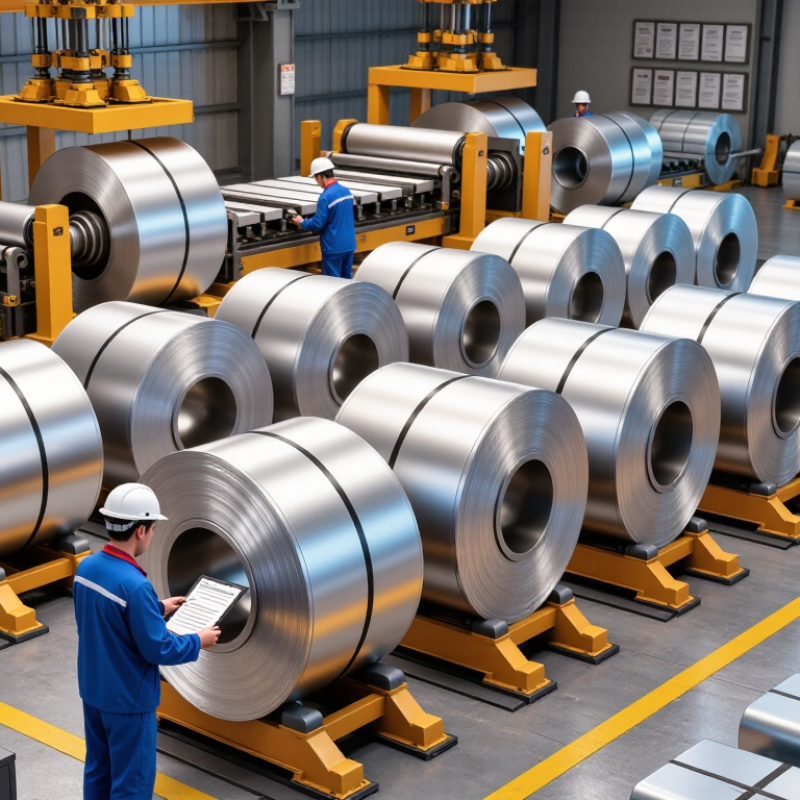
Choosing the best China Rolled Metal supplier requires more than comparing prices on a spreadsheet. Global buyers need stable quality, clear communication, and evidence behind every promise. A reliable supplier should provide mill test certificates, heat numbers, dimensional reports, and traceable production records. These documents matter when a coil arrives with a 0.8-millimeter thickness requirement or a visible surface finish standard.
Dr. John D. Verhoeven, a respected metallurgist and author of Fundamentals of Physical Metallurgy, stated, “The properties of metals depend upon their structure.” This principle remains important when evaluating Rolled Metal suppliers. Production methods, alloy control, rolling schedules, annealing, and inspection practices can directly affect strength, formability, and corrosion resistance.
The strongest Chinese suppliers usually demonstrate their capabilities through factory audits, sample approvals, and repeatable delivery performance. Buyers should inspect slitting accuracy, coil edges, packaging, moisture protection, and loading procedures. Small details often decide whether material performs well after arrival.
Price still matters. It should not lead the decision.
No supplier is perfect, and no buyer should accept vague claims without verification. Some companies communicate quickly but provide weak technical evidence. Others offer excellent testing yet struggle with export coordination. This guide examines those differences carefully. It focuses on practical supplier selection, technical reliability, documentation, and long-term cooperation. The goal is not to promote one factory blindly. It is to help global buyers choose Rolled Metal with clearer evidence and fewer costly surprises.
Rolled-metal grades should be defined by standards, not by familiar product names. ASTM, EN, JIS, and ISO use different systems for chemistry, strength, testing, and tolerances. For example, ASTM A36, EN 10025 S235JR, JIS G3101 SS400, and ISO 630 grades may serve similar structural purposes. They are not automatically identical.
A reliable Chinese supplier should provide the standard edition, grade, thickness range, heat number, and mill test certificate. Verify yield strength, tensile strength, elongation, carbon content, and impact requirements. For hot-rolled plate, surface condition and dimensional tolerance also matter. A 12-millimeter plate may pass the grade test but fail your cutting or welding process.
In practical sourcing, I compare the buyer’s drawing with the original standard clause. I do not approve substitutions from a simple cross-reference chart. Those charts save time, but they can hide differences in testing temperature or delivery condition. This is where mistakes happen.
Ask for third-party inspection when the application is demanding. Review samples before placing a large order. Confirm whether ISO describes the product grade or only the management system. That detail is often misunderstood. A supplier’s low price means little if traceability records are incomplete or certificates contain vague wording. The specification should remain clear from quotation to loading.
China’s 2023 crude-steel output reached about 1.02 billion tonnes, creating an exceptionally deep production base. This scale supports broad availability of hot-rolled and cold-rolled metal. It also creates noise. Large capacity does not guarantee stable quality, complete documentation, or dependable export service. Global buyers should treat this figure as a market benchmark, not a purchasing guarantee. The practical question is narrower: can a supplier repeatedly deliver the required grade, thickness, coil weight, and schedule?
A reliable assessment starts with traceable mill certificates and recent test data. Check chemical composition, yield strength, tensile strength, elongation, surface finish, and dimensional tolerance. Ask how coils are protected from moisture during container loading. Photos of labels and packaging can prevent costly confusion. Production capacity matters, but process control matters more. An attractive price may hide inconsistent slitting or weak edge protection. Those problems appear during stamping, welding, or uncoiling.
For international purchasing, compare lead times, minimum order quantities, inspection access, packing standards, and complaint procedures. Confirm the applicable standard before signing; equivalent grades are not always interchangeable. A sensible trial order can reveal flatness, oiling, coil shape, and communication speed. It may feel slower. It is often cheaper than correcting a full shipment. China’s steel base offers strong sourcing depth, yet buyers should still verify every document and allow for quality variation. That point is uncomfortable, but realistic.
China’s reported 90.3-million-tonne steel exports show market scale, not automatic supplier quality. Global buyers should verify every rolled metal shipment through mill-level records. In practical sourcing work, I check the heat number first. It should match the mill certificate, coil tag, packing list, and invoice. The trail must remain unbroken.
Reliable documentation includes the production date, steel grade, chemical composition, tensile results, thickness tolerance, and surface inspection. Ask for the original mill test certificate, not only a scanned summary. Compare sample values with the agreed specification. A small mismatch can signal an administrative error, or something more serious. Digital records help, but they do not replace physical inspection. A spreadsheet can still contain mistakes.
Tips: Request a traceability package before placing a large order. Confirm heat numbers on random coils during loading. Use an independent inspection agency for thickness, width, coating, and packaging checks. Keep photographs of labels and container seals. Export statistics should support your research, not end it. Also, verify the data source and reporting year, because trade figures can differ. I would not choose the cheapest offer without reviewing production evidence. That lesson is easy to learn late.
Best China Rolled Metal Supplier for Global Buyers?
Compare ISO 9001 Controls, MTCs, and EN 10051 Thickness Tolerances
A reliable rolled metal supplier should show more than a polished website. ISO 9001 certification indicates controlled processes, not automatic product perfection. Ask how operators control heat numbers, inspection records, corrective actions, and measuring equipment.
Look for practical evidence. A strong MTC should identify the coil, steel grade, heat number, chemical analysis, mechanical results, and applicable test standards. Traceability must continue from the furnace record to the shipping label. Request a sample MTC before placing a large order. Small omissions can create expensive questions later.
EN 10051 thickness tolerances deserve closer attention. The permitted variation depends on the ordered thickness and width range. Confirm whether the quotation uses the standard tolerance class and whether measurements cover the coil center and edges. A supplier may report one attractive reading, while production shows wider variation. That is not necessarily fraud, but it requires investigation.
Use calibrated micrometers.
Ask for recent inspection data. Compare actual readings with the tolerance table, not with informal promises. ISO procedures may look complete, yet operators can still record data inconsistently. Buyers should review nonconformance handling and request photographs of marking, packaging, and coil condition. My own preference is to approve suppliers through a small trial order first. It costs more time, but it exposes weaknesses before a full shipment is committed.
| Buyer Evaluation Dimension | Basic Export Supplier | Controlled Production Supplier | Best-Fit Supplier Profile for Global Buyers | Evidence to Request Before Ordering |
|---|---|---|---|---|
| ISO 9001 Quality Management | May state that a quality system is in place, but certification scope and validity are not confirmed. | Operates a documented quality management system with controlled procedures and internal audits. | Holds a valid ISO 9001 certificate covering the relevant manufacturing or trading activities, with certificate scope matching the ordered product. | Valid certificate number, issuing certification body, covered sites, certificate scope, expiry date, and verification record. |
| Incoming Material Control | Material may be accepted mainly by supplier declaration. | Checks heat number, grade, dimensions, surface condition, and basic documentation before production or shipment. | Uses heat-number traceability and documented inspection records from receipt through slitting, leveling, cutting, or packing. | Incoming inspection procedure, heat-traceability example, supplier material certificate, and nonconformance record format. |
| Mill Test Certificate (MTC) | Provides a commercial or generic certificate that may not clearly identify the supplied batch. | Provides a batch-linked certificate with product grade, heat number, dimensions, chemical composition, and mechanical results where applicable. | Provides an EN 10204 Type 3.1 certificate linked to the actual heat and delivery quantity, with results traceable to the ordered material. | Sample redacted MTC showing heat number, product standard, grade, dimensions, chemical analysis, mechanical tests, and authorized signatory. |
| EN 10204 Documentation Level | Often supplies a Type 2.2 document containing non-specific or non-batch-specific test results. | Can issue Type 3.1 documentation when specified in the purchase order. | Confirms the required inspection document before production; uses Type 3.1 for manufacturer-certified batch results and Type 3.2 when independent or purchaser witnessing is required. | Written confirmation of the document type, responsible inspection party, test laboratory, and certificate-to-coil or certificate-to-heat linkage. |
| EN 10051 Applicability | May quote a thickness tolerance without stating the applicable product standard or tolerance class. | Quotes continuously hot-rolled flat products against the agreed edition and tolerance requirements. | States EN 10051 or the agreed equivalent in the purchase order and confirms the applicable thickness, width, edge, flatness, and shape tolerances. | Quotation and order confirmation showing product standard, nominal thickness, nominal width, tolerance class, and edge condition. |
| Thickness Tolerance Control | Uses a general “±” value that may not correspond to the ordered thickness range. | Measures thickness with calibrated gauges at defined positions and records inspection results. | Applies the tolerance table relevant to the nominal thickness and width under EN 10051, rather than using one universal tolerance for all sizes. | Inspection plan, calibrated gauge certificate, measurement locations, actual readings, and the exact EN 10051 tolerance class used. |
| Representative Thickness Reading | May provide only one nominal value, such as 3.00 mm, without actual readings. | Provides several readings across the coil, sheet, or cut length. | Reports actual minimum, maximum, and average readings and confirms that edge exclusion and measurement locations follow the agreed specification. | Redacted dimensional inspection report containing nominal thickness, actual readings, instrument identification, date, and inspector approval. |
| Width and Edge Condition | Width may be described as approximate or nominal only. | Controls width and identifies mill edge, trimmed edge, or slit edge. | Links width tolerance and edge condition to the EN 10051 requirement and the customer’s fabrication process. | Dimensional report, edge-condition statement, width tolerance, and packaging identification. |
| Surface Quality | Uses broad terms such as “good surface” without a defined acceptance level. | Checks rust, scale, scratches, roll marks, dents, and visible defects during production or final inspection. | Defines surface acceptance criteria, repair limits, inspection lighting or method, and rejection handling before shipment. | Surface-quality specification, inspection checklist, defect photographs, and agreed acceptance standard. |
| Mechanical and Chemical Testing | Results may be stated without clear heat or sample traceability. | Provides chemical composition and mechanical results appropriate to the ordered grade and standard. | Ensures test results match the ordered grade, heat number, product form, and applicable standard; additional tests are agreed before production. | Redacted test report, laboratory accreditation information where applicable, sampling method, and heat-number linkage. |
| Calibration and Measurement Control | Calibration status may not be included in the inspection package. | Maintains calibration records for micrometers, gauges, scales, and testing equipment. | Provides current calibration status and uses equipment suitable for the required accuracy and measurement range. | Calibration certificates, equipment identification, resolution, calibration date, and next due date. |
| Nonconformance Handling | Claims are handled case by case without a documented corrective-action process. | Records defects and investigates recurring causes. | Uses documented nonconformance reports, root-cause analysis, corrective action, and replacement or credit procedures. | Redacted corrective-action report, claim workflow, response time commitment, and replacement policy. |
| Pre-Shipment Inspection | Relies mainly on packing-list confirmation. | Performs final checks for quantity, dimensions, surface condition, marking, and packaging. | Provides a pre-shipment inspection package with actual measurements, photographs, packing details, and certificate references. | Final inspection report, packing photographs, bundle or coil identification, and loading record. |
| Traceability After Delivery | Traceability can be difficult once bundles are separated. | Marks bundles or coils with grade, size, heat number, and order reference. | Maintains traceability from the delivered unit back to the MTC, production record, inspection report, and shipping documents. | Sample bundle label, packing list, MTC cross-reference, and traceability map. |
| Recommended Buying Decision | Suitable only when price is the primary concern and the buyer accepts greater verification risk. | Suitable for routine orders where documented inspection and basic batch traceability are required. | Best fit for regulated, repeat, or fabrication-sensitive applications where ISO 9001 controls, EN 10204 Type 3.1 MTCs, and EN 10051 dimensional compliance are contract requirements. | Make certification scope, MTC type, EN 10051 tolerance class, inspection records, and claim procedures contractual requirements. |

Selecting a rolled metal supplier requires more than comparing the lowest unit price. Set your MOQ against actual demand, storage space, and cash flow. A small trial order may reduce risk, but a higher MOQ can lower conversion and packing costs. Ask for material certificates, thickness tolerance data, inspection records, and production photos. Lead time should include production, inspection, port handling, and sailing time. A quoted “15-day lead time” may exclude several hidden days.
Incoterms also change your real exposure. Under FOB, the buyer usually controls the main ocean freight. Under CIF, the supplier arranges freight and insurance, but destination charges can still surprise you. Calculate landed cost carefully: product value, inland transport, freight, insurance, duties, port fees, inspection, and financing.
UNCTAD’s Review of Maritime Transport 2024 states that over 80% of global trade by volume moves by sea. Delays therefore remain a commercial risk, not just a logistics detail. The World Bank’s 2023 Logistics Performance Index also evaluates customs, tracking, and timeliness.
Tips: Request two quotes with identical specifications and Incoterms. Compare the final delivered cost, not the headline price. Confirm whether lead time starts after deposit, drawing approval, or material confirmation. I have seen low quotes fail after destination fees appeared. That mistake is easy to repeat. Also, supplier communication matters more than many spreadsheets suggest, although it is difficult to score objectively. Keep a written tolerance, packing, claim, and delay procedure before payment.
Content © 2025 Komatsu. All Rights Reserved