
Solar demand is growing fast, but every rooftop system still depends on small components doing demanding work. SolarPower Europe’s Global Market Outlook 2024–2028 reports approximately 447 GW of new solar installations worldwide in 2023. That scale makes dependable mounting hardware more than a purchasing detail. A Stainless steel roof hook must suit the roof covering, timber structure, and local weather exposure—not just look sturdy in a product photo.
Details matter. A hook’s base plate sits beneath the tile; its arm must clear the tile profile without forcing it upward. Stainless steel can offer strong corrosion resistance, but grade, thickness, weld quality, and installation all affect performance. The IEA PVPS Snapshot of Global PV Markets 2024 also documents the continued expansion of global PV capacity, reinforcing the need for mounting choices grounded in tested specifications. Bigger installations raise the stakes. They do not make every hook interchangeable.
This guide compares leading options for 2026 by material grade, adjustability, load documentation, and roof compatibility. It also flags a limitation: no verifiable, named expert quotation about stainless-steel roof hooks was provided, so none is invented here. That matters. A confident quote without a traceable source would weaken the advice. Use the comparison as a starting point, then check each manufacturer’s current technical data and consult a qualified installer before choosing hardware for a specific roof.
How Stainless Steel Roof Hooks Support Solar Mounting
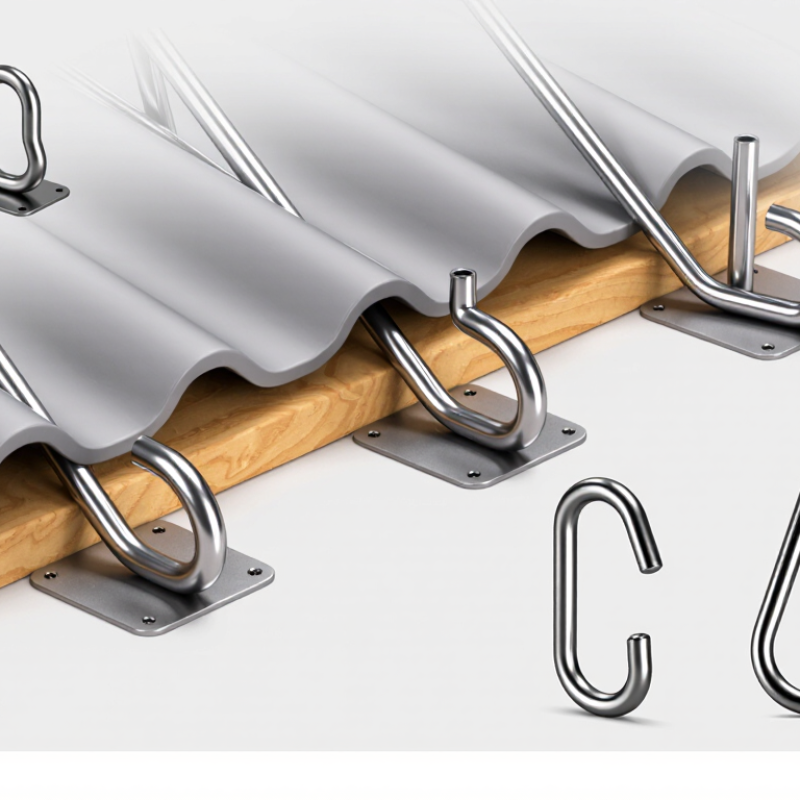
Stainless steel roof hooks create a mechanical link between the roof structure and solar rails. On a tiled roof, a hook passes beneath a tile and is fastened into a rafter; the rail then carries the modules. The tile should not bear the hook’s load. Small detail. A poorly placed fastener can miss the rafter or split the timber, so installers must verify framing, fastener embedment, and tile clearance on site.
The IEA PVPS Snapshot of Global PV Markets 2024 estimates that 447 GW of solar capacity was installed worldwide in 2023. That scale makes dependable rooftop attachment important, but a hook alone cannot guarantee a safe array. Wind uplift, snow loads, roof condition, and the mounting layout all matter; ASCE/SEI 7-22 provides methods for determining site-specific design loads in the United States. Stainless steel resists corrosion, yet grade and exposure still matter, especially near salt air. Dissimilar metals can also corrode at contact points. Check compatibility and use suitable isolation where specified. I would not assume “stainless” means maintenance-free. Each roof deserves a closer look.

A stainless steel roof hook faces rain, temperature swings, and repeated wind loading. Material grade matters. Grade 304 stainless steel suits many inland settings, while grade 316 may offer better resistance in salt-laden coastal air. Neither choice replaces checking the roof environment, fasteners, and maintenance needs. Mixed metals can corrode at contact points, so compatible hardware or suitable isolation washers may be needed.
Look closely at the hook’s formed plate, bends, and welds. Smooth edges reduce the chance of damaging roofing layers, while a stable base helps spread loads across the supporting structure. A slotted arm can make rail alignment easier, but excessive adjustment may leave less room for secure fastening. Small details matter. Check that holes align with the specified structural screws, not just with the mounting rail.
Hook dimensions must match the roof profile and the space beneath the tiles or shingles. Fit is not universal. A hook that presses against a tile can create a stress point, even when the metal itself is strong. Installers should verify clearance, flashing or water-shedding details, and the condition of the underlying roof before fixing the assembly. Steel thickness alone is a poor measure of performance; geometry, fabrication quality, fastener placement, and the roof structure all contribute. Specifications are useful, but field conditions can still surprise you.
Stainless Steel Chromium Content by Grade (Typical Specification Ranges)
Chromium content is one factor in corrosion resistance, but it does not determine a roof hook’s suitability on its own. Grade 316 also contains molybdenum (typically 2–3% by mass), which can improve resistance to chloride environments compared with grade 304. Check the hook’s full material specification and the roof, climate, and installation requirements before selecting a grade.
Roof type sets the first limit. On a tile roof, a stainless steel hook must pass beneath the tile and fasten into a rafter, not just the battens. Check tile clearance carefully; a hook that lifts the tile can create a leak path. Asphalt-shingle roofs need compatible flashing and a sound structural attachment. Standing-seam metal roofs often use seam clamps instead of hooks, so the attachment should match the roof system.
Then consider the loads. Panels add weight, but wind uplift and snow can place greater demands on the fixings. Roof edges and corners may experience stronger wind forces than central areas. A hook can look stout and still fail if the rafter is undersized, cracked, or missed during installation. That detail is easy to underestimate. Confirm the roof structure, fastener type, and required embedment before choosing a hook.
Stainless steel grade matters, too. Coastal air and persistent moisture can accelerate corrosion; a suitable grade and compatible hardware help reduce that risk. Check contact with aluminum rails and use isolation components where specified. There is no universal hook. Actual roof framing and local design loads should guide the final selection, even when a product chart suggests an easy answer.
Best Stainless Steel Roof Hooks for Solar Mounting in 2026?
How to Compare Stainless Steel Roof Hooks in 2026
Compare roof hooks by their fit, material, and load path—not by appearance alone. Check the stated stainless steel grade and confirm it suits the roof’s exposure, especially in coastal or persistently damp areas. Then match the hook’s base and height to the tile profile. A few millimeters can affect clearance, tile pressure, and rail alignment. Check technical drawings and installation instructions; a polished finish proves little about structural suitability.
Look closely at how each hook transfers force into the roof structure. Review documented load ratings, fastener specifications, and required fixing points, and have a qualified installer confirm the assembly suits the project. Check flashing or other water-shedding details, too. A sturdy hook can still create a leak if it lifts a tile or interrupts drainage. It is tempting to rank products by steel grade alone, but that misses the full installation. I would treat unclear documentation as a reason to pause, not guess.
Tips: Compare the same measurements across options: steel grade, base dimensions, adjustment range, fasteners, and test data. Keep a sample beside the roof tile. Small differences become obvious there.
| Hook type or comparison | Typical roof application | Material to compare | Adjustment and fit | Key advantages | Checks before selection |
|---|---|---|---|---|---|
| Fixed tile roof hook | Concrete or clay tile roofs, where the hook can pass beneath the tile and attach to structural roof framing. | Commonly stainless steel grades such as 304 or 316; confirm the specified grade and applicable product documentation. | Fixed geometry; requires the correct hook height and offset for the tile profile and roof structure. | Simple configuration when the roof covering, rafter position, and mounting rail align with the hook design. | Check tile clearance, flashing or waterproofing details, attachment into structural framing, and whether the tile needs modification. |
| Adjustable tile roof hook | Tile roofs with variation in batten height, tile profile, or rail position. | Compare the stainless grade of the hook and the materials of bolts, washers, and other connected parts. | Slotted or multi-position features can allow on-site alignment; the available adjustment is product-specific. | Can make rail alignment easier where roof geometry varies, provided the adjustment is set and secured as specified. | Confirm adjustment range, fastener arrangement, installation instructions, and that adjustment does not compromise structural attachment. |
| Slate roof hook | Natural or manufactured slate roofs, using a hook designed for the roof build-up and slate layout. | Grade selection depends on exposure and project requirements; 316 contains molybdenum and is often considered for more corrosive environments. | Usually selected to suit slate thickness, course spacing, and the intended attachment point. | A purpose-designed profile can reduce interference with adjacent slates when installed correctly. | Check slate condition, fixing method, water-shedding details, and any requirements for specialist slate-roof installation. |
| 304 stainless steel option | A common comparison grade for many general-purpose exterior applications, subject to the project environment. | Austenitic stainless steel; 304 is commonly described as an 18/8 grade, referring approximately to its chromium and nickel content. | Hook shape and adjustment are separate design choices; grade alone does not determine fit. | Widely used and a useful baseline when comparing material declarations and project suitability. | Evaluate local exposure, including coastal salt, industrial pollutants, and trapped moisture; do not choose by grade name alone. |
| 316 stainless steel option | Projects where increased resistance to chloride-related corrosion is a consideration, including some coastal or salt-exposed locations. | Austenitic stainless steel containing molybdenum; exact composition and certification should be confirmed from the supplier documentation. | Available hook geometry and adjustment depend on the specific design, not simply on the stainless grade. | Molybdenum improves resistance to chloride corrosion compared with 304 in many conditions, though it does not make the material corrosion-proof. | Consider the entire assembly, including fasteners and dissimilar-metal contact; follow project specifications and exposure guidance. |
| Load capacity and structural design | All roof types and hook configurations. | Material grade is only one factor; geometry, thickness, fasteners, substrate, and installation all affect performance. | No universal load value applies to every hook or roof assembly. | Comparing documented design values and test conditions is more meaningful than comparing appearance alone. | Use project-specific wind and snow loads, roof framing details, approved installation instructions, and applicable local codes. Have the design verified by a qualified professional. |
Comparison note: Specifications and suitability vary by product and roof assembly. Verify stainless-steel grade, dimensions, fasteners, test data, installation requirements, and local code compliance using current technical documents before purchase or installation.
Best Stainless Steel Roof Hooks for Solar Mounting in 2026?
A reliable roof hook starts with the roof, not the metal grade. Confirm the roof covering, rafter position, hook geometry, and flashing details before drilling. Stainless steel can resist corrosion, but trapped moisture and contact with incompatible metals may still cause trouble. Keep the hook seated firmly on structural timber; tiles should not carry the array’s load. Follow the system’s specified fasteners and torque values. Guessing is not a method.
During installation, check that each flashing sheds water and lies flat beneath the surrounding tiles. Photograph concealed connections before closing the roof. The National Renewable Energy Laboratory’s review of nearly 2,000 reported photovoltaic degradation rates found a median module decline of about 0.5% per year. That figure is not a hook-failure rate, but it underlines the value of protecting long-lived rooftop systems. Inspect hooks and nearby roofing at least annually, and after severe weather. Look for shifted tiles, loose fasteners, rust staining, cracked sealant, or water marks indoors. A clean-looking roof can still hide a poor detail.
Tips: Use a torque tool, not guesswork. Keep inspection photos dated and compare them each year. If a hook moves or flashing lifts, have a qualified solar or roofing professional assess it before tightening anything. Small repairs can be awkward, and assumptions sometimes miss the real cause.
Content © 2025 Komatsu. All Rights Reserved