
Choosing China’s best Complete Motor supplier is not simply a matter of comparing prices or polished catalogs. Global buyers need to assess engineering capability, production consistency, documentation, and after-sales support. A motor may look excellent on a specification sheet, yet perform differently under continuous load, high temperatures, or frequent starts. Details matter.
Electrical-engineering pioneer Michael Faraday wrote, “Nothing is too wonderful to be true, if it be consistent with the laws of nature.” His words offer a useful lens for evaluating motor claims: check whether performance figures match the design, test conditions, and evidence provided. Ask for rated power, voltage, efficiency data, protection rating, and clear test reports. Then confirm that the supplied configuration matches the quotation. Small differences in winding, insulation, or cooling can change real-world performance.
Look beyond the sample unit. Request factory quality-control procedures, traceable inspection records, and examples of comparable projects. Clarify lead times, spare-parts availability, warranty terms, and communication responsibilities before placing an order. A responsive supplier should explain limitations, not just promise ideal results. That distinction is easy to miss.
No single manufacturer is best for every application. A supplier suited to pumps may not fit a conveyor or an export project with demanding service requirements. Compare evidence, visit or independently assess the production process where practical, and test a representative unit. The process takes time. It can still leave questions. A careful selection helps buyers identify a Complete Motor partner whose capabilities fit the actual duty, budget, and support needs.
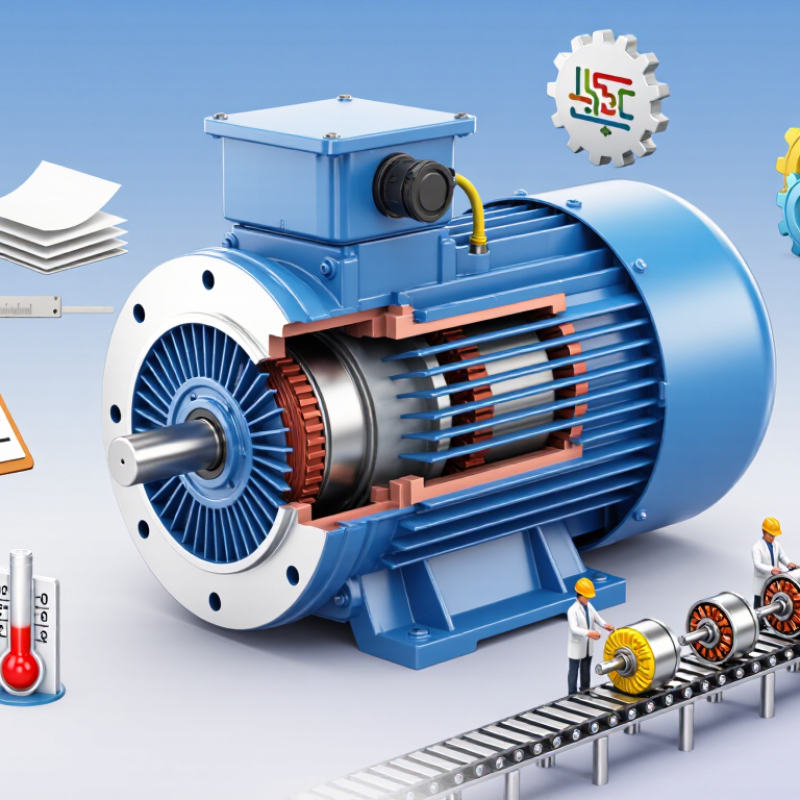
China Best Complete Motor Supplier for Global Buyers
Electric motors turn electrical input into rotation, but the right choice depends on the load. Induction motors suit many pumps, fans, and conveyors. Synchronous motors can offer precise speed control, while DC motors remain useful in some specialized systems. Check the nameplate for rated power, voltage, frequency, current, speed, duty, and enclosure rating. A 7.5 kW motor, for example, may still be unsuitable if its starting torque or operating environment is wrong.
Efficiency classes need context. IEC 60034-30-1 defines IE1, IE2, IE3, and IE4 classes for specified line-operated AC motors. It does not assign one universal efficiency threshold: limits vary with motor output and pole count. Compare the class at the motor’s actual rating, and confirm whether the standard covers the motor type being purchased. Small detail. Big difference.
The IEA’s 2011 report, Energy-Efficiency Policy Opportunities for Electric Motor-Driven Systems, estimated that these systems use about 46% of global electricity. That figure is a broad estimate, not a prediction for one plant. Still, it shows why efficiency deserves attention. Ask suppliers for test results, rated-load efficiency, and clear duty information; then assess energy use against real operating hours and load. A higher class can help, but mismatched sizing or poor control can erase some gains. Honestly, the nameplate rarely tells the whole story.

Motor-driven systems are estimated to use about 53% of global electricity. They power pumps, fans, compressors, conveyors, and many machines found in factories and buildings. The exact share depends on how systems and electricity use are measured, so the figure is best treated as an estimate, not a fixed reading.
The opportunity lies beyond the motor itself. A pump that is too large for its normal workload may waste energy every shift. A fan running at full speed when demand is low can do the same. Small losses add up. Correct sizing, suitable speed control, and regular checks of bearings and alignment can improve how the whole system performs. Results still depend on operating conditions.
For global buyers, comparing complete motor systems means asking how equipment will perform at the real duty point, not just checking rated efficiency. Request clear test data, operating limits, and maintenance guidance. These details help teams make practical decisions. One caveat: spreadsheets rarely capture every change in load or daily use. Actual performance deserves follow-up.
A complete motor supplier should offer more than a long catalog. Check whether its range covers the required power, speed, voltage, mounting, and operating conditions. Ask for dimensioned drawings and performance curves, then compare them with your equipment specifications. Small differences in shaft size or mounting holes can delay installation.
Look closely at how each model is tested. Useful evidence may include test procedures, sample reports, and records for temperature rise, vibration, noise, and electrical performance. Ask how production units are checked, not only how prototypes are tested. Details matter.
Production capacity also deserves direct questions. Request realistic lead times, monthly output estimates, and an explanation of how orders are scheduled during busy periods. A factory tour, live or in person, can show assembly stations, inspection tools, and finished-goods storage. Yet one visit cannot prove consistent quality. Compare records from several production batches where possible, and confirm how defects are documented and handled. A polished brochure may answer little. Supplier evaluation is imperfect; careful follow-up helps reveal the gaps.
| Assessment Dimension | What a Complete Supplier May Offer | Evidence and Checks for Buyers |
|---|---|---|
| Product range | AC induction motors, synchronous motors, permanent-magnet motors, brushless DC motors, geared motors, and servo motors. Availability depends on the supplier’s actual product portfolio. | Request a current catalogue and model-level datasheets. Confirm rated output, speed, torque, voltage, frequency, duty, mounting arrangement, and dimensional drawings. |
| Application coverage | Motor configurations can be selected for applications such as pumps, fans, conveyors, compressors, and automated machinery. | Match the motor’s rated duty and starting characteristics to the application. Review the load profile, operating environment, and required control method. |
| Efficiency and performance | Efficiency classes and declared performance should be assessed against the motor type, rating, and applicable market requirements. | Request test reports and rating data. IEC 60034-30-1 defines efficiency classes for certain line-operated AC motors; confirm that the motor falls within its scope before comparing class claims. |
| Electrical and routine testing | Common production checks include winding resistance, insulation resistance, dielectric withstand, no-load operation, and direction of rotation. | Ask for the routine-test record format, test criteria, instrument calibration records, and serial- or batch-level traceability. |
| Performance and type testing | Depending on the product and specification, testing may cover load performance, efficiency, temperature rise, vibration, or noise. | IEC 60034-1 covers rating and performance requirements for rotating electrical machines. Confirm the applicable edition, test method, and scope in the purchase specification. |
| Enclosure protection | Ingress protection is selected according to the installation environment; the required IP rating should be stated for each ordered configuration. | IEC 60034-5 specifies degrees of protection provided by the integral design of rotating electrical machines. Request supporting test evidence for any claimed rating. |
| Customization and integration | Possible options include different shaft or mounting arrangements, terminal-box positions, brakes, encoders, thermal protection, and gearboxes. | Verify customization through approved drawings, a defined change-control process, and a sample or first-article approval where required. |
| Production capacity | Output capacity is supplier- and product-specific; a single general capacity figure cannot reliably represent every motor type or configuration. | Request monthly capacity by model or product family, current utilization, planned production lead time, bottleneck processes, and recent on-time delivery records. |
| Manufacturing controls | Relevant controls may include incoming-material inspection, process inspection, final testing, nonconformance handling, and product traceability. | Review process flow charts, inspection plans, defect and corrective-action records, and traceability from key materials to finished motor batches. |
| Export readiness | Documentation and conformity requirements vary by destination market, motor design, and end use. | Agree on destination-specific standards, labels, manuals, packaging, and required conformity documents before placing the order. Verify certificates and reports against the exact model and scope. |
China Best Complete Motor Supplier for Global Buyers
Global buyers should confirm IEC and UL requirements before comparing motor prices. IEC 60034-1 defines rating and performance requirements, including duty types such as S1 continuous operation. UL 1004-1 covers general safety requirements for rotating electrical machines; the applicable certification depends on the motor design and destination. Check certificates, nameplate details, and installation conditions together. A document alone is not enough.
Voltage and frequency must match the actual supply. A 50 Hz motor connected to a 60 Hz system may run faster, affecting cooling, torque, and load performance. Confirm the permitted voltage range and whether a variable-frequency drive will be used. Duty matters, too: frequent starts or short operating cycles can create heat that a continuous-duty selection may not handle. The IEA’s 2011 report, Policy Opportunities to Improve Energy Efficiency of Electric Motor-Driven Systems, estimated these systems use 43–46% of global electricity. Small specification errors can have broad consequences.
Tips: Send the supplier your supply voltage, frequency, load profile, starts per hour, and ambient temperature. Ask for written confirmation against the intended standard. One detail is often missed: the best match on paper may still need review against the real operating cycle.
For global buyers, a motor order is only as dependable as the steps between factory release and installation. Before shipment, confirm voltage, frequency, mounting dimensions, shaft details, and package labels against the purchase specification. A signed inspection record and clear carton photos can help resolve disputes if goods arrive damaged. Small details matter. Export documents should match the goods and destination requirements, so buyers and suppliers should verify them together before dispatch. Choose crate or pallet protection for the route, handling conditions, and moisture exposure—not just the lowest quoted cost.
Reliable service continues after delivery. A written warranty should state its coverage period, exclusions, required evidence, response channel, and responsibility for return freight. Link serial or batch references to invoices and test records, so service cases can be traced quickly. For spare parts, agree on a practical list before ordering. Bearings, seals, terminal blocks, fans, and fasteners can differ between motor designs. Ask for part numbers, lead times, storage guidance, and replacement instructions. Photos help, but dimensions and material checks matter too. A mismatch can delay a repair for days. No shipment plan avoids every port delay; allow time buffers and communicate estimate changes promptly. Some records get missed. That is a useful warning, not a reason to skip them.
Export logistics benchmark: China scored 3.7 out of 5 in the World Bank’s 2023 Logistics Performance Index. This country-level score provides logistics context; it is not a rating of any individual motor supplier or its warranty and spare-parts service.
Source: World Bank, Logistics Performance Index 2023. Scale: 1 (low) to 5 (high).
Content © 2025 Komatsu. All Rights Reserved