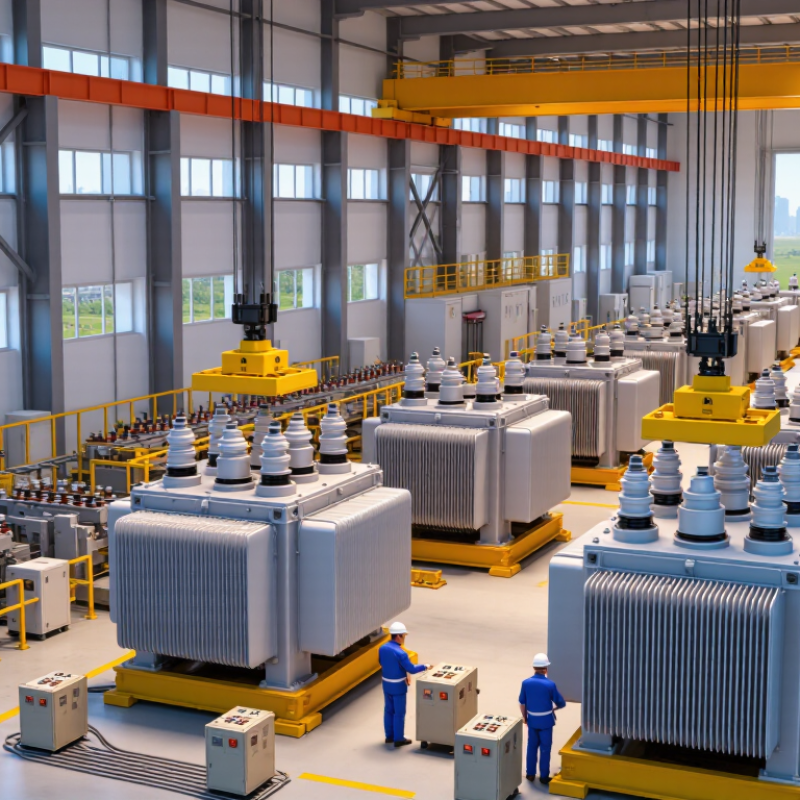
Choosing among the China Best Substation Transformer Manufacturers Worldwide requires more than comparing prices or factory photographs. Reliable selection depends on engineering depth, verified testing, material quality, and long-term service performance. A transformer may look impressive on a showroom floor. Its real character appears under heat, load changes, moisture, and fault stress.
Martin J. Heathcote, author of The J&P Transformer Book, offered a practical principle: “A transformer must be designed for the service conditions in which it will operate.” This observation remains highly relevant when evaluating Substation Transformers for industrial plants, renewable-energy projects, utilities, and regional grids. Manufacturers should demonstrate experience with voltage classes, insulation systems, cooling methods, tap changers, and protection coordination. Independent test reports matter. So do factory acceptance tests, traceable materials, and documented quality procedures.
China has developed a strong manufacturing base, supported by large production capacity and expanding technical expertise. However, not every supplier offers the same engineering discipline. That distinction is easy to miss. Buyers should examine temperature-rise results, partial-discharge data, short-circuit capability, noise levels, and after-sales response. Site references can reveal more than polished brochures.
This overview introduces leading Chinese manufacturers through a practical, evidence-based lens. It considers technical capability, certifications, delivery experience, customization, and lifecycle support. No ranking is permanently perfect. Project conditions change, and published information can become outdated. Therefore, each manufacturer should be verified against the buyer’s actual grid requirements, applicable standards, installation environment, and maintenance strategy. Good decisions begin with evidence, not assumptions.
A substation transformer is a static electrical machine that changes voltage between transmission, distribution, and local networks. It uses electromagnetic induction, not moving gears. High-voltage power enters one winding, while another winding delivers a safer, usable voltage. The voltage ratio depends on the turns ratio. Simple in theory.
In a working substation, the transformer also supports electrical isolation, voltage regulation, and system protection. Bushings carry conductors through the tank. Conservators manage insulating-oil expansion. Radiators release heat during heavy loading.
Tap changers adjust voltage when demand changes. IEC 60076 defines key requirements for transformer design, testing, and performance. Yet a compliant nameplate cannot reveal every field condition.
Scale makes reliability urgent. The IEA’s Electricity Grids and Secure Energy Transitions report estimates that more than 80 million kilometres of grids must be added or replaced by 2040. Substation transformers will face longer service hours and more variable loads. The U.S. Department of Energy identifies large power transformers as critical, long-lead grid assets. Their service life can exceed several decades, but ageing insulation still deserves attention.
A small oil leak matters. A hot connection matters more. In practice, maintenance records are sometimes incomplete, and that weakness should not be ignored.
China’s substation transformer sector grew from intense domestic demand. The IEA reported that China delivered nearly 60% of global renewable capacity additions in 2023. New wind and solar projects require reliable voltage conversion, protection, and grid balancing equipment. This creates a large testing ground for manufacturers.
Scale matters. Chinese producers can source steel, copper, insulation materials, bushings, and control systems through dense regional supply chains. Large industrial clusters also shorten delivery routes. The China Electricity Council reported continued growth in national power infrastructure investment during 2024. That investment supports engineering upgrades, factory automation, and higher transformer capacity. In practice, factory technicians can adjust winding tension, inspect oil seals, and review test records within the same production cycle. Small details matter.
Small details matter.
The picture is not flawless. Quality can vary between factories, and low quotations may hide weaker testing procedures. Buyers should examine temperature-rise results, impulse-test records, noise data, and after-sales response. IEC 60076 compliance is useful, but documented factory experience matters too. The best supplier is not always the cheapest.
Tips: Request recent type-test reports, production photos, material traceability, and independent inspection records. Compare warranty terms carefully. Ask how the supplier manages humidity, transport shocks, and emergency spare parts. These practical checks often reveal more than a polished catalogue.
Chinese substation transformer manufacturers serve utility, industrial, renewable energy, and infrastructure projects worldwide. Their experience covers oil-immersed, dry-type, and special-purpose transformer systems. Many production facilities use automated winding equipment, vacuum drying, and controlled assembly environments.
Engineering quality begins with accurate project data. Manufacturers typically review voltage ratio, rated capacity, insulation level, cooling method, frequency, and local climate. Coastal substations may require stronger corrosion protection. High-altitude sites need careful insulation and thermal calculations. Practical suppliers also examine transport limits before finalizing the tank design.
Reliable production depends on more than attractive specifications. Factory acceptance testing may include winding resistance, ratio verification, impedance measurement, partial discharge checks, and temperature-rise evaluation. Certified laboratories and traceable inspection records improve confidence. However, documentation quality can vary. Buyers should question unclear test methods and request evidence from comparable projects.
Delivery planning matters. A transformer can arrive on time yet fail to fit the foundation or cable route. Experienced manufacturers check drawings, lifting points, bushing positions, and control interfaces with the project team. Spare parts and maintenance guidance should be discussed early. This is often overlooked.
Chinese manufacturers can offer competitive engineering and flexible customization. Their strongest value appears when technical communication remains direct and detailed. Some proposals still rely too heavily on standard templates. Careful review is necessary. Long-term reliability depends on design discipline, material control, testing, and service responsiveness.
China Best Substation Transformer Manufacturers Worldwide
Reliable substation transformers depend on engineering discipline, not only production capacity. IEC 60076-1 defines general requirements, including rated power, voltage, and insulation coordination. IEC 60076-2 addresses temperature-rise limits and cooling performance. For outdoor equipment, IEC 60076-3 specifies insulation levels, dielectric tests, and clearances. These details matter beside a noisy switchyard, where dust, humidity, and short-circuit stress become daily realities.
CIGRE Technical Brochure 642 reviewed 964 transformer failures from utility data. Its findings repeatedly identify windings, bushings, and tap changers as critical failure locations. IEEE C57.91 also provides practical loading guidance, including thermal aging calculations under changing load profiles. The U.S. Department of Energy’s 2024 Transformer Supply Chain Review reports lead times reaching up to 36 months for some large power transformers. That figure changes procurement decisions. It also exposes a weakness: factory test certificates cannot predict every field condition. A poorly specified cooling system may pass routine tests, yet struggle during a hot summer peak.
Tips: Specify altitude, ambient temperature, seismic conditions, harmonics, and expected overloads before requesting quotations. Require routine and type-test evidence under IEC 60076. Ask for dissolved-gas analysis guidance, bushing monitoring options, and spare-part plans. Compare total ownership cost, not only the purchase price. A lower-loss design can reduce energy waste, but the estimate should use your actual load curve.
Choosing the best Chinese substation transformer manufacturer requires more than comparing prices. Start by matching the factory’s experience with your project voltage, capacity, cooling method, and installation environment. A supplier producing distribution units may lack experience with large grid applications. Ask for recent project references, factory audit records, and verified type-test reports.
Check compliance with applicable IEC or national standards. Review winding materials, core steel quality, insulation systems, temperature-rise results, and guaranteed load losses. Request drawings before signing. Small errors in cable entry or bushing position can create expensive site delays. Factory quality control should cover incoming materials, vacuum treatment, oil testing, partial discharge, and final inspection. Do not accept vague certificates.
A reliable manufacturer explains warranty limits, delivery stages, spare parts, and on-site service clearly. Visit the production line if the order is critical. Look for clean assembly areas, calibrated test equipment, traceable serial records, and technicians who answer technical questions directly. Price still matters, but an unusually low quote may hide thinner documentation or weaker testing. That deserves scrutiny. I would also ask for a sample inspection plan and independent witness testing. No supplier is perfect, and even a strong factory may have communication gaps. Record every technical promise in the contract, including efficiency, noise level, accessories, packaging, and corrective actions.
| Evaluation Dimension | Relevant Technical Benchmark | Practical Selection Criteria | Evidence to Request | Priority |
|---|---|---|---|---|
| Applicable Standards | IEC 60076 is the main international series for power transformers. The GB/T 1094 series is the commonly used Chinese transformer standard series and is technically aligned with IEC requirements in many parts. | Confirm that the quotation identifies the exact standards, editions, and deviations applicable to the project and destination country. | Technical specification, standards compliance statement, approved drawings, and a deviation list. | Required |
| Rated Power and Voltage | Substation transformers are engineered for specific system conditions, such as rated capacity in kVA or MVA and high-, medium-, and low-voltage ratings in kV. | Choose a manufacturer that can design the required vector group, frequency, tap range, impedance, insulation level, and cooling method rather than offering only a standard catalog model. | Guaranteed technical schedule, nameplate data, transformer ratio, vector-group designation, and load profile confirmation. | Required |
| Transformer Type | Common substation options include oil-immersed power transformers, cast-resin dry-type transformers, and sealed or conservator-type designs. | Match the type to fire-safety rules, indoor or outdoor installation, ambient conditions, maintenance capability, and environmental requirements. | Construction drawings, cooling arrangement, enclosure rating where applicable, oil-system description, and installation requirements. | Required |
| Energy Efficiency | Transformer losses consist mainly of no-load loss and load loss. Both losses should be stated separately because they affect lifetime operating cost. | Compare guaranteed losses at the specified frequency, voltage, and reference temperature. A lower purchase price may not offset higher lifetime losses. | Guaranteed no-load loss, load loss, impedance, tolerances, loss-calculation method, and routine-test results. | High Priority |
| Insulation and Dielectric Performance | Insulation levels are selected according to the highest system voltage, lightning impulse withstand, power-frequency withstand, altitude, and overvoltage exposure. | Verify that insulation coordination matches the grid and local utility requirements, especially for outdoor substations and high-lightning areas. | Insulation-level schedule, impulse-test report, dielectric-test records, and altitude correction information where applicable. | Required |
| Temperature Rise and Cooling | Temperature-rise limits depend on transformer design, insulation system, cooling class, ambient temperature, and the applicable standard. | Check continuous-load capability, emergency loading requirements, fan or pump control, and performance at the project’s maximum ambient temperature. | Temperature-rise test report, cooling-class designation, thermal calculations, control schematic, and alarm settings. | Required |
| Short-Circuit Strength | Transformers must withstand the thermal and mechanical stresses caused by prospective short-circuit currents for the duration specified by the system design. | Confirm that the transformer impedance and mechanical design are suitable for the available fault level at the installation point. | Short-circuit withstand calculation or test evidence, winding-support details, impedance tolerance, and fault-level confirmation. | Required |
| Tap-Changer Configuration | Off-circuit tap changers are adjusted only when the transformer is de-energized. On-load tap changers permit voltage adjustment while energized, subject to the specified operating range. | Select the tap-changing method based on voltage-regulation needs, switching frequency, control philosophy, and maintenance capability. | Tap range, tap-step percentage, wiring diagram, operating sequence, interlocks, and type-test or routine-test documentation. | Project Dependent |
| Factory Testing | Typical routine tests include winding-resistance measurement, voltage-ratio and phase-displacement checks, impedance and load-loss measurement, no-load loss and current measurement, dielectric tests, and leak testing where applicable. | Make the inspection and test plan part of the purchase contract and define which tests require customer or third-party witnessing. | Approved inspection and test plan, routine-test reports, calibration certificates, and signed release documentation. | Required |
| Type and Special Tests | Depending on the design and project specification, type or special tests may include temperature-rise, lightning impulse, sound-level, partial-discharge, zero-sequence impedance, and short-circuit testing. | Do not treat a routine-test report as proof of every design capability. Request test evidence relevant to the proposed transformer family. | Independent laboratory reports, previous equivalent-design test records, test certificates, and traceability to the quoted design. | Preferred |
| Quality Management | A documented quality-management system supports controlled design, purchasing, manufacturing, inspection, nonconformance handling, and corrective action. | Evaluate whether the certificate scope covers transformer design and manufacture and whether the certificate is current and independently verifiable. | Current quality certificate, certificate scope, audit details, quality manual extracts, and corrective-action procedure. | Preferred |
| Materials and Component Traceability | Core steel, conductor material, insulation, bushings, tap changers, protective devices, and transformer oil can affect reliability and performance. | Require traceability for critical materials and clear identification of all major purchased components before production approval. | Material certificates, incoming-inspection records, component datasheets, batch numbers, and approved-vendor documentation. | High Priority |
| Oil and Environmental Protection | Oil-immersed transformers require appropriate oil containment, leak prevention, fire protection, and safe handling. Mineral oil and alternative fluids have different fire and environmental characteristics. | Check local regulations for bunds, drainage, fire separation, oil type, spill control, and end-of-life disposal. | Oil datasheet, material-safety documentation, leak-test records, tank design, fire-safety recommendations, and environmental compliance documents. | Required |
| Climate and Installation Conditions | Ambient temperature, humidity, altitude, solar radiation, pollution level, seismic conditions, and wind loads can change the required design. | Provide complete site data and confirm derating or design modifications for high altitude, coastal salt, desert dust, tropical humidity, or seismic zones. | Site-condition questionnaire, derating calculations, corrosion-protection specification, seismic calculation, and enclosure or creepage data. | Required |
| Protection and Monitoring Accessories | Depending on transformer type and rating, accessories may include temperature indicators, oil-level indicators, pressure-relief devices, gas-actuated protection, surge arresters, and online monitoring systems. | Ensure accessories are compatible with the substation protection, SCADA, alarms, trip circuits, and communication protocols. | Accessory list, alarm and trip matrix, terminal schedule, control schematic, communication protocol, and interface drawings. | Project Dependent |
| Manufacturing Capacity and Delivery | Delivery depends on transformer size, design approval, material availability, production loading, testing requirements, export packaging, and transport restrictions. | Use a milestone-based schedule covering drawing approval, long-lead procurement, assembly, testing, packing, shipment, and site support. | Detailed production schedule, capacity statement, procurement plan, factory-acceptance-test date, packing specification, and logistics plan. | High Priority |
| Warranty and After-Sales Support | A useful warranty defines the coverage period, performance guarantees, exclusions, response time, spare parts, and corrective-action process. | Prefer suppliers able to provide commissioning support, troubleshooting, replacement parts, technical documentation, and service after delivery. | Warranty terms, service-level agreement, spare-parts list, commissioning plan, training plan, and escalation contacts. | Required |
| Total Cost of Ownership | Total cost includes purchase price, transport, installation, testing, energy losses, maintenance, oil handling, outage risk, and disposal. | Compare suppliers using the same technical assumptions, loss capitalization method, warranty scope, delivery terms, and lifetime analysis period. | Itemized commercial offer, loss evaluation, maintenance schedule, spare-parts pricing, transport terms, and lifecycle-cost calculation. | High Priority |

Content © 2025 Komatsu. All Rights Reserved