Choosing a reliable Pos Machine Battery supplier requires more than comparing prices. Retail terminals operate through long shifts, repeated charging cycles, and busy payment environments. A weak battery may cause sudden shutdowns, slower checkout service, or unnecessary replacement costs.
This guide introduces ten leading China-based POS machine battery manufacturers and explains why they deserve attention. The selection considers manufacturing experience, battery chemistry, cycle life, safety controls, customization ability, and export support. It also reviews practical details, such as connector design, voltage matching, dimensions, and protection circuits. Small differences matter. A battery that fits poorly can loosen inside a handheld terminal. A connector with weak contact may interrupt transactions.
Real-world reliability should remain the main concern. Manufacturers with ISO-certified systems, traceable production, and clear testing procedures generally offer stronger confidence. However, certifications alone do not guarantee excellent performance. Buyers should request sample testing, capacity reports, and aging data before placing large orders. This step is often overlooked.
No ranking can fit every business.
Some suppliers may excel at high-volume production, while others offer better support for custom models. Pricing can also change with cell quality, order quantity, and shipping requirements. Therefore, this overview is a practical starting point, not a final purchasing decision. It aims to help distributors, payment-service companies, and equipment brands compare suppliers more carefully. The best Pos Machine Battery manufacturer is the one that consistently matches your terminal, operating conditions, and long-term service expectations.
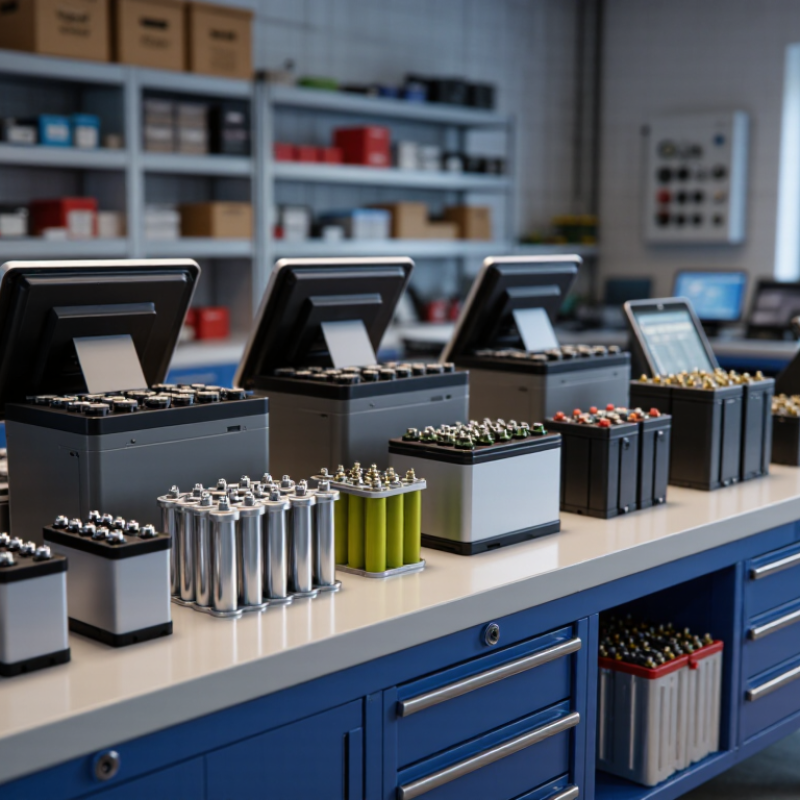
A POS machine battery is the rechargeable power source inside a portable payment terminal. It keeps the screen, card reader, printer, and wireless connection working away from a wall outlet. In busy stores, reliable power protects checkout speed and customer confidence. One unexpected shutdown can interrupt several transactions.
Battery performance depends on more than capacity. Voltage must match the terminal’s circuit design. The protection board should control overcharging, deep discharge, overheating, and short circuits. Lithium-ion cells are common because they offer useful energy in a compact space. However, high capacity alone does not guarantee longer service. Poor charging control can reduce battery life quickly.
During supplier evaluations, buyers should check cycle-life reports, cell traceability, temperature testing, and quality-control records. Standards such as IEC 62133 and UN 38.3 may support safer transport and product evaluation, depending on the target market. The connector, housing fit, and replacement process also deserve close attention. A battery that fits badly may loosen after repeated handling. That detail matters.
Manufacturers serving the Chinese POS battery market may offer different chemistry options, custom labels, and production volumes. Their real value appears in testing consistency and after-sales response. I would request samples before approving large orders. Even technical documents can contain optimistic figures. Field testing remains necessary, especially in crowded shops with frequent charging and heavy daily use. Perfect batteries do not exist. A careful selection process reduces avoidable failures.

China Top 10 POS Machine Battery Manufacturers?
When evaluating Chinese POS battery manufacturers, look beyond production volume and attractive quotations. Check battery chemistry, rated capacity, cycle life, and charging temperature. A reliable supplier should provide recent test reports, cell traceability, and clear protection parameters. Ask how each batch is tested, not only how the factory looks.
Request samples from different production dates. Test them in real POS devices, especially during long shifts and repeated charging. Measure voltage stability, charging speed, heat, and usable capacity. Review quality systems, material inspection, aging tests, and failure records. Certifications should match your market and product requirements. A written warranty also matters, but its terms must be practical and measurable.
Tips: Ask for a process flow, sample test data, and a small pilot order. Confirm connector dimensions and battery fit before mass production. Keep communication records. One overlooked detail can delay an entire shipment. A polished factory tour may still hide weak process control, so independent verification is wise. No checklist is perfect. Reflect on your own testing method, too, because poor testing can create false confidence.
| No. | Evaluation Factor | Recommended Benchmark for POS Batteries | Evidence to Request | Weight |
|---|---|---|---|---|
| 1 | Battery Chemistry | Rechargeable lithium-ion or lithium-polymer cells with stable discharge performance and an integrated protection circuit. | Cell specification, safety data sheet, protection-circuit design, and sample test results. | 12% |
| 2 | Voltage and Capacity Matching | Common POS battery configurations include approximately 3.7 V nominal voltage and capacity ranges from about 1,000 mAh to 5,000 mAh, depending on device size and operating time. | Electrical drawings, rated-capacity report, discharge curves, and compatibility confirmation. | 12% |
| 3 | Protection and BMS Functions | Protection against overcharge, over-discharge, overcurrent, short circuit, and abnormal temperature conditions. | Protection-circuit schematic, limit settings, abnormal-condition test records, and firmware or communication details when applicable. | 12% |
| 4 | Safety and Transport Compliance | Products should be tested according to applicable lithium-battery transport requirements, including UN 38.3, with documentation suitable for international shipment. | Current UN 38.3 test summary, safety data sheet, transport classification, and packaging specifications. | 14% |
| 5 | Quality Management System | A documented production and quality system, preferably certified to ISO 9001, with traceability from cells and components to finished battery packs. | Valid certificate, factory audit report, incoming-inspection records, and lot-traceability procedure. | 10% |
| 6 | Cycle Life and Reliability | A clearly defined cycle-life test at specified charge, discharge, temperature, and end-of-life conditions; the result should be validated on the final pack design. | Cycle-life curves, aging conditions, retention criteria, reliability plan, and sample failure analysis. | 10% |
| 7 | Customization Capability | Ability to customize dimensions, connector type, wire length, protection settings, labeling, and communication interfaces for specific POS terminals. | Engineering drawings, prototype samples, tooling quotation, change-control process, and customization lead time. | 10% |
| 8 | Production Capacity and Lead Time | A supplier should be able to provide a realistic prototype schedule, stable mass-production capacity, and documented control of component availability. | Monthly capacity statement, production schedule, standard and customized lead times, and delivery-performance records. | 8% |
| 9 | Testing and Traceability | Each production lot should be checked for voltage, capacity, internal resistance, appearance, insulation, connector polarity, and protection performance. | Inspection standards, automated-test records, calibration certificates, lot codes, and corrective-action reports. | 7% |
| 10 | Commercial Terms and After-Sales Support | Transparent pricing, reasonable minimum order quantities, warranty terms, technical support, replacement policy, and effective communication during product changes. | Formal quotation, warranty policy, sample terms, service-level commitments, and customer-reference checks. | 5% |
| Total Evaluation Weight | 100% | |||
China’s Top 10 POS Machine Battery Manufacturers
China’s top 10 POS machine battery manufacturers are often selected for consistency, customization, and production control. A reliable supplier should understand compact lithium battery design, not only assembly. In field testing, battery size, connector position, and charging temperature can affect daily performance. Common POS batteries use lithium-ion or lithium-polymer cells, with capacities around 2,000 to 3,000 mAh. However, capacity alone proves little. A stable battery should support repeated charging, secure protection circuitry, and steady output during receipt printing and wireless payments.
The strongest manufacturers usually provide samples, electrical test reports, and traceable production records. They should explain cycle testing, overcharge protection, short-circuit control, and shipping documentation. Quality audits can reveal details that online catalogs hide, such as uneven welding or weak cable strain relief. Some suppliers offer excellent samples but inconsistent mass production. That gap deserves attention. A factory visit or independent inspection may prevent expensive replacements later. No ranking is permanent; pricing, materials, and technical teams change over time.
Tips: Ask for a sample before signing a large order. Check voltage, capacity, connector fit, charging time, and operating temperature. Request safety documentation and batch records. Test the battery inside the actual POS device, not on a laboratory bench alone. Keep written specifications. Small omissions can become large service problems.
Industry-level technical reference for POS battery sourcing. Company names and brand-specific data are excluded.
The chart compares nominal voltage values of rechargeable battery chemistries commonly considered for POS terminals. Lithium-ion and lithium-polymer cells are widely used in portable payment devices, while lithium iron phosphate offers stronger thermal stability and a longer service-life profile but a lower nominal voltage.
When comparing China’s top ten POS machine battery manufacturers, chemistry deserves close attention. Lithium-ion cells offer strong energy density and support slim terminals. Lithium-polymer designs allow flexible shapes around screens and circuit boards. Lithium iron phosphate provides better thermal stability, but usually needs more space. Capacity alone misleads.
In field evaluations, I check voltage stability during receipt printing, wireless payments, and repeated screen use. A reliable battery should include overcharge, over-discharge, short-circuit, and temperature protection. Cycle-life data matters more than a large milliamp-hour figure. Ask whether testing reflects real POS workloads, not only laboratory conditions. Fit matters.
Product features also separate capable suppliers from ordinary factories. Compare connector quality, cell matching, charging speed, operating temperature, and replacement availability. A clear datasheet should state nominal voltage, rated capacity, dimensions, weight, and test conditions. Traceable quality records improve confidence. I also examine sample consistency across several production batches. One sample proves little. Fast charging may reduce service downtime, yet it can increase heat and long-term stress. That trade-off needs measurement. My comparison would remain incomplete without checking safety documentation, transport requirements, and warranty handling. Manufacturers may publish impressive cycle numbers, but actual results can vary with storage temperature, charger design, and daily usage.
Choosing among China’s top ten POS machine battery manufacturers requires more than comparing prices. A suitable supplier should understand your terminal’s voltage, capacity, connector, dimensions, and charging limits. Ask for samples before placing a large order. Check whether the battery fits securely inside the device, without pressure on the casing or cables. Experienced suppliers should provide clear datasheets, production records, and test results.
Reliability appears during repeated use. Request cycle-life data, temperature testing, protection functions, and consistency reports from different batches. Confirm whether the factory controls cell sourcing, assembly, and final inspection. Independent certifications and transport documents also deserve careful review. A supplier may promise fast delivery, but lead times can change during peak seasons. Get production schedules in writing. Higher capacity is not always better. I once saw a battery with impressive numbers that caused heat and fitting problems. The specification looked good; the application did not.
Tips: Compare at least three samples under real POS workloads. Test printing, scanning, wireless communication, and charging together. Measure operating time, surface temperature, and charging stability. Ask how defective units are handled. Read the warranty terms carefully. A responsive technical team matters when a connector or firmware setting changes. Do not select the lowest quotation automatically. It may hide weaker cells, limited testing, or inconsistent after-sales support. Keep one approved sample for future batch inspections.
Content © 2025 Komatsu. All Rights Reserved