How to Choose an Injection Molding Machine With Robot?
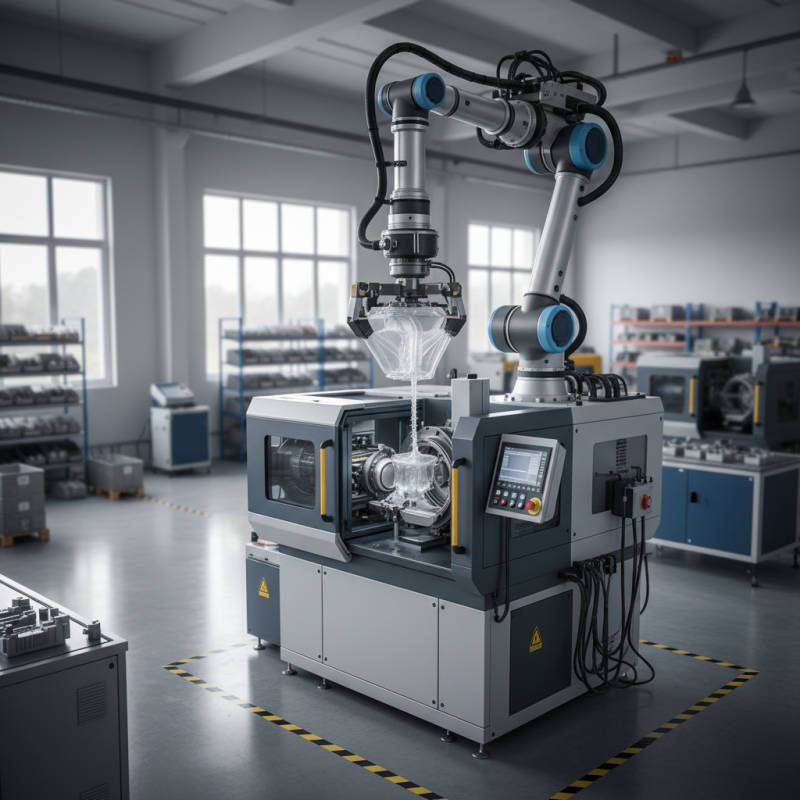
Choosing an Injection Molding Machine With Robot can seem daunting. Integrating robotics into this process enhances efficiency. It can automate tasks and reduce cycle times. A robotic arm picks parts swiftly. This integration transforms the traditional molding approach.
However, not every machine fits every need. Considerations include production volume and part complexity. Some machines offer advanced features, while others may lack versatility. Think about future demands too. A machine that suffices today might struggle tomorrow.
Evaluating a potential Injection Molding Machine With Robot involves many factors. Think about overall costs, including maintenance. Reflect on your facility space and layout. It can be overwhelming, yet taking time to assess these elements pays off.
Understanding Injection Molding Machines and Their Functions
Injection molding machines are pivotal in manufacturing plastic products. They transform raw plastic into detailed components. Understanding their functions can vastly influence production efficiency. The global injection molding market is projected to reach USD 335 billion by 2025, indicating robust demand.
Injection molding machines generally consist of two primary parts - the injection unit and the clamping unit. The injection unit melts plastic pellets and injects them into a mold. Meanwhile, the clamping unit holds the mold together under pressure. Recent reports show that energy-efficient machines can reduce operational costs by up to 30%. However, achieving the right balance between speed and quality is often challenging.
The integration of robots into injection molding processes enhances precision and efficiency. Robots can handle tasks such as part removal and packaging. Automation improves production rates but requires careful programming. A misaligned robot can disrupt the entire cycle. In a world aiming for greater productivity, these subtle complexities must be addressed for smoother operations.
Injection Molding Machine Performance Comparison
Identifying the Key Features of Injection Molding Machines
When selecting an injection molding machine with a robot, understanding key features is crucial. These machines come with a variety of specifications that influence efficiency and performance. One of the primary aspects is the clamping force. It needs to be sufficient for the materials you plan to use. Not all materials require the same force. Oversizing pressure might lead to unnecessary energy consumption.
Another important feature is the injection speed. High-speed machines can enhance production rates. However, they may also increase wear on components. Balance is key here. Look for a machine that suits your specific production needs. The size and complexity of your parts matter.
**Tip**: Always assess the automation options. A machine with a flexible robot system can adapt to different tasks efficiently.
Energy efficiency is another consideration. Some machines now offer eco-friendly modes. These could save costs in the long run but may require a higher initial investment.
**Tip**: Consider maintenance requirements. Some machines might have complex service needs, increasing downtime over time. Ensure you have the support infrastructure for optimal performance.
Selecting the Right Robot for Your Injection Molding Application
When selecting a robot for your injection molding application, consider its functionality and compatibility. The robot should match your specific production needs. For example, some tasks require high precision while others focus on speed. It’s essential to identify what works best for your operations.
Look into the types of robots available. Articulated robots offer flexibility for complex tasks. Cartesian robots provide straightforward movements and can handle heavy loads. If your production line changes often, a collaborative robot might be a good choice. These robots can safely work alongside humans, adapting to various tasks. However, they may lack the speed of traditional robots.
Budget is another factor. Investing in a robot can be costly. However, cheaper options may lead to more problems down the line. Calculate the total cost of ownership, including maintenance and operation. You might find that a more expensive robot pays off through increased efficiency and reduced downtime. Reflect on the long-term impact of your choice.
Integrating the Robot with the Injection Molding Machine
Integrating a robot with an injection molding machine can greatly enhance production efficiency. This combination allows for automation in material handling, part removal, and assembly processes. A well-integrated robot can work seamlessly with the machine, reducing human error and cycle times. However, the integration process requires careful planning and execution.
One challenge often faced is the compatibility of the robot’s software and the injection molding machine’s controls. Misalignment can lead to errors, downtime, and even damage to both systems. Engineers must ensure that all components communicate effectively. A solution may involve customizing interfaces or even reprogramming the robot. This task can be time-consuming and may require trial and error.
Moreover, safety considerations cannot be overlooked. The robot and the injection molding machine should be equipped with sensors and emergency stop features. These are essential to protect operators and prevent accidents. Implementing safety protocols is crucial but can sometimes be an afterthought. Regular reviews and updates to safety measures can significantly mitigate risks. Balancing efficiency and safety is an ongoing challenge in automation.
Evaluating Cost-Effectiveness and ROI of the Setup
When evaluating the cost-effectiveness of an injection molding machine with a robot, understanding the initial investment and long-term ROI is key. The average cost of such a setup can range from $100,000 to $200,000. However, lifecycles often extend for over ten years. This means that by calculating the annual operating cost, companies can break even in about two to three years.
Labour savings are a significant consideration. By automating production, firms may reduce labor costs by around 30%. A recent report indicates that companies incorporating automation see a productivity increase of up to 40%. Yet, the initial costs and ongoing maintenance must be weighed against these savings.
Another critical factor is the adaptability of the setup. With rapid technological advancements, older models can quickly become obsolete. This creates a dilemma. Investing in the latest technology may enhance productivity but generate recurring costs as systems evolve. Regular assessments can determine if the ROI remains favorable amid changing market trends. Procurement decisions must account for both current needs and future flexibility in production capabilities.