How to Choose the Best Aerial Lifts for Your Projects?
Choosing the right Aerial Lifts for your projects can be challenging. These machines offer unique capabilities, but not all models fit every task. Understanding the specifications and the intended application is crucial. Aerial Lifts come in various types, such as scissor lifts, boom lifts, and more. Each type has its strengths and limitations.
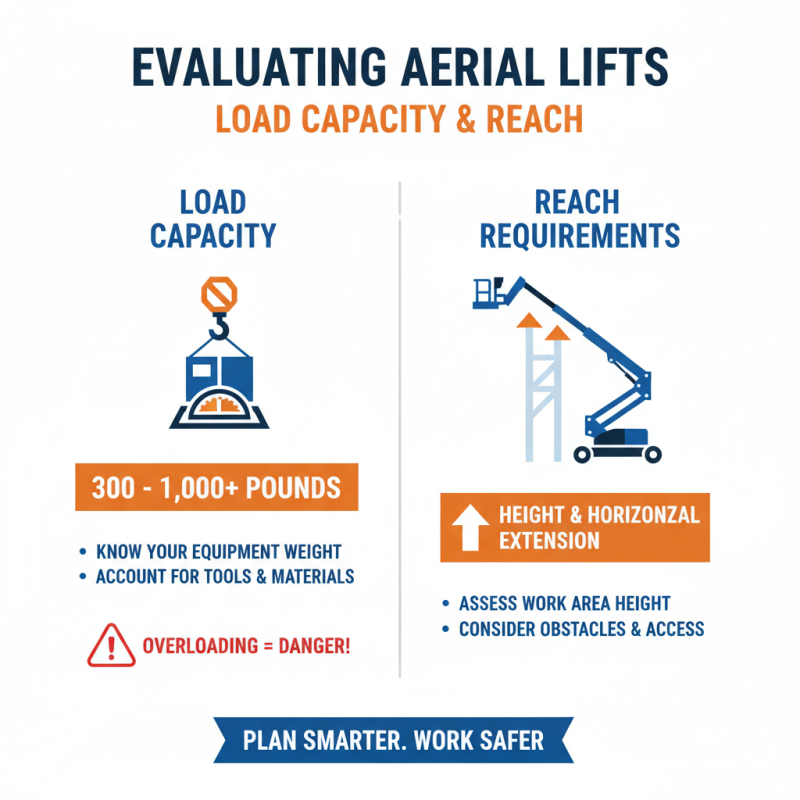
Accurate decisions depend on the project needs. Consider the height, weight capacity, and work environment. For example, a narrow scissor lift can be perfect for tight spaces, while a boom lift may be necessary for increased reach. However, many overlook the importance of ground conditions. Soft or uneven terrain can pose risks.
Moreover, it’s vital to account for operator training and safety measures. Many accidents occur due to lack of experience. Aerial Lifts can be powerful tools, but improperly used, they become dangerous. Reflecting on these factors will lead to better choices. Strive for a lift that not only meets your project’s demands but also promotes safety and efficiency.
Understanding Different Types of Aerial Lifts Available in the Market
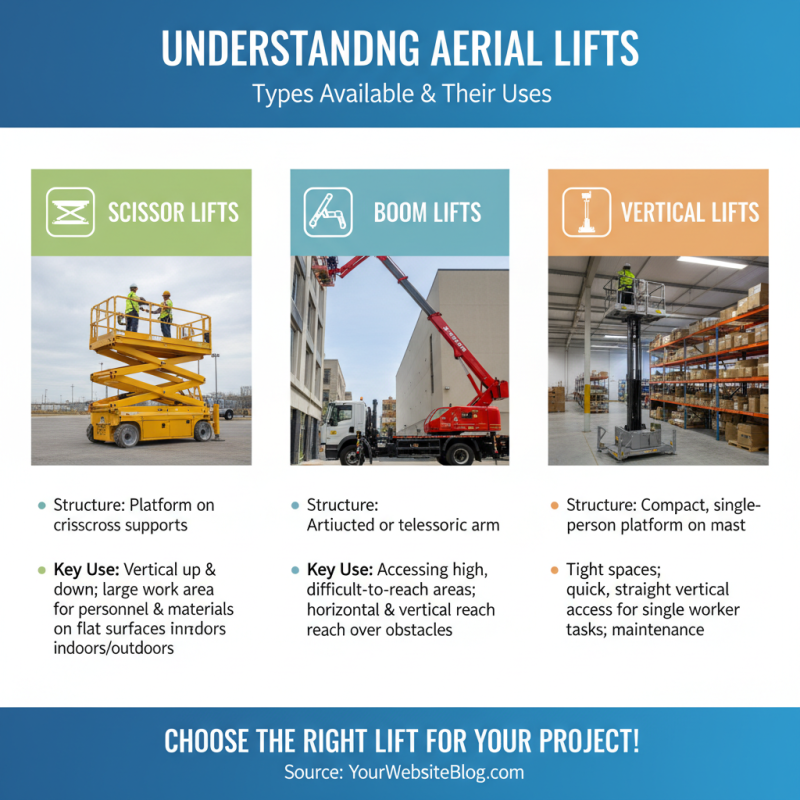
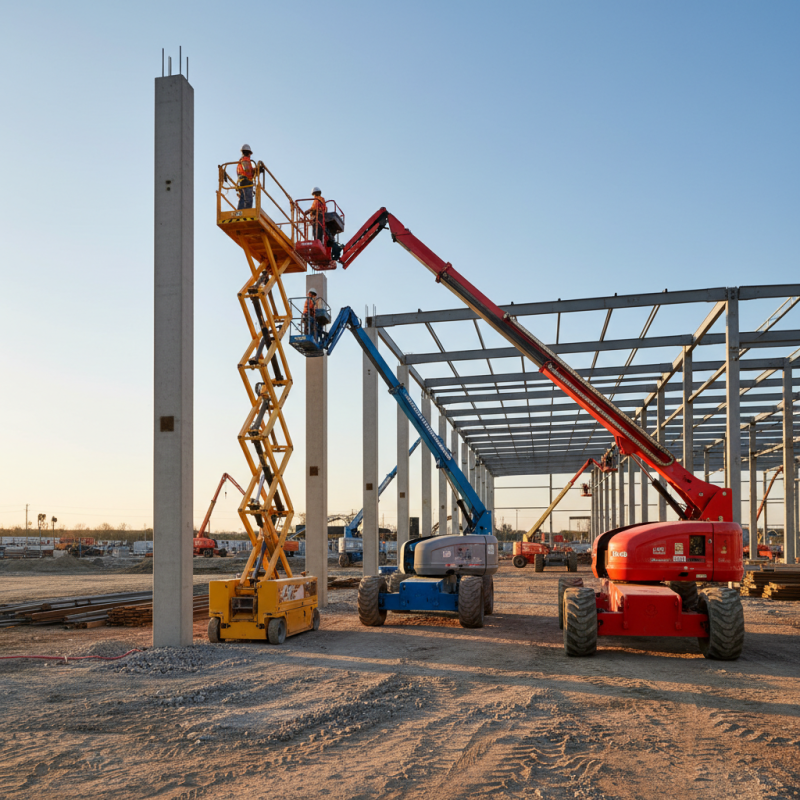
When choosing the best aerial lifts for your projects, it’s crucial to understand the different types available. Aerial lifts vary in structure, height, and functionality. The most common types include scissor lifts, boom lifts, and vertical lifts. Each serves a unique purpose and offers distinct advantages.
Scissor lifts are ideal for indoor tasks. They provide a stable platform and can reach heights of up to 50 feet. Boom lifts, on the other hand, have extendable arms. They are suitable for outdoor work, allowing you to reach high and hard-to-access areas. Vertical lifts are compact and work well in tight spaces. They are great for light-duty applications.
Tips:
Always assess the work environment before selecting a lift. Consider factors like space limitations, surface type, and height requirements. Additionally, ensure that operators undergo proper training. Safety must be the priority at all times. Don't overlook maintenance. Regularly inspect your equipment to avoid unexpected breakdowns and ensure reliability. Choosing the right aerial lift can make a significant difference in project efficiency and safety.
Key Factors to Consider When Selecting Aerial Lifts for Specific Projects
Selecting the right aerial lift for your project requires careful evaluation of several key factors. Understanding the working height needed is crucial. According to the American National Standards Institute (ANSI), a safe working height should account for both the lift height and any required clearance. For example, if your project involves working on a building façade, consider both the lift's maximum height and any obstructions.
Another vital aspect is the lift's weight capacity. A study from the International Powered Access Federation (IPAF) indicates that choosing a lift with insufficient capacity can lead to accidents. It’s essential to assess the total weight of equipment and personnel on the lift. Balance is key. Factors influencing lift stability include terrain type and weather conditions. It's easy to overlook these details, but they are critical to safe operation.
Space limitations at the job site also play a significant role. A report by the National Safety Council emphasizes that inadequate space can hinder maneuverability and increase risk. Remember to choose a lift that can navigate tight corners and fit in limited spaces. Sometimes, this may require a specific type of aerial lift, such as a compact lift, that may not be your first choice but is better suited for challenging environments. Careful consideration of these factors can greatly improve safety and efficiency in your projects.
How to Choose the Best Aerial Lifts for Your Projects?
This bar chart provides a visual representation of key factors to consider when selecting aerial lifts for specific projects, including work height, max load capacity, operating range, setup time, and cost. Analyze these dimensions to make informed decisions for your project needs.
Safety Standards and Compliance for Aerial Lifts in Construction Sites
Aerial lifts play a critical role in construction, but safety standards are paramount. The Occupational Safety and Health Administration (OSHA) sets guidelines that protect workers. According to the Bureau of Labor Statistics, aerial lift incidents account for 20% of construction fatalities. This statistic underscores the importance of compliance with established safety standards.
Before utilizing aerial lifts, ensure they meet safety requirements outlined by OSHA. Regular inspections and maintenance help in identifying potential hazards. Operators must be trained and certified. A study by the National Institute for Occupational Safety and Health (NIOSH) shows that proper training can reduce accidents by up to 30%. Such training equips operators with crucial skills to handle emergencies effectively.
Understanding the equipment’s specifications is vital. Aerial lifts should be chosen according to the job site’s conditions. Consider factors such as load capacity and working height. A mismatch can lead to failures and accidents. Not all aerial lifts are created equal; choosing the right one can enhance safety. Evaluate your project’s demands critically and ensure that safety is never compromised.
Cost Analysis: Evaluating Rental vs. Purchase of Aerial Lifts
When deciding between renting or purchasing aerial lifts, cost analysis is crucial. Rental costs might seem lower initially. However, frequent rentals add up quickly. For short-term projects, renting offers flexibility. You avoid maintenance responsibilities and storage issues. This can lessen upfront financial burden, especially if budgets are tight.
On the other hand, purchasing equips you for long-term usage. You gain control over maintenance and availability. Frequent users often find that buying becomes more economical over time. But upfront costs can be high. Not all projects justify this investment, especially if lift usage is sporadic. Reflecting on your project needs and timeline is essential for informed decisions. Consider both immediate financial implications and long-term project forecasts.
How to Choose the Best Aerial Lifts for Your Projects? - Cost Analysis: Evaluating Rental vs. Purchase of Aerial Lifts
| Lift Type |
Rental Cost (Per Day) |
Purchase Cost |
Maintenance Cost (Annual) |
Expected Lifespan (Years) |
Break-even Point (Days) |
| Articulating Boom Lift |
$300 |
$50,000 |
$2,500 |
10 |
167 |
| Scissor Lift |
$200 |
$25,000 |
$1,500 |
8 |
125 |
| Telehandler |
$250 |
$45,000 |
$2,000 |
9 |
180 |
| Mast Lift |
$150 |
$15,000 |
$1,000 |
6 |
100 |