Choosing a Commercial Drain Cleaning Machine starts with the pipes you service, not the biggest motor on the showroom floor. A narrow kitchen branch, a long municipal lateral, and a grease-heavy restaurant line place different demands on a machine. Match cable or hose diameter, working length, and cutting attachments to the pipe sizes and blockages you encounter. Too much machine can be awkward in tight rooms. Too little can leave a stubborn obstruction untouched.
Commercial drain-service specialist Alex Morgan puts the principle this way: “Choose for the toughest line you clean regularly, but keep control and access in mind.” Treat that as a practical selection rule, not a substitute for checking equipment specifications. Compare drum and sectional machines, then consider portability, setup time, operator training, and maintenance. A heavy unit may feel steady beside a floor drain, yet become a burden on stairs. A compact model may fit a van neatly, but its reach could fall short on longer runs.
Look closely at real job conditions. Measure access points, note common pipe diameters, and consider whether power outlets are available. Ask suppliers about compatible cables, replacement parts, and service support. These details matter on a wet morning, when a blocked line is backing up and the crew needs dependable equipment. Price matters, too. But the lowest purchase cost may not reflect repair time or downtime. Be honest about your workload; many buyers overestimate the largest jobs and underestimate daily handling. A sound choice balances capacity with control.
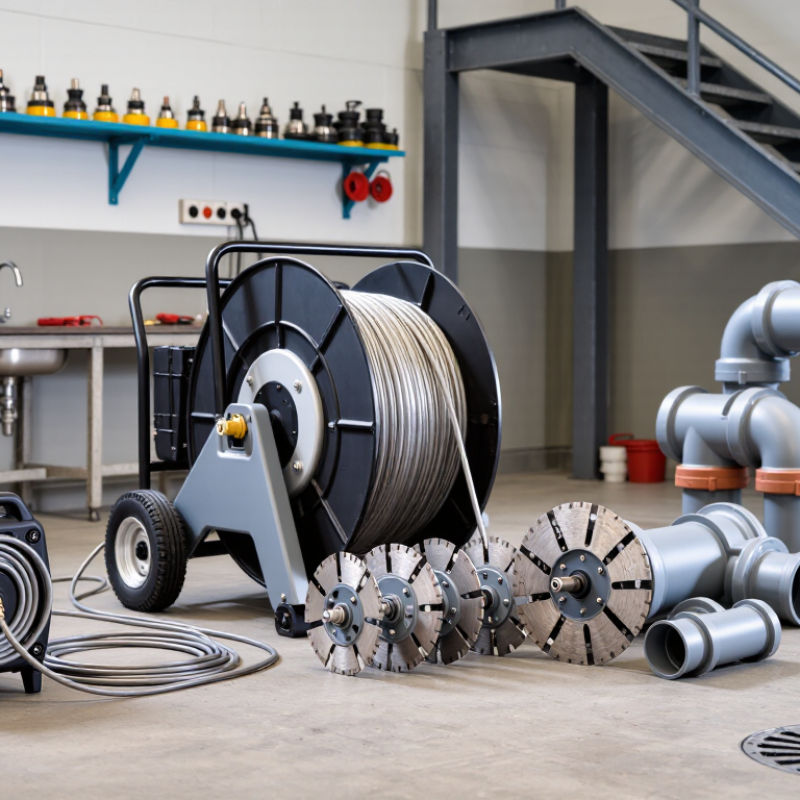
A commercial drain cleaning machine should match the pipe, not just the size of the building. Identify whether you are clearing a floor drain, kitchen line, roof drain, or main sewer. These systems may differ in pipe diameter, material, access, and direction of flow. A narrow branch line needs a different cable and head than a large main line. Small detail. Big consequences.
Check the pipe size using reliable plans or measurements at an accessible cleanout. Note whether the line is cast iron, clay, PVC, or another material; older or fragile pipes may need a gentler approach. Then assess the blockage. Grease often coats kitchen lines, while roots or heavy scale may require a different cutting head and machine capacity. A water jetter can be useful for certain deposits, but only when the pipe condition and site setup are suitable. Standing water alone does not reveal the cause.
Consider the route, too. Long runs, tight bends, and awkward cleanout access affect cable length and handling. If the blockage keeps returning or its location is unclear, a camera inspection can help prevent repeated guesswork. It is easy to overread one clue. A neat measurement can still mislead when old repairs or hidden bends change the line.
| Drain Type / Typical Pipe Size | Common Blockage Conditions | Suitable Machine Type | Typical Cable or Tooling | Selection Considerations |
|---|---|---|---|---|
| Lavatory, sink, or small branch line Approximately 1¼–2 in (32–50 mm) | Hair, soap residue, light grease, and small soft obstructions | Compact handheld or small drum machine | Approximately ¼–⅜ in (6–10 mm) cable; small retrieving or boring head | Choose a flexible cable suited to the pipe diameter and bends. Use care with older or fragile piping. |
| Commercial kitchen sink or branch drain Approximately 1½–3 in (40–75 mm) | Grease, food residue, soap, and recurring soft buildup | Small-to-medium drum or sectional machine | Approximately ⅜–½ in (10–13 mm) cable; grease-cutting or scraping head where appropriate | For heavy grease, confirm the machine and tooling can clear the full pipe diameter. A camera inspection may help identify persistent buildup. |
| Floor drain or short branch line Approximately 2–4 in (50–100 mm) | Sludge, sediment, debris, roots near the connection, or accumulated residue | Medium drum or sectional machine | Approximately ½–⅝ in (13–16 mm) cable; retrieving head, cutter, or descaling tool matched to the obstruction | Check drain-trap layout, access, and pipe material. Use a cutter only when the pipe condition and obstruction type are understood. |
| Toilet branch or building drain Approximately 3–4 in (75–100 mm) | Paper, wipes, foreign objects, scale, or roots in downstream piping | Medium or heavy-duty sectional machine; use a toilet-specific machine when access is through the fixture | Approximately ⅝–¾ in (16–19 mm) cable for suitable cleanouts; retrieval or cutting head selected for the blockage | Protect fixtures and finishes. Do not force a cable through a suspected solid object; retrieve it or inspect the line as appropriate. |
| Building sewer or main drain Approximately 4–6 in (100–150 mm) | Tree roots, grease, scale, heavy deposits, or recurring blockages | Heavy-duty sectional machine or suitable main-line drum machine | Approximately ⅝–⅞ in (16–22 mm) cable, depending on pipe size and machine capacity; root cutter or descaling head as appropriate | Match cable stiffness and cutter diameter to the pipe. Inspect uncertain, damaged, or repeatedly blocked lines before aggressive cutting. |
| Large commercial sewer or storm drain Approximately 6 in (150 mm) and larger | Sand, silt, leaves, sediment, grease, roots, or accumulated debris | High-pressure water jetter for suitable deposits; heavy-duty sectional or drum equipment for accessible mechanical obstructions | Jetter hose and nozzle selected for pipe size, material, and debris; mechanical cable and tooling sized to the machine and line | Confirm access, downstream discharge, and pipe condition. Jetting may move debris downstream, so provide a clear path for its removal. |
Selection note: Pipe sizes and cable ranges are typical starting points, not universal specifications. Confirm the pipe diameter, material, access point, run length, bends, machine capacity, and blockage type before operating. Follow the equipment instructions and applicable site safety procedures.