How to Choose the Right Power Capacitor for Global Sourcing?
Selecting the right Power Capacitor for global sourcing requires more than comparing unit prices. Electrical performance, supplier reliability, compliance, and long-term availability all affect the final decision. A capacitor that looks suitable on paper may fail under heat, vibration, or unstable voltage conditions.
Real-world experience shows why application details matter. A motor drive may need high ripple-current tolerance and controlled self-healing behavior. A power-factor correction system may require precise capacitance, low losses, and dependable thermal performance. Check the rated voltage, capacitance tolerance, frequency range, ESR, insulation level, and expected service life. Small errors can create large maintenance costs.
Supplier evaluation deserves equal attention. Request test reports, traceability records, production samples, and clear warranty terms. Confirm whether the manufacturer follows recognized quality systems and can maintain consistent specifications across multiple batches. Review packaging carefully, especially for long-distance transport through humid ports. One damaged carton can reveal weaknesses in the entire logistics process.
There is no perfect checklist. I have seen buyers focus heavily on price and overlook replacement lead times. That decision often appears reasonable until production stops. A useful sourcing process combines laboratory data with factory audits, sample testing, and honest communication with engineering teams. Compare total ownership cost, not only the purchase quotation. When uncertainty remains, document it and test again. The best choice is usually the Power Capacitor that performs reliably in its actual operating environment, not the one with the most attractive headline specification.
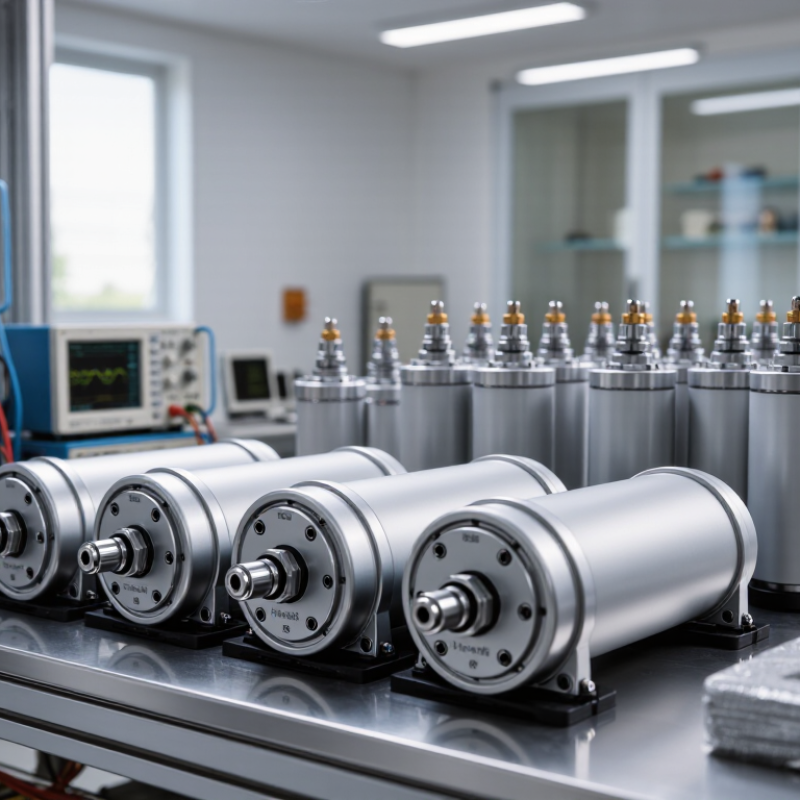
Define the Application, Electrical Load, and Operating Environment
How to Choose the Right Power Capacitor for Global Sourcing?
Define the application before comparing prices or catalog ratings. A capacitor for motor power-factor correction faces different demands than one used in a harmonic filter. Record the load type, operating cycle, switching frequency, and expected reactive power. Is the load steady, or does it change every few seconds? That detail affects heating, inrush current, and service life. Small errors here become expensive later.
Measure the electrical load under real operating conditions. Confirm system voltage, frequency, required kVAr, current, tolerance, and temporary overvoltage. Check whether variable-speed drives, welders, or rectifiers create harmonics. Standard capacitors may overheat in that environment. Select suitable protection, discharge performance, and switching equipment. A rushed selection can look correct on paper.
The operating environment needs equal attention. Note ambient temperature, altitude, humidity, dust, vibration, and enclosure ventilation. A capacitor installed beside a hot motor may experience far more stress than laboratory data suggests. Request clear datasheets, routine test records, material details, and traceable production information from suppliers. Compare test conditions carefully; they are not always identical. I have seen sourcing teams overlook cable length and cabinet airflow. That was a costly assumption. Leave room for uncertainty, and verify the design with field measurements before placing a large order.
Select the Required Capacitance, Voltage, and Frequency Ratings
Choosing the right power capacitor starts with the required capacitance, not the catalog size. For a three-phase system, estimate kvar from the present and target power factors: Qc = P(tanφ1 − tanφ2) Confirm the result with measured load data. A neat calculation can mislead. Motors rarely operate at one fixed load.
Check the voltage rating carefully. A 400 V capacitor on a 400 V network may face overvoltage from harmonics and poor regulation. Many engineers select a higher rated unit after reviewing operating peaks, temperature, and switching conditions. IEC 60831-1 addresses self-healing shunt capacitors and their performance requirements. Its guidance should be matched with the actual installation environment. Also verify capacitance tolerance, discharge time, enclosure temperature, and terminal clearance.
Frequency deserves equal attention. Standard systems usually operate at 50 or 60 Hz, but variable-speed drives can inject significant harmonic currents. IEEE 519-2022 identifies a 5% total voltage distortion planning limit for systems below 1 kV. Capacitors can amplify resonance instead of correcting it. Detuned reactors may be necessary. The IEA Electricity 2024 report recorded 2.2% global electricity-demand growth in 2023 and projects average annual growth of 3.4% through 2026. That expansion increases pressure on correction equipment and grid stability. During sourcing, request factory test records, frequency ratings, harmonic suitability, and capacitor loss data. I still recheck every kvar calculation against field measurements. Load behavior changes.
Compare Capacitor Technologies, Materials, and Construction Types
How to Choose the Right Power Capacitor for Global Sourcing?
Choosing a power capacitor starts with its electrical duty, not its catalog appearance. In field evaluations, polypropylene film capacitors often suit high-frequency switching and power-factor correction. Their low losses help control heat inside compact cabinets. Aluminum electrolytic capacitors offer high capacitance in smaller packages, but their service life depends strongly on temperature and ripple current. Ceramic capacitors respond quickly, although their capacitance can shift under voltage and temperature.
Materials matter more than many buyers expect. Metallized film can self-heal after minor dielectric damage. Foil construction usually provides stronger pulse handling, but it may require more space. Dry-type designs reduce leakage concerns and simplify installation.
Oil-filled designs can manage demanding thermal conditions, yet shipping, sealing, and environmental requirements need closer review. Small details matter.
Construction should match the installation site. Check terminal spacing, pressure-disconnection features, cooling airflow, altitude, humidity, and expected switching frequency. Request test reports against applicable international standards, batch traceability, and clear aging data. A lower price can win the spreadsheet and lose the maintenance budget.
I have seen suppliers compare capacitance only, while ignoring harmonic current and enclosure temperature. That was a costly oversight.
Supplier claims also need independent verification. Some documents look complete, but key test conditions remain unclear. Ask for them.
Verify Safety Standards, Certifications, Reliability, and Service Life
When sourcing power capacitors globally, safety evidence deserves more attention than the lowest quotation. The IEA Electricity 2024 report forecasts global electricity demand to rise by 3.4% annually from 2024 to 2026. Higher demand can increase stress on correction and filtering equipment. Ask suppliers for test reports covering voltage, temperature, humidity, and discharge performance. IEC 60831-1 applies to self-healing power capacitors, while IEC 61071 addresses capacitors for power electronics. The correct standard depends on the application.
Check every certificate’s scope, model number, factory address, and expiry status. A certificate for one capacitor series may not cover another series. Verify the document through the certification body’s public database. Require routine test records, batch traceability, and a written warranty. For outdoor installations, inspect sealing details and terminal insulation closely. Small cracks can become expensive failures. Very small details matter.
Service life should be supported by temperature-rise data, overload limits, and expected operating hours. Many engineers use a ten-degree temperature rule as a preliminary life estimate. It is not a guarantee. IEC endurance testing provides useful evidence, but field conditions remain different. Harmonics, frequent switching, poor ventilation, and overvoltage can shorten life sharply. Ask for failure-rate data from comparable installations, not only laboratory claims. I sometimes see impressive lifetime figures without the temperature assumptions. That deserves a second review. Also confirm spare-part availability, response times, and technical support across your destination markets. A reliable capacitor is not truly reliable if replacement support stops after shipment.
Evaluate Global Suppliers, Costs, Logistics, and Quality Control
Choosing a power capacitor for global sourcing requires more than comparing voltage, capacitance, and unit price. Supplier evaluation should begin with production experience, technical documentation, and traceable test records. Ask for insulation resistance data, thermal endurance results, and samples from the proposed production line. A polished datasheet helps, but it does not replace physical verification.
Look beyond the quotation. Calculate the landed cost, including tooling, packaging, inspection, insurance, duties, and inland transport. A cheaper capacitor may become expensive after urgent air freight or repeated replacements. Confirm lead times in writing, especially for customized voltage ratings or terminal designs. One missed shipment can interrupt an entire assembly schedule. Build some buffer.
Logistics planning should match the capacitor’s sensitivity to heat, moisture, and vibration. Use moisture-resistant packaging and check whether cartons can survive long warehouse storage. Before shipment, agree on sampling levels, electrical test methods, and rejection procedures. Independent inspection can verify dimensions, capacitance tolerance, leakage current, and visual defects before payment. Batch labels should connect each unit to raw materials and test dates.
Quality control is where global sourcing often becomes uncertain. Request corrective-action reports when failures occur, not just replacement promises. A supplier may pass an initial audit and still struggle after volume increases. That risk deserves attention. Recheck samples after three or six months. Standards are useful, but actual field performance remains the harder evidence. My own preference is a staged order, although this can slow purchasing and frustrate production teams.