
three part picture of forklifts

How to Choose a Sodium Hypochlorite Generator

Choosing a Sodium Hypochlorite Generator starts with the water, not the brochure. A unit that performs well in one plant may struggle with different salinity, temperature, or demand. Buyers should compare output capacity, power use, salt quality requirements, ventilation, maintenance access, and controls. Ask how the system handles changing demand during a busy operating shift. Look closely at the cell design, too. Scale on electrodes can affect output and cleaning schedules.

Water-treatment researcher Dr. David Sedlak is a relevant authority on water quality, though no source was provided for a direct quotation from him about generator selection. Rather than assign him an unverified quote, consider this practical selection principle: “Choose for the water and workload you actually have.” It is simple. It also deserves scrutiny: site conditions can change, and yesterday’s demand may not predict tomorrow’s.

A reliable assessment should include operating costs, expected service intervals, available technical support, and the operator’s ability to monitor performance. Request documented specifications and ask suppliers to explain assumptions behind their sizing recommendations. Check how the system signals low output or needs for maintenance. A clear answer matters. So does a realistic service plan. The right Sodium Hypochlorite Generator is not automatically the largest or most automated model. It is the system that fits the site’s water, staffing, and operating goals—and whose limitations are understood before installation.
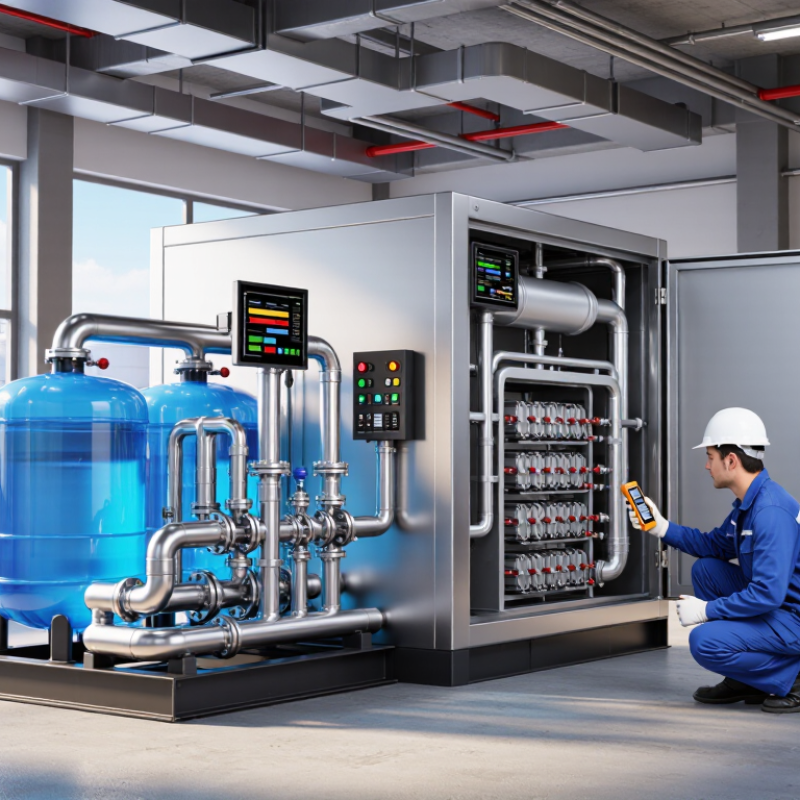
How to Choose a Sodium Hypochlorite Generator

Assess Required Chlorine Output and Daily Operating Demand

Assess required chlorine output against the highest credible daily demand, not the monthly average. Calculate daily chlorine mass as flow in cubic metres per day × applied dose in milligrams per litre ÷ 1,000. Then divide by the generator’s planned operating hours to estimate its required hourly output. Include measured chlorine demand, contact needs, and time for cleaning or maintenance; the target residual alone does not equal the dose. Averages look tidy on spreadsheets. Real demand rarely does.

Use field data to refine the estimate. WHO drinking-water guidance identifies 0.2 mg/L free chlorine at the point of delivery as a minimum residual benchmark, but the appropriate operating target depends on the system and local requirements. The USGS report Estimated Use of Water in the United States in 2015 recorded about 39 billion gallons per day of public-supply withdrawals nationwide. That figure shows the scale of variation between systems; it cannot size an individual generator. Sample source water during seasonal changes, then check demand and residual at peak flow. Keep a margin for realistic peaks, not an unexplained oversized unit.

Tips: Log daily flow, dose, residual, and generator run hours for several weeks. Compare ordinary days with peak-demand days, then verify the calculated output through commissioning tests. If the records are thin, that uncertainty deserves attention.

Evaluate Feedwater Quality and Pre-Treatment Requirements

Feedwater quality can determine whether a sodium hypochlorite generator runs steadily or needs frequent cleaning. Check hardness, chloride, conductivity, iron, manganese, and suspended solids before selecting equipment. Hard water can leave scale on electrodes, while fine sediment may collect in narrow flow paths. Small changes matter. Test the actual water source, not just a regional water report.

Pretreatment depends on the generator’s design and the water analysis. A sediment filter may remove visible particles, but it will not reduce dissolved hardness. Softening or reverse osmosis may be appropriate in some systems; neither should be assumed necessary without checking the manufacturer’s feedwater limits. If salt is dissolved on site, salt purity also matters. Insoluble material can build up in the brine tank and interfere with consistent operation. Keep sample results and maintenance observations together.

Water quality can shift after heavy rain, seasonal changes, or a change in supply. A single test is useful, but it can also create false confidence. Measure key parameters at commissioning and repeat tests when performance changes. Watch for rising cell voltage, reduced output, or deposits on electrodes; these signs deserve investigation, not guesswork. Ask the supplier to confirm acceptable ranges and pretreatment needs for the specific system. I have seen a simple filter mistaken for a complete solution. It is not.

Compare Electrolytic Cell Design and System Capacity

How to Choose a Sodium Hypochlorite Generator
Compare Electrolytic Cell Design and System Capacity

Electrolytic cell design decides chlorine output stability. Check electrode coating, gap size, and current density. A tight gap can raise efficiency. It also raises scaling risk. Ask for the expected cleaning interval at your water hardness. My own mistake was trusting a rated output number. The real output dropped after three weeks. That lesson matters.

System capacity is more than a label. Match capacity to your peak daily demand and duty cycle. Include brine quality, power supply, cooling, and storage. A 10 kg/day unit may not deliver 10 kg every hour. Verify continuous output at your site temperature. Check flow rate and pressure drop. Small details bite. I still review maintenance access before capacity claims. That may seem basic, but access affects uptime.

Compare cell design and capacity together. A robust cell with weak system capacity will struggle. A large system with a poorly matched cell wastes power and chemicals. Request a site-specific output estimate. Ask for scaling data and spare parts lead time. Do not accept vague efficiency claims. My current view is cautious. Test under real brine and real downtime. The numbers should still make sense after a hard week.

Review Safety Features for Hydrogen, Chlorine, and Storage

A sodium hypochlorite generator produces hydrogen as part of its operation, so safe ventilation deserves close attention. Check that gas has a defined path outdoors and cannot collect beneath ceilings or inside cabinets. Confirm alarms, airflow monitoring, and electrical equipment match the site’s actual conditions. Small details matter. A fan may be present, yet blocked louvers or a failed sensor can leave a blind spot. Ask who tests these safeguards and how failures trigger shutdowns.

Chlorine is an abnormal-release hazard, particularly if hypochlorite contacts acids or equipment malfunctions. Keep incompatible chemicals physically separated, and review leak response, isolation points, and staff training. Storage needs equal care. Use compatible, clearly labeled tanks with secondary containment, and protect them from heat and direct sunlight, which can speed product breakdown. Tanks need suitable venting; do not assume a sealed container is safer. That is not enough. Check the storage area for drains, splash exposure, and a practical way to detect leaks. A checklist helps, but it can miss awkward site-specific risks. Have qualified personnel verify the design, sensor placement, and maintenance schedule against the generator’s operating instructions.

How to Choose a Sodium Hypochlorite Generator - Review Safety Features for Hydrogen, Chlorine, and Storage

Review area Safety feature to look for What to verify
Hydrogen management Designed ventilation and a safe hydrogen discharge path for the hydrogen produced during brine electrolysis. Confirm the design basis, ventilation rate, discharge location, and safeguards against hydrogen accumulating in enclosed or high-level spaces. Hydrogen is flammable and can form explosive mixtures with air.
Hydrogen detection and alarms Hydrogen detectors where the risk assessment identifies potential accumulation, with alarms and defined operator responses. Check detector location, alarm setpoints, calibration and test procedures, and whether alarms initiate appropriate actions such as stopping generation or increasing ventilation.
Ignition-source control Electrical equipment and installation suited to the hazard assessment, with ignition sources controlled near potential hydrogen-release points. Review the hazardous-area assessment, equipment ratings where applicable, bonding and grounding provisions, and restrictions on hot work and open flames.
Chlorine exposure risk Enclosed or controlled process connections, suitable room ventilation, and a chlorine-response plan based on the process hazard assessment. Although the process is intended to produce hypochlorite solution, assess credible chlorine release scenarios, including faults and contact with acids. Verify whether chlorine detection is needed for the installation.
Gas and liquid separation Process design that manages gas disengagement and prevents unsafe gas carryover into liquid lines or storage vessels. Ask for process and piping diagrams showing gas separation, vent routing, pressure relief, and safeguards against blocked or isolated vents.
Automatic shutdowns and interlocks Interlocks for abnormal operating conditions, such as loss of ventilation, high temperature, low or abnormal flow, or relevant gas alarms. Review the cause-and-effect logic, fail-safe behavior, manual emergency stop, restart requirements, and testing schedule. Confirm which trips are included in the supplied system.
Hypochlorite storage materials Tank, piping, seals, and fittings selected for the solution concentration, temperature, and service conditions. Obtain written chemical-compatibility guidance for all wetted materials. Sodium hypochlorite is corrosive, and compatibility depends on concentration, temperature, and material grade.
Storage conditions and stability Storage protected from excessive heat and direct sunlight, with inventory practices that limit prolonged storage of generated solution. Confirm the recommended storage temperature, expected solution strength over time, tank sizing, and monitoring plan. Sodium hypochlorite gradually decomposes, with decomposition generally faster at higher temperatures and concentrations.
Tank venting and pressure protection Storage vessels designed with appropriate venting and pressure/vacuum protection for the intended service. Verify that vents cannot be inadvertently blocked and are routed to a suitable location. Do not assume a storage tank can be sealed; confirm the design with the equipment supplier and site engineer.
Chemical segregation Physical separation of hypochlorite from acids, ammonia, and incompatible chemicals, with clearly identified transfer connections. Check the site layout, dedicated hoses and connections, labeling, and procedures that prevent accidental mixing. Acid contact can release chlorine gas; mixing with ammonia can form hazardous chloramines.
Leak containment and drainage Secondary containment and drainage arrangements compatible with the chemical and the facility’s spill-response plan. Verify containment capacity and construction against applicable local requirements and the site risk assessment. Confirm that spills cannot reach incompatible chemicals or uncontrolled drains.
Materials, training, and emergency readiness Accessible safety data, operating and maintenance instructions, appropriate personal protective equipment guidance, and documented emergency procedures. Confirm staff training, detector and ventilation maintenance, spill and exposure response procedures, and availability of current safety data sheets for the generated solution and process chemicals.

Use this checklist alongside a site-specific process hazard assessment, applicable regulations, and the generator manufacturer’s operating documentation.

Check Maintenance Needs, Power Use, and Lifecycle Costs

Choosing a sodium hypochlorite generator by purchase price alone can hide its real operating cost. Log cleaning hours, salt and water use, electrode replacements, and output consistency. Inspect the cell for scale and uneven deposits. Record electricity use per kilogram of available chlorine, using the same output conditions for each unit. Check ventilation and service access, too. Small details matter.

The 2001 Pump Life Cycle Costs guide, prepared by the U.S. Department of Energy with industry partners, puts energy near 40% and maintenance near 25% of typical pump-system lifecycle costs. These figures are not a forecast for electrolytic generators; they are a useful warning against comparing equipment on purchase price alone. The U.S. EPA’s Alternative Disinfectants and Oxidants Guidance Manual also offers operational context for evaluating disinfection systems. Build a cost sheet covering power, routine labor, replacement cells, salt, water, and downtime. A spreadsheet can still miss awkward cleaning access or gradual output drift. Ask operators to review the assumptions, then compare cost per unit of chlorine delivered.

How to Choose a Sodium Hypochlorite Generator

Compare maintenance needs, power use, and lifecycle costs using site-specific vendor quotes.

Illustrative model, not a market benchmark: assumes production of 100 kg of available chlorine per day for 365 days per year, electricity at $0.12/kWh, installed equipment cost of $45,000, and maintenance cost of $4,000 per year. The three scenarios use 3, 4, or 5 kWh per kg of available chlorine. Replace these assumptions with quoted system performance and local costs. Before choosing, also compare required cleaning frequency, maintenance labor, and cell replacement intervals. The 10-year estimate excludes water, salt, financing, and unplanned repairs.