
Choosing the right Stainless Steel Pipe in 2026 starts with the job it must perform, not the lowest quoted price. A pipe carrying clean water indoors faces different demands from one exposed to salt spray, chemicals, vibration, or high temperatures. The details matter.
This guide introduces the main factors buyers and project teams should compare before specifying or ordering pipe. These include stainless steel grade, operating conditions, pressure requirements, dimensions, wall thickness, manufacturing method, and surface finish. Each choice can affect service life, installation, and maintenance. A bright, polished sample can look reassuring, but appearance alone cannot confirm suitability.
Reliable selection depends on matching technical requirements with verified product information. Review current specifications and applicable project standards, and request documentation that identifies the material grade and manufacturing details. Check that dimensions and tolerances fit the design, especially where pipe connects to valves, fittings, or existing lines. If conditions are uncertain, ask a qualified engineer or materials specialist to review them.
Price still matters, of course. But choosing by price alone may create larger costs later. A common oversight is treating all stainless steel pipe as interchangeable; it is not. This introduction sets up a practical comparison of grades, applications, quality checks, and supplier questions, helping readers make a more informed decision for their specific project in 2026.
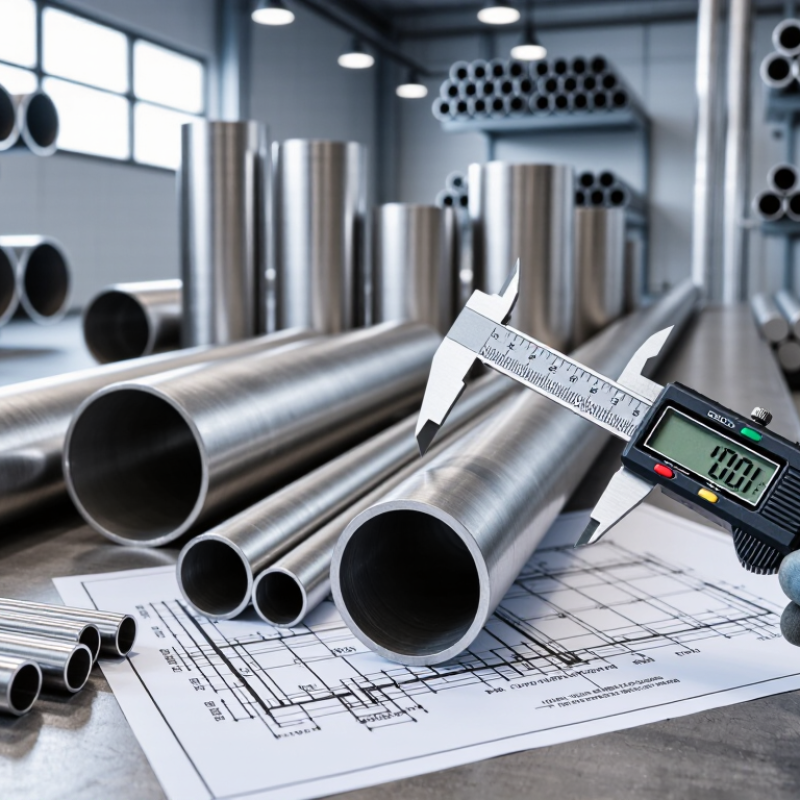
How to Choose the Right Stainless Steel Pipe in 2026?
Before comparing pipe schedules, define the service conditions under ASME B31.3. Record the design pressure and temperature, not just normal operating values. Include credible startup, shutdown, and upset conditions. Start with the process. The fluid matters, too: its composition and corrosiveness can affect material selection and corrosion allowance.
B31.3 design checks connect pressure, temperature, material properties, and required wall thickness. A pipe’s pressure capacity can change as temperature rises, so a nominal size or schedule alone cannot confirm suitability. Check the material’s allowable stress at the design temperature, then account for manufacturing tolerances, corrosion allowance, and applicable joint factors. Minimum design temperature deserves attention as well, particularly where toughness requirements may apply. Small details matter.
It is easy to overfocus on pressure; that shortcut is not enough. A spreadsheet may look tidy while overlooking a brief temperature spike or a corrosive cleaning cycle. Compare candidate stainless grades against the actual fluid and operating range, then verify dimensions and code requirements against the project’s governing B31.3 edition and specifications. Have a qualified piping engineer review the assumptions and calculations. If operating data are incomplete, flag the uncertainty rather than treating an estimate as a confirmed design condition.
| Assessment Area | Service Data to Define | Illustrative Example | ASME B31.3 Selection Check | Practical Decision |
|---|---|---|---|---|
| Design pressure | Maximum pressure expected at the component, including applicable operating, upset, startup, shutdown, and transient conditions. | A process line normally operating at 8 bar(g), with a credible maximum condition of 10 bar(g). | Establish the design pressure for the applicable location and evaluate the pressure effects required by the adopted B31.3 edition. Consider static liquid head, surge, and external pressure or vacuum where applicable. | Use the governing design pressure—not only the normal operating pressure—to calculate required pipe wall thickness and check component ratings. |
| Design temperature | Maximum and minimum metal temperatures expected in service, including credible operating transients and environmental effects. | A hot process normally at 220°C, with a defined design temperature of 250°C. | Select allowable stresses and check material suitability at the applicable design temperature using the relevant B31.3 material provisions and tables. | Do not infer a pressure rating from temperature alone. The allowable pressure depends on material, dimensions, component type, and other design factors. |
| Coincident pressure and temperature | Pressure and temperature combinations that can occur together, rather than unrelated maximum values considered without context. | A line reaches 10 bar(g) during a warm-up condition at 180°C; its highest temperature occurs later at a lower pressure. | Define the coincident design conditions that govern the required thickness or component rating, in accordance with the adopted code edition and project design basis. | Document the governing combinations and check all credible cases; different cases may govern different components or design checks. |
| Material and product specification | Required alloy, product form, grade, delivery condition, and applicable material specification. | ASTM A312 TP304L or TP316L may be evaluated for austenitic stainless steel pipe service. | Confirm that the selected material is permitted for the application and determine its applicable allowable stress from the relevant B31.3 provisions for the exact material specification and grade. | Choose by both mechanical design requirements and corrosion compatibility. TP316L contains molybdenum and can offer improved resistance to pitting in some environments compared with TP304L, but neither grade is universally suitable. |
| Required wall thickness | Outside diameter, design pressure, allowable stress at design temperature, applicable weld joint factor, coefficient, and corrosion or erosion allowance. | A nominal 4-inch pipe size is not enough information to determine a schedule; the pressure, temperature, material, and allowances must also be known. | Calculate pressure design thickness using the applicable B31.3 rules, then include applicable allowances and account for manufacturing tolerances when selecting a nominal wall thickness. | Select a standard pipe wall that satisfies the calculated requirement and verify the resulting minimum wall, dimensions, and component compatibility. |
| Corrosion, erosion, and contamination | Fluid composition, concentration, impurities, oxygen content, pH, chlorides, velocity, deposits, cleaning chemicals, and exposure duration. | An aqueous stream containing chlorides at 80°C requires evaluation of chloride concentration, chemistry, stress, and operating history. | B31.3 pressure design does not by itself establish corrosion resistance. Evaluate material compatibility and include a justified corrosion or erosion allowance where applicable. | Do not assume stainless steel is corrosion-proof. Assess pitting, crevice corrosion, and possible chloride stress-corrosion cracking with suitable materials expertise. |
| Low-temperature service | Minimum design metal temperature, pressure at minimum temperature, and exposure during startup, shutdown, or depressurization. | A refrigerated process line has a minimum design metal temperature of −100°C. | Check the applicable B31.3 low-temperature requirements, material limitations, and toughness requirements for the selected material and thickness. | Confirm that the exact grade and product form are suitable at the minimum temperature; do not rely on a generic “stainless steel” designation. |
| Fittings, flanges, valves, and joints | Component material, pressure class or rating, temperature limits, end connections, and joint details. | A pipe run may include flanges, branch connections, valves, and fittings with different dimensions or rating bases. | Check each component under the applicable B31.3 rules and relevant component standard. Verify that ratings are suitable for the design pressure and temperature. | Ensure all pressure-containing components and connections are compatible with the selected pipe material and design conditions. |
| Final design review | Design basis, load cases, supports, thermal expansion, fabrication, examination, testing, and documentation. | Record the governing pressure-temperature cases, material specification, wall-thickness calculation, and corrosion basis in the line design record. | Apply the edition of ASME B31.3 adopted by the project or jurisdiction, including its applicable material, design, fabrication, examination, and testing requirements. | Have the completed design reviewed by qualified piping or pressure-design personnel before procurement and construction. |
Important: The example values are illustrative service inputs, not ASME B31.3 limits or pipe ratings. A pipe size or stainless steel grade alone cannot establish an allowable pressure. Final selection requires the applicable code edition, material specification, design conditions, calculated wall thickness, component ratings, and service-specific corrosion assessment.