What Is a Modular Power Wall and How Does It Work?
A Modular Power Wall is a home battery system built from connected units, rather than one fixed-capacity battery. Each module stores electricity, while a battery management system monitors charging, temperature, and cell performance. An inverter converts stored direct current into the alternating current used by household appliances. The exact design varies by manufacturer, so “modular” does not guarantee that every battery can expand in the same way.
The need for storage is growing. The International Energy Agency’s Batteries and Secure Energy Transitions report says global energy storage capacity may need to reach 1,500 gigawatts by 2030 in its net-zero pathway, with batteries providing most of that growth. That is a system-wide projection, not a promise of household savings. Still, it helps explain why expandable home batteries are attracting attention. The U.S. Department of Energy’s Energy Storage program director, Dr. Imre Gyuk, has described the broader role of storage this way: “Energy storage is the key to enabling a clean energy future.”
The practical appeal is easy to picture: add battery capacity as household needs change, then use stored solar power after sunset or during an outage. The details matter. Usable capacity, power output, inverter compatibility, warranty terms, and installation conditions all shape real-world performance. A larger system is not automatically a better one. In this guide, we’ll explain how a Modular Power Wall works, what its components do, and which specifications deserve a closer look before choosing a system. Some limits are easy to overlook.
What a Modular Power Wall Is
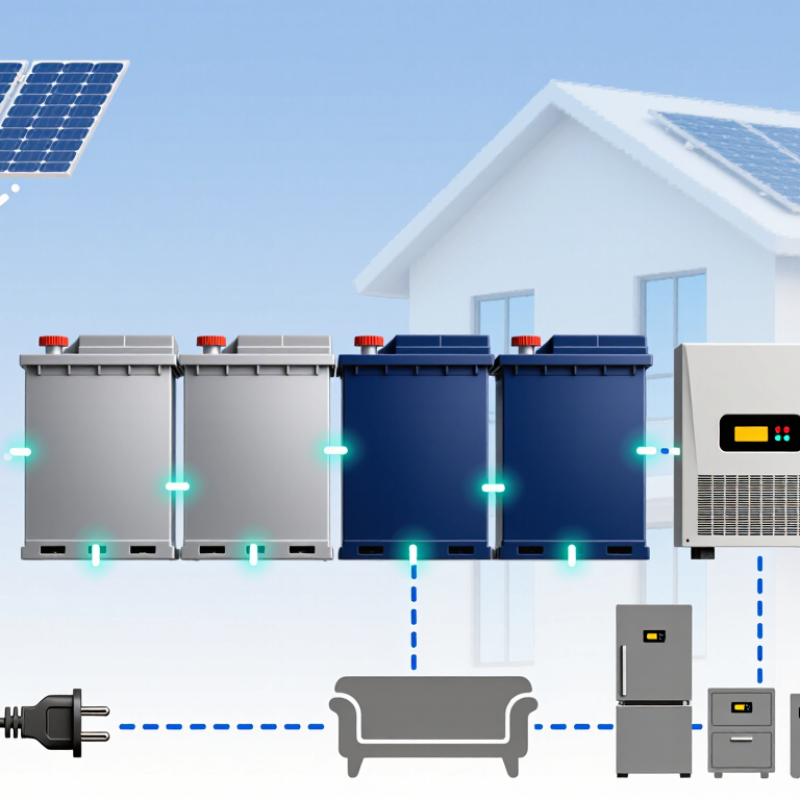
A modular power wall is a wall-mounted battery system built from separate, connectable storage units. Each module holds electrical energy, while a battery-management system monitors temperature, charge, and cell balance. An inverter converts the stored direct current into alternating current for household circuits. The system can charge from solar panels or the grid, then supply selected loads when generation falls or power is interrupted. Think of several compact battery blocks beside a utility panel, not one oversized battery. That distinction matters.
“Modular” describes how capacity can be expanded, but extra modules do not automatically increase power output; inverter limits and system design matter too. The International Energy Agency’s 2024 report, Batteries and Secure Energy Transitions, says global battery storage capacity needs to grow from about 85 GW in 2023 to 1,200 GW by 2030 in its net-zero pathway. That figure covers the wider energy system, not just homes, but it shows why flexible storage is gaining attention. For a household, the useful question is which circuits need backup and for how long. A refrigerator, lights, and router are modest loads; electric heating can drain storage quickly. Capacity on a specification sheet is not the same as usable energy. Real-world performance also depends on temperature, installation, and charging patterns—details easy to underestimate.
What Is a Modular Power Wall and How Does It Work? - What a Modular Power Wall Is
| Dimension | Description | How It Works or What to Check |
| Definition | A modular power wall is a stationary battery energy-storage system built from multiple battery modules that can be combined into one system. | Modules store electricity for later use. The system’s usable capacity generally increases when compatible modules are added. |
| Battery modules | Each module contains rechargeable battery cells, electrical connections, and monitoring or protection components. | Modules operate together under system controls. Only modules approved for the specific system should be combined. |
| Battery chemistry | Stationary systems commonly use lithium-ion chemistries, including lithium iron phosphate (LFP) and nickel manganese cobalt (NMC). | Chemistry affects characteristics such as energy density, operating limits, and thermal behavior. Specifications vary by product. |
| Battery management system | A battery management system (BMS) monitors battery conditions, such as cell voltage and temperature. | The BMS helps control charging and discharging and can limit operation if conditions exceed configured safety limits. |
| Inverter and power conversion | An inverter converts direct current (DC) from the battery into alternating current (AC) for compatible household circuits. Some systems use a separate inverter; others integrate power electronics. | During charging, the system manages power flowing into the battery. During discharge, the inverter supplies AC power to supported loads. |
| Charging sources | A system may charge from rooftop solar, the electrical grid, or another compatible source, depending on its design and configuration. | Solar charging depends on available generation, system limits, and settings. Grid charging availability depends on equipment, local rules, and the installation. |
| Capacity and scalability | Energy capacity is measured in kilowatt-hours (kWh); power output is measured in kilowatts (kW). These are different ratings. | Adding modules can increase energy capacity when supported, but it does not necessarily increase power output by the same amount. Check both ratings. |
| Operating modes | Common modes include solar self-consumption, backup power, and time-based charging or discharging. | Available modes depend on the system’s controls, electrical setup, utility arrangements, and local requirements. |
| Backup operation | Some systems can supply selected circuits or a broader portion of a building during a grid outage. | Backup capability may require transfer equipment and suitable wiring. Runtime depends on usable stored energy and the loads being powered. |
| Installation and safety | Stationary batteries require appropriate placement, electrical protection, and installation in accordance with applicable codes and manufacturer instructions. | System compatibility, permitted locations, clearances, and connection requirements should be confirmed by a qualified installer and local authorities. |
Note: Modular power-wall specifications are system-specific. Capacity, power output, expansion limits, backup features, and operating conditions should be verified in the relevant technical documentation.
Core Components of a Modular Power Wall
A modular power wall is a home battery system built from smaller, connected battery units. Its core is the cell-and-module stack, which stores electricity for use after sunset or during an outage. Add modules as demand grows, but only within the system’s electrical and thermal limits. More capacity is not automatically better.
A battery management system monitors voltage, temperature, and charge across the modules. It can reduce output or disconnect the pack when readings fall outside safe operating ranges. The inverter converts battery power into the form household circuits use; some systems also need a separate solar inverter. Sensors, fuses, contactors, and a sealed enclosure support protection and control. Small parts count.
The U.S. National Renewable Energy Laboratory’s 2024 Annual Technology Baseline uses 85% round-trip efficiency for utility-scale lithium-ion storage. That is a modeling assumption, not a promise for every home system; conversion losses and temperature affect real performance. The International Energy Agency’s Batteries and Secure Energy Transitions report says global battery storage capacity must reach 1,200 GW by 2030 in its net-zero pathway. That figure is grid-wide, not a household target. For a homeowner, usable capacity, continuous power, expansion compatibility, and installation conditions matter more. One detail is easy to underestimate: a wall’s rated capacity does not show how much power it can deliver at once.
What Is a Modular Power Wall and How Does It Work?
Core components and illustrative storage capacity as battery modules are added.
A modular power wall combines battery modules with a battery management system (BMS), an inverter, thermal management, and a protective enclosure. The BMS monitors and protects the batteries, while the inverter converts DC battery power to AC for compatible household loads. The chart illustrates simple capacity scaling using 5 kWh per module; actual module ratings and usable capacity vary by system.
How Energy Flows Through the System
A modular power wall stores electricity in battery units that can be added as household needs change. During sunny hours, rooftop panels send direct current to a controller or hybrid inverter. The system directs power to active loads, such as a refrigerator or lights, then charges the battery with surplus energy. In some setups, solar power and battery charging follow different paths. Small detail, big impact.
When sunlight fades, the battery supplies stored energy through an inverter, which converts it into the alternating current most home circuits use. A control system monitors charge levels and decides when to serve the home, charge the battery, or draw from the grid, if connected. During an outage, backup power depends on the system’s transfer equipment and which circuits were selected. Not every wall powers an entire house. Capacity, wiring, and settings matter, and the exact flow varies by design. I used to think extra modules always meant longer backup; heavy loads can drain them sooner than expected.
Tips: Check the system’s usable capacity and backup circuit list. Ask a qualified installer to explain the energy-flow diagram, especially what happens when the battery is nearly empty.
How Modules Connect and Expand Storage Capacity
A modular power wall stores electricity in separate battery units linked to a shared control system. Add-on modules connect through approved electrical and communication interfaces. The battery management system tracks voltage, temperature, and charge across the stack. It helps keep modules operating within safe limits. Small differences still matter.
In many designs, modules connect in parallel, increasing stored energy while keeping system voltage similar. More kilowatt-hours can extend evening backup or capture extra midday solar. But adding modules does not automatically increase power output; the inverter and wiring may set that limit. The U.S. Department of Energy’s 2022 Grid Energy Storage Technology Cost and Performance Assessment uses about 85% round-trip efficiency for lithium-ion storage. In practical terms, some energy is lost between charging and discharge.
Expansion also depends on compatible firmware, available space, and the system’s maximum module count. A dusty utility closet or a long cable run can complicate an otherwise simple upgrade. The International Energy Agency reported that battery storage additions in the power sector grew by about 130% in 2023, reaching roughly 42 GW. That growth shows how quickly storage is scaling, but a home installation still needs careful capacity and load planning. More storage is not always better.
Common Uses and Key Design Considerations
A modular power wall is a stationary battery system made from linked battery units. It stores electricity from solar panels or the grid, then supplies selected circuits when needed. Homes use it for evening energy, short outages, or keeping essentials running. Small businesses may use it to support lights, networking equipment, or refrigeration during brief interruptions. It is not automatically a whole-house backup. That distinction matters.
Design starts with the loads, not the advertised capacity. List appliances, their running watts, and any brief startup surges. A refrigerator and a few lights need far less power than electric heating or a large pump. Battery capacity affects how long energy lasts; inverter output affects which equipment can run at once. Check whether the system supports future expansion, and confirm compatible components before adding modules. Placement matters, too: follow manufacturer clearances, temperature limits, and local electrical requirements. A cool, dry utility area is often practical, but site conditions vary. I would avoid assuming more modules always mean a better design; unused capacity can be expensive.
Tips: Keep a simple outage-priority list. Ask a qualified installer to verify circuit loads and backup behavior. Leave room for ventilation and service access. Recheck your assumptions after a season of actual use.