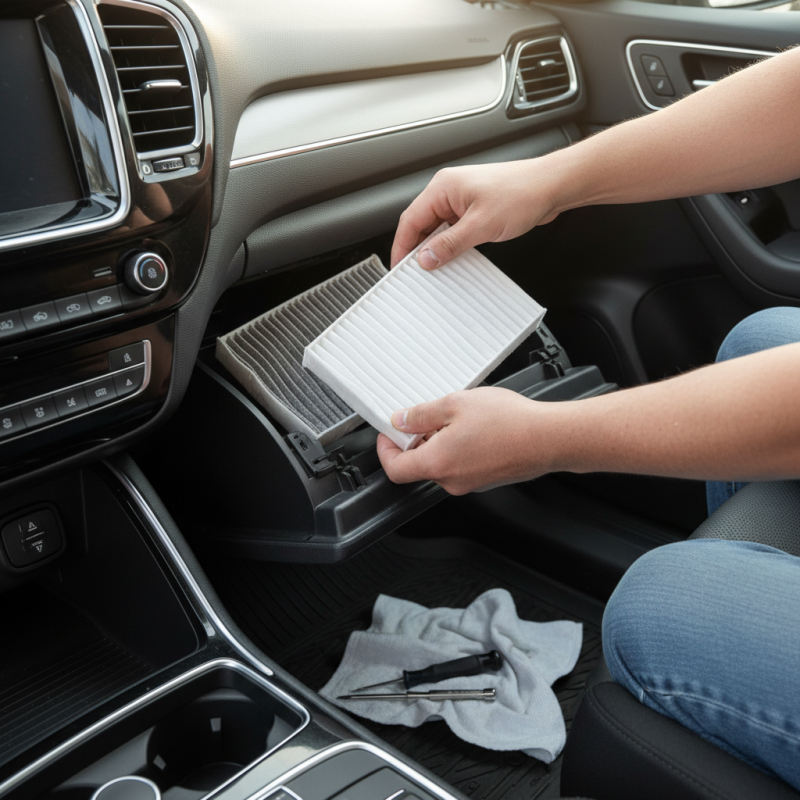
How to Replace Cabin Filter in Your Car Efficiently?
When it comes to maintaining your car, replacing the Cabin Filter is often overlooked. The cabin filter plays a crucial role in ensuring the air inside your vehicle remains clean and pleasant. Over time, this filter can accumulate dust, pollen, and other particles. A clogged filter can reduce air quality and cause unpleasant odors.
Many drivers may delay this task, thinking it is complicated. However, replacing the cabin filter can be a straightforward procedure. A quick look through your car’s manual can reveal useful details. This can empower you to tackle the replacement yourself.
Ignoring the condition of your cabin filter is a mistake. It can lead to increased allergens and decreased comfort while driving. Regular maintenance not only enhances air quality but can also extend the lifespan of your HVAC system. Taking the time to replace your cabin filter could significantly improve your driving experience.
Understanding the Importance of Cabin Filters in Your Car
Cabin filters play a critical role in maintaining air quality inside your car. They trap dust, pollen, and other pollutants, ensuring cleaner air for passengers. Research shows that vehicles with a clean cabin filter can improve air quality by up to 30%. This is significant, especially for individuals with allergies or respiratory issues.
Yet, many drivers overlook the importance of regular filter replacements. A dirty cabin filter can obstruct airflow. This may lead to discomfort during drives. Studies indicate that 60% of drivers don't replace their cabin filters on time. This negligence can also strain the car's HVAC system, leading to higher repair costs.
In urban areas, the impact is even more pronounced. Pollution levels are rising. According to environmental reports, cities often have particulate matter that exceeds safe limits. A functional cabin filter can minimize exposure to these harmful particles. Regular checks and timely replacements can enhance your driving experience, making it both safer and more pleasant.
Identifying the Right Cabin Filter for Your Vehicle Model
When it comes to replacing your cabin filter, identifying the right one for your vehicle model is crucial. Many people assume all filters are the same. This can lead to confusion and inconvenience. Each vehicle has specific requirements for its Cabin Air Filter. These requirements depend on the make, model, and year of your car.
To find the right filter, start by checking your owner’s manual. It usually lists the specifications needed for the filter. If you can’t find it, consider looking online. Many automotive websites provide useful information based on your vehicle's details. Remember, you want a filter that fits snugly. An ill-fitting filter won’t do its job effectively.
Don’t be alarmed if you notice some differences in filter appearance. Variations can exist, but functionality is key. Check reviews for quality. Some filters excel in debris capture, while others may struggle. Always think about what is best for your driving environment. A bit of research can prevent a frustrating installation later. Taking the time to get it right may save you from repeated replacements down the line.
Step-by-Step Guide to Accessing Your Car's Cabin Filter
Replacing a cabin filter is essential for clean air inside your car. Accessing it can be straightforward if you follow a step-by-step approach. Typically, the cabin filter is located behind the glove compartment or under the dashboard.
Start by clearing out the glove compartment to create space. Remove any contents gently; you wouldn’t want to break anything.
After clearing the area, look for the screws or clips holding the glove compartment in place. Unscrewing carefully is key. Sometimes, it might be tricky to identify all the clips. Take your time and don’t force anything. Once removed, you should see the cabin filter housing. It may be a bit dusty, and that's normal.
Pull out the old filter slowly. Notice how it fits. This detail will help with inserting the new one correctly.
Install the new filter by aligning it with the housing. Ensure it fits snugly. Put the glove compartment back in place. Don’t forget to reconnect any screws or clips. You might find it easier than expected. Yet, sometimes, issues arise if the filter isn’t seated correctly. Always double-check.
Ensure that the air flows freely afterward. Proper air flow is vital for a pleasant driving experience.
How to Properly Remove and Replace the Cabin Filter
Replacing the cabin filter in your car is essential for maintaining air quality. A dirty filter can reduce airflow significantly. Studies suggest that approximately 80% of cabin air filters are not replaced regularly. This can lead to poor indoor air quality, increasing allergens and pollutants inside your vehicle.
To remove and replace the cabin filter, locate it in your car. Common locations include the glove box or behind the dashboard. Carefully unscrew any fasteners or clips holding it in place. Pull it out gently to avoid breaking any components. Inspect the old filter; it may be clogged with debris. A clogged filter can restrict airflow by up to 50%, according to industry data.
When inserting the new filter, ensure it fits snugly. A loose filter can lead to inefficiency. Ensure the airflow direction is marked on the filter. Often, this detail is overlooked. Take the time to verify it. A correct installation maximizes performance and extends the lifespan of your HVAC system. Cleaning the surrounding area can also prevent dust from entering your cabin. Neglecting this step may lead to future issues with air quality.
Cabin Filter Replacement Frequency
Tips for Maintaining Your Cabin Filter for Optimal Performance
Maintaining your cabin filter is crucial for a comfortable driving experience. A clean filter ensures good air quality inside your car. Reports show that clogged filters can reduce airflow by up to 30%. This drop affects not just comfort but also the efficiency of your vehicle's HVAC system.
Checking your filter at regular intervals is essential. Many experts suggest inspecting it every 12,000 to 15,000 miles. It can be surprising how much dirt and debris can accumulate. Some might forget this aspect, leading to poor air quality. If you notice dust swirling in sunlight, it’s likely time to change the filter.
Proper maintenance also includes understanding the specific needs of your vehicle. Seasonal changes can affect filter performance. For instance, pollen levels rise in spring, and a timely replacement can prevent allergy flare-ups. Regular maintenance habits are key. Ignoring them often leads to bigger issues, like higher repair costs or discomfort while driving.
Remember, a small effort now saves you from larger problems later.