
three part picture of forklifts

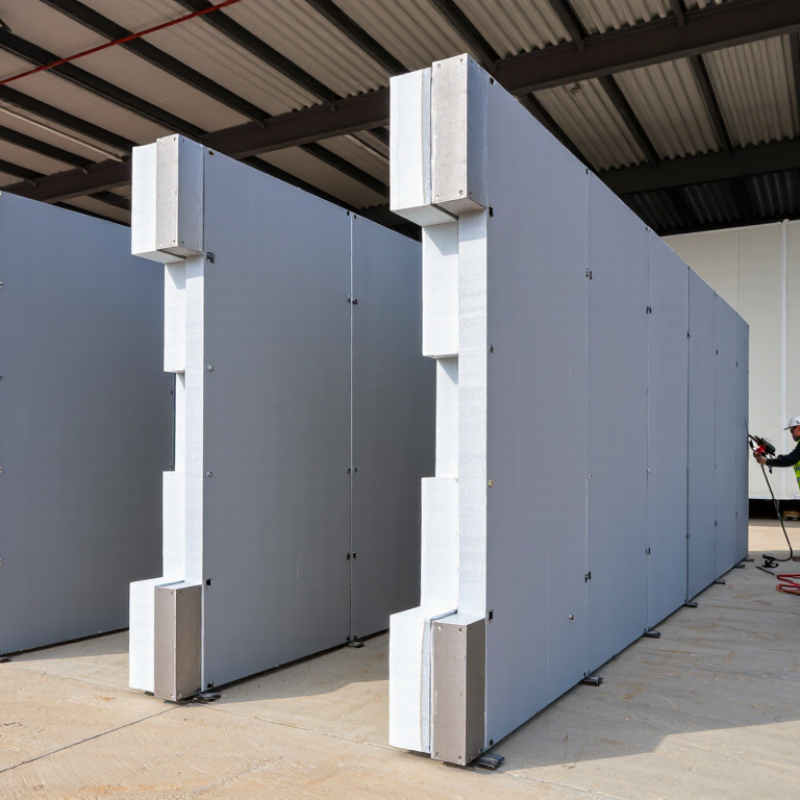
7 Tips for Choosing Non Aging Foam Sandwich Panels

Choosing a Non-Aging Foam Sandwich Panel requires more than comparing prices or advertised insulation values. Building owners need stable thermal performance, moisture resistance, fire safety, and dependable service life. The International Energy Agency’s Buildings 2023 report states that buildings represent about 30% of global final energy demand. It also highlights the urgent need to improve envelope efficiency. A panel’s foam core and protective skins therefore deserve careful examination.

This guide presents seven practical tips for evaluating panels in real projects. Check the declared thermal conductivity, density, water absorption, and dimensional stability. Ask whether testing follows recognized methods, such as ASTM C518, ASTM E84, or EN 14509. Product certificates should identify test conditions, not merely display impressive numbers. Look closely at joints, fasteners, edge protection, and sealants. A strong core can still fail when rain reaches an unsealed connection.

Independent market reports, including analyses from Grand View Research and MarketsandMarkets, show continuing demand for insulated sandwich panels in industrial, commercial, and cold-storage construction. However, market growth does not guarantee product quality. Field experience matters. A panel installed beside a loading dock faces impacts, temperature swings, cleaning chemicals, and repeated condensation. Laboratory results may not fully predict that environment. This is where careful supplier auditing becomes essential. Review factory quality controls, warranty exclusions, recycled content, and replacement procedures. Ask difficult questions. Some specifications remain unclear. A reliable decision combines published data, third-party verification, installation guidance, and local climate knowledge. The best panel is not always the thickest one; it is the one that performs consistently after installation.
7 Tips for Choosing Non Aging Foam Sandwich Panels

Understanding What Makes Foam Sandwich Panels Non-Aging

Understanding What Makes Foam Sandwich Panels Non-Aging

“Non-aging” does not mean permanent. It means the panel maintains stable thermal and structural performance over time. Closed-cell foam, low water absorption, and strong facing adhesion reduce performance loss. The 2023 Global Status Report for Buildings and Construction states that buildings consume about 30% of global final energy. Durable insulation can therefore support long-term efficiency. However, laboratory results may not match every jobsite.

Tip 1: Check the aging method. Ask for test data based on ISO 10456 or ASTM C518. These standards help compare thermal conductivity under controlled conditions. Do not trust one impressive R-value alone. Temperature, moisture, thickness, and installation quality also matter.

Tip 2: Inspect the foam structure. Uniform closed cells usually resist moisture better than damaged or uneven cells. Look for stable density and documented dimensional-change testing. A small gap at a joint can become a large heat bridge. I have seen specifications overlook this detail.

Tip 3: Study the facing and edge design. Impermeable facings can limit vapor movement, while reinforced edges protect joints during handling. The U.S. Department of Energy warns that moisture and compression can reduce insulation effectiveness. That warning deserves attention.

Tip 4: Compare declared and aged values. ISO 10456 allows standardized aging assumptions, but real exposure differs. Factory data is useful, not infallible. Review installation records, climate conditions, and maintenance access before choosing a supposedly non-aging panel.

Checking Core Materials for Long-Term Structural Stability

Choosing Non Aging Foam Sandwich Panels: Checking Core Materials for Long-Term Structural Stability

I would not call any foam panel truly non-aging. A better question is whether its core retains strength after moisture, heat, and repeated loading. On site, inspect the core edge, not only the published R-value. Look for uniform cells, firm bonding, and no powdery surfaces. Closed-cell foam usually limits water movement, but it does not eliminate it.

Ask suppliers for compressive strength, tensile adhesion, water absorption, and dimensional stability results. Test reports should identify temperature ranges, conditioning time, and specimen thickness. ASTM C578 and ASTM C1289 provide useful reference frameworks for foam insulation performance. However, one laboratory result cannot represent every roof, wall, or transport condition. That is where judgment matters.

The 2024 Global Status Report for Buildings and Construction states that buildings used 32% of global energy and produced 34% of global carbon dioxide emissions. Long service life therefore matters, not just initial insulation value. Check creep data under sustained loads, especially for roofs and cold-storage walls. Thermal cycling can also weaken joints and facer adhesion. A small gap can become a moisture path.

I once treated high thermal resistance as proof of durability. That was incomplete. Review five-year field records when available, and compare them with accelerated aging results. Select a core that still meets its structural limits after conditioning, not one that only looks impressive on a datasheet.

Comparing Thermal, Moisture, and Fire Resistance Properties

“Non-aging foam” should be treated as a design goal, not a permanent promise.

Closed-cell panels can retain insulation better when cores, facings, and joints remain intact. Yet thermal drift still matters. The IEA’s 2023 Global Status Report for Buildings and Construction states that buildings consume about 30% of global final energy and produce roughly 26% of energy-related emissions. A small conductivity increase can become a major operating cost across a warehouse roof. Ask for tested thermal resistance, not only a fresh lambda value. ISO 8301 data and EN 13165 design values help reveal real performance differences.

Moisture resistance deserves equal attention.

Water entering a cut edge can raise heat flow and weaken adhesive bonds. Check water absorption results under EN 1609 or comparable ASTM testing.

Also request vapor resistance data. Closed-cell foam helps, but it is not waterproof after careless drilling. In site inspections, excellent cores have been undermined by unsealed penetrations. That detail is easy to miss.

Fire performance must be judged at assembly level.

ASTM E84 reports flame spread and smoke development, but it does not reproduce a complete wall fire. NFPA 285 evaluates fire propagation in certain multistory exterior wall assemblies, while EN 13501-1 classifies reaction to fire. Request test thickness, joints, facings, and mounting details. Mineral-filled cores may improve fire resistance, yet they can absorb more moisture or reduce thermal efficiency. Trade-offs remain. Select according to climate, occupancy, and maintenance records, then inspect samples after heat-and-humidity exposure. Reports help, but field evidence matters.

Selecting the Right Panel Thickness and Surface Finish

Selecting the Right Panel Thickness and Surface Finish

Panel thickness should follow the building’s climate, span, joint design, and target U-value. According to the IEA Buildings 2023 report, buildings produce about 26% of global energy-related emissions. Better thermal envelopes can reduce this pressure. However, thicker is not automatically better. A poorly sealed joint can waste more energy than a thin panel. Check the declared thermal conductivity under ASTM C518 or EN 14509 conditions.

Tip 1: Compare complete wall performance, not foam thickness alone. Request U-values, fire classification, moisture resistance, and tested aging data. In practice, I inspect cut edges and fastener zones first. They often reveal weak detailing. This is not perfect, but it catches expensive mistakes early. Select thickness according to local code and indoor humidity. Cold storage usually needs tighter tolerances than a dry warehouse.

Tip 2: Treat surface finish as a performance layer. A light, durable coating can reduce solar heat gain and improve cleaning. The Cool Roof Rating Council reports solar reflectance and thermal emittance separately, so avoid judging color by appearance alone. For coastal or chemical environments, verify coating thickness, adhesion, and corrosion testing.

Tip 3: Ask for accelerated weathering results, not vague “non-aging” claims. Gloss loss, chalking, and seal failure can appear before the foam loses its insulation value. A slightly imperfect finish may be acceptable, but hidden moisture never is.

Verifying Manufacturing Quality, Standards, and Supplier Support

Choosing non-aging foam sandwich panels requires more than comparing thickness and price. No foam remains unchanged forever. Ask how the supplier defines “non-aging,” then request accelerated-aging results, dimensional stability data, water absorption figures, and thermal conductivity retention. ASTM C518 can verify thermal transmission, while EN 14509 addresses factory-made, double-skin metal-faced insulating panels. These tests are useful only when reports identify the foam type, density, sample age, and test conditions.

Check the factory, not just the certificate. Production records should show core density, adhesive coverage, curing temperature, panel flatness, and batch traceability. Inspect cut edges for voids, uneven bonding, or crushed foam. Small defects can become visible heat bridges. ISO 9001 certification indicates a quality management system, but it does not automatically prove product performance. That distinction is often missed.

Fire and moisture evidence also deserve careful review. Request test reports under the exact assembly, thickness, joint design, and installation direction. ASTM E84 and EN 13501-1 use different classification systems, so their results should not be treated as interchangeable. The 2023 Global Status Report for Buildings and Construction reported that buildings consumed about 34% of global energy and produced roughly 37% of energy-related carbon emissions in 2022. Better-performing envelopes matter. Supplier support matters too. Confirm response times, replacement procedures, installation guidance, and storage instructions. A polished brochure cannot repair poor technical support. I would still keep one doubt: laboratory aging rarely reproduces every roof, climate, or handling mistake.

7 Tips for Choosing Non Aging Foam Sandwich Panels - Verifying Manufacturing Quality, Standards, and Supplier Support

No. Selection Tip What to Verify Recommended Quality Indicator Required Evidence Warning Signs
1 Confirm the core material and aging behavior Identify whether the core is PIR, PUR, EPS, XPS, or mineral wool. Confirm density, closed-cell structure where applicable, moisture resistance, and the method used to determine long-term thermal performance. The declared thermal conductivity should state the test temperature, specimen condition, thickness, and whether the value is initial or aged. Thermal performance should not be described as permanently unchanged without test evidence. Technical data sheet; density test results; thermal-conductivity report using ASTM C177, ASTM C518, or EN 12667; documented aging or declared-value method. Only an “R-value” is provided with no test method, thickness, temperature, or aging information.
2 Check dimensional accuracy and panel construction Inspect panel thickness, width, length, squareness, flatness, joint geometry, adhesive coverage, and the alignment between the metal facings and foam core. Measured dimensions should remain within the tolerances stated in the applicable product standard and purchase specification. Joints should close consistently without excessive gaps or crushing. Incoming inspection records; calibrated measuring-tool certificates; cross-section samples; production drawings; dimensional inspection plan. Variable thickness, visible core voids, uneven edges, delamination, or inconsistent joint engagement.
3 Verify mechanical strength for the intended span Review panel load tables for span, support spacing, wind pressure, snow load, temperature effects, fastener layout, and serviceability limits such as deflection. Load capacities should be based on tested or engineered panel assemblies, not foam compressive strength alone. Relevant testing may include ASTM C393 for sandwich flexural properties or EN 14509 for self-supporting metal-faced panels. Third-party test report; structural calculations; load-span tables; design assumptions; fastener and support details; declared safety factors. A single unsupported load value is advertised without span, support, deflection, temperature, or safety-factor information.
4 Review fire performance and regulatory compliance Confirm the complete panel assembly’s reaction-to-fire, fire-resistance, smoke, and flame-spread performance for the project jurisdiction. Fire classification must identify the exact core, facings, joint design, thickness, and test configuration. EN 13501-1 and ASTM E84 address different classification systems and should not be treated as interchangeable. Current fire-test report; classification certificate; product-composition statement; installation limitations; evidence for the exact panel thickness and joint detail. “Fireproof” wording without a classification, test standard, specimen description, or validity date.
5 Evaluate moisture resistance and corrosion protection Check water absorption, vapor exposure, drainage, cut-edge protection, coating type, metal thickness, and compatibility with the building environment. Water-absorption data should identify the test method, such as ASTM C272 for sandwich construction or the applicable foam-material method. Coating and metal specifications should be stated in measurable units. Coating certificate; metal-facings specification; salt-spray or corrosion test where required; water-absorption report; installation and sealing instructions. Unsealed cut edges, exposed foam, coating damage, trapped water at joints, or no guidance for humid or coastal conditions.
6 Assess manufacturing process control Review incoming-material control, foaming or lamination parameters, adhesive application, curing time, batch traceability, calibration, and final inspection procedures. A documented quality-management system, such as ISO 9001, should be supported by traceable batch records and corrective-action procedures. Certification alone does not prove every panel meets the project specification. Valid management-system certificate; factory quality manual; inspection and test plan; batch identification; nonconformance and corrective-action records. No batch number, no retained samples, undocumented process changes, or refusal to provide independent audit information.
7 Measure technical support and after-sales capability Confirm design assistance, shop-drawing review, installation training, response times, replacement-panel policy, spare accessories, warranty terms, and complaint handling. Support commitments should be written, including response time, warranty exclusions, storage conditions, repair procedures, and responsibility for design or installation errors. Installation manual; approved shop drawings; project references without confidential client information; warranty document; service-level contact process; spare-part availability statement. Verbal warranty promises, unclear exclusions, no installation guidance, or support limited to sales communication.
Note: “Non-aging” should be treated as a performance objective rather than an absolute claim. Thermal, mechanical, moisture, and fire properties should be verified for the complete panel assembly, stated service conditions, and applicable local building requirements.