
China’s DC surge protection market includes manufacturers, specialized exporters, and established electrical equipment groups. This guide examines ten suppliers frequently considered by industrial buyers and project engineers. It focuses on Surge Protection Dc products for photovoltaic systems, battery storage, telecommunications, control cabinets, and transportation equipment.
Supplier selection requires more than comparing catalogue prices. We review product structure, voltage ranges, discharge capacity, response time, enclosure quality, and replacement indicators. We also consider factory experience, engineering support, testing practices, certifications, and export performance. These details matter when a protector is installed beside a solar inverter or inside a crowded railway control cabinet.
Real projects reveal practical differences. A supplier may offer strong technical documents but provide slow application support. Another may respond quickly but lack suitable models for unusual operating voltages. That matters.
Our assessment is based on publicly available information, product documentation, customer-facing capabilities, and common procurement concerns. It is not a permanent ranking. Market conditions, certifications, lead times, and manufacturing partnerships can change. Some information may also be difficult to verify independently. Readers should request current test reports and confirm compliance with applicable standards before purchasing.
The selected companies are presented as potential partners, not automatic recommendations. Buyers should compare grounding design, system compatibility, warranty terms, samples, and after-sales service. A careful evaluation can reduce equipment downtime and improve protection reliability. Even a well-designed device cannot correct poor wiring or inadequate earthing. That limitation deserves attention.
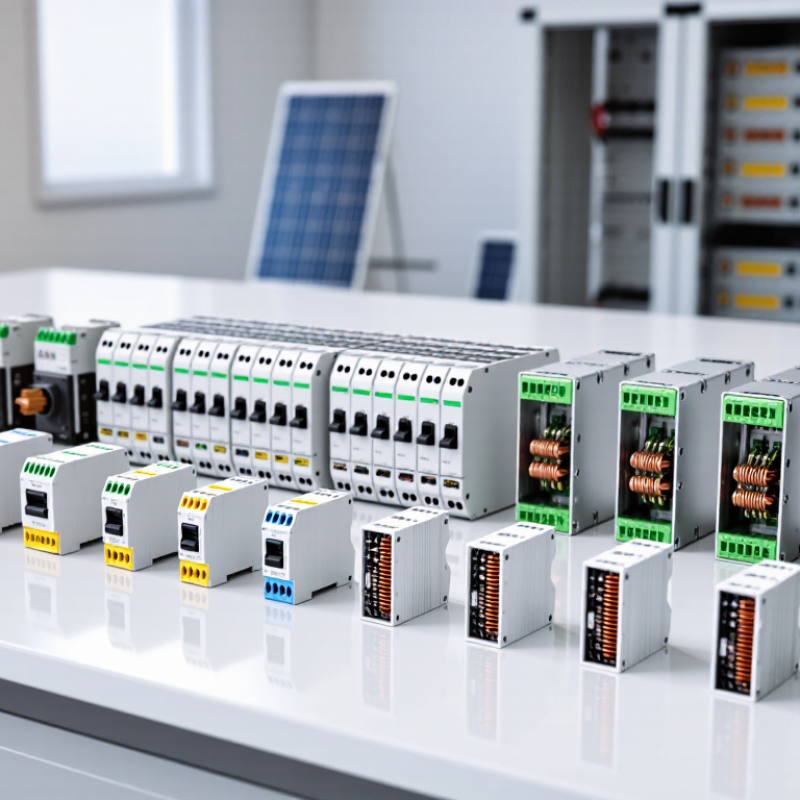
DC surge protection shields direct-current equipment from brief, high-energy voltage spikes. These events can come from nearby lightning, switching operations, or faults in long cable runs. A surge protective device redirects excess energy toward a safe grounding path. It protects inverters, battery systems, controllers, and sensitive monitoring equipment.
DC systems need special attention because current does not naturally cross zero. A damaged circuit can therefore sustain an arc longer than an AC circuit. Proper protection requires a DC-rated device, suitable voltage rating, short-circuit capacity, and coordinated disconnects. For photovoltaic systems, installers should check maximum open-circuit voltage, operating temperature, and cable length. A device rated too low may fail during cold mornings. That detail is easy to miss.
When comparing the top ten DC surge protection suppliers, buyers should inspect test reports, production controls, warranty terms, and replacement procedures. Look for compliance with relevant standards, such as IEC 61643-31 for photovoltaic applications. Independent testing matters more than polished brochures. Field inspections often find loose grounding conductors, excessive lead length, or poorly matched protection modules. These small errors reduce performance. A datasheet may look convincing, yet it cannot prove correct installation. Surge protection is not magic. It is a coordinated system that depends on sound design, verified components, and regular inspection. There is room for judgment, especially where site conditions differ from laboratory assumptions.

Evaluating China’s DC surge protection suppliers starts with application evidence, not catalogue claims. The IEA PVPS Trends 2024 report recorded about 456 GW of new photovoltaic capacity in 2023. That expansion increases demand for reliable protection in rooftop, utility-scale, and battery systems. Ask suppliers to match Ucpv, In, Imax, and short-circuit ratings to your actual DC design. A visually impressive product can still be unsuitable.
Check compliance with IEC 61643-31 for photovoltaic DC surge protective devices. Request accredited laboratory reports, thermal-disconnector test results, impulse-current data, and batch traceability. Factory audits should verify varistor sourcing, assembly controls, and end-of-line testing. The Fraunhofer ISE Photovoltaics Report 2024 notes that silicon modules dominate global photovoltaic deployment, but system reliability still depends heavily on balance-of-system components. This is easy to overlook.
Field experience matters. Request failure statistics, replacement procedures, enclosure IP ratings, and performance records from similar climates. Suppliers should explain protection coordination between combiner boxes, inverters, and battery cabinets. Independent inspection can confirm whether test samples match production units. Do not rely on certificates alone. They may describe one configuration, not every option. A weakness remains: public failure data is limited, so supplier comparisons require careful documentation, site visits, and conservative technical judgment.
China’s top 10 DC surge protection suppliers are often judged by engineering depth, testing discipline, and delivery reliability. Strong suppliers provide DC surge protective devices for solar arrays, battery systems, charging stations, and industrial controls. Their products should show clear voltage ratings, maximum discharge current, response time, and short-circuit protection details.
Look closely at factory experience. A reliable supplier can explain how its devices handle an 8/20 μs current waveform and repeated surge events. It should also provide test reports, production records, and traceable quality checks.
Certifications matter, but they should support real performance rather than replace it. Ask whether the supplier tests each batch. Small details matter, such as terminal spacing, enclosure strength, and replacement status indicators.
Field feedback can reveal more than a polished catalog. Some suppliers offer fast customization for grounding layouts, narrow control cabinets, or harsh outdoor environments. Others provide better technical support after installation. The best ten may not be identical in scale. One may excel at volume production, while another handles unusual DC voltages more carefully.
No ranking is perfect. Supplier data can change, and independent verification remains necessary before purchasing. A practical evaluation should compare samples, warranty terms, response quality, and delivery records under real project conditions.
China’s top ten DC surge protection suppliers typically serve photovoltaic, battery storage, telecom, rail transit, and industrial control projects. Their key products include DC surge protective devices, combined fuse-SPD units, monitoring modules, and replaceable protection cartridges. Some suppliers also provide customized enclosures for outdoor cabinets.
Modern products use metal oxide varistors, thermal disconnectors, and visual status indicators. Advanced models add remote alarms, temperature monitoring, and communication contacts. For photovoltaic systems, protection must match the system voltage, often 600 V, 1,000 V, or 1,500 V DC. Data centers need compact, low-inductance protection for sensitive power distribution equipment. Rail and automation applications may require stronger vibration resistance and wider operating temperatures. These details matter more than a polished catalog.
Tips: Check the maximum continuous operating voltage, short-circuit rating, response time, and backup fuse requirements. Ask for test reports, traceable production records, and installation guidance. Confirm whether the supplier has experience with rooftop arrays, containerized storage, or high-humidity sites. A field inspection can reveal more than a sales presentation. I have seen technically suitable devices fail because cable routing was too long or grounding was poorly planned. Supplier selection is not only about price. It also depends on testing discipline, documentation quality, replacement support, and honest communication about product limits.
When comparing China’s top ten DC surge protection suppliers, start with your project conditions, not a ranking. A rooftop solar array, battery cabinet, and charging station require different protection choices.
Confirm maximum DC voltage, short-circuit current, system grounding, and expected lightning exposure.
Ask suppliers for clear specifications, independent test reports, and applicable standard references. A vague datasheet is a warning sign.
Check the supplier’s technical depth. Can its engineers explain voltage protection level, discharge current, thermal disconnection, and remote monitoring? Request samples before placing a large order. Inspect terminal strength, enclosure materials, labeling, and wiring instructions.
Also review factory quality controls, batch traceability, inspection records, and warranty procedures. These details often reveal more than polished sales language.
I once focused too heavily on unit price. That choice created extra checking work later. A lower quotation may exclude testing, documentation, or customized fittings. Compare complete project costs instead.
Discuss delivery schedules, spare parts, communication response, and after-sales support in writing.
A factory audit, even through a live video call, can expose practical weaknesses. Still, no audit removes every risk.
Keep a small pilot order, define acceptance criteria, and record problems honestly before expanding cooperation.
Content © 2025 Komatsu. All Rights Reserved