Choosing a Three Phase Transformer manufacturer is not just a price comparison. These units support factories, commercial buildings, renewable energy projects, and utility networks. A poor match can mean wasted energy, installation delays, or difficult maintenance. Small details matter.
This guide introduces ten manufacturers with international reach and established transformer expertise. It considers practical factors buyers can verify: product range, voltage and capacity options, efficiency data, testing procedures, certifications, warranty terms, and local service. A transformer’s nameplate is only part of the story. Cooling method, insulation system, operating environment, and available installation space also shape the final choice. For example, a unit destined for a hot, dusty site may need different protection from one installed in a clean indoor electrical room.
There is no single best manufacturer for every project. A supplier well suited to a large power network may not be the right fit for a compact industrial installation. Buyers should review technical documents, request project references, and confirm after-sales support before making a decision. Rankings can simplify research, but they cannot replace engineering review. Some comparisons will remain imperfect, especially when companies publish different levels of product and performance data. That is worth remembering. This overview offers a starting point, not a substitute for checking specifications against load requirements, site conditions, and applicable standards.
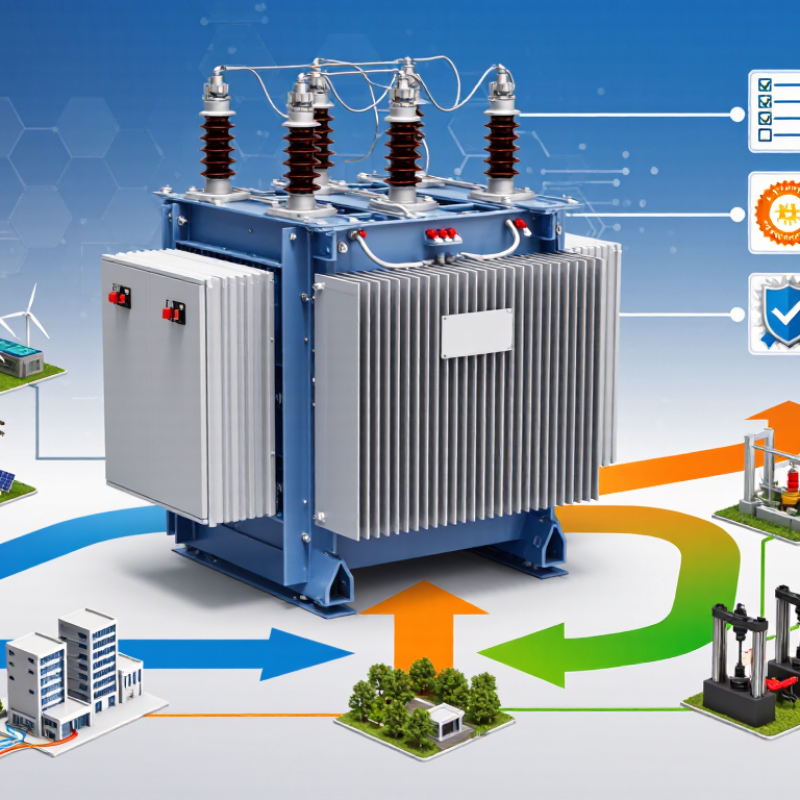
A three-phase transformer transfers electrical energy between circuits while changing voltage levels. Its core usually has three magnetic limbs, with windings arranged to serve each phase. The windings may connect in star or delta configurations, depending on system requirements. This choice affects neutral availability, voltage relationships, and how the transformer handles certain load conditions. Tap settings can adjust the output voltage when supply levels vary. Design also accounts for insulation, cooling, and expected load. Small details matter. A loose connection or poor ventilation can raise operating temperatures and shorten service life.
These transformers are used in factories, commercial buildings, utility networks, and large pumping systems. In a workshop, one may supply motors that drive conveyors; in a building, it can feed distribution panels and heavy equipment. Correct sizing depends on load demand, starting currents, installation conditions, and room for future growth. Too much spare capacity can add cost, while too little may cause overheating or voltage drop. Site measurements help, but real operating loads can change over time. Noise and heat are useful warning signs, though neither alone proves a fault. Not always. Regular inspection should include connections, cooling paths, and signs of insulation wear.
This overview describes ten widely used three-phase transformer configurations and applications. It is a technical guide, not a manufacturer ranking; no company or brand data is included. Actual ratings and construction depend on the project specification and applicable standards.
| No. | Transformer type | Design and function | Common applications | Typical construction considerations |
|---|---|---|---|---|
| 1 | Generator step-up transformer | Raises generator output voltage for connection to a transmission network, helping reduce current for a given transmitted power. | Power stations, including thermal, hydroelectric, and nuclear generation facilities. | Usually an oil-immersed power transformer; insulation, cooling, and protection are selected for the generator and grid duty. |
| 2 | Transmission substation transformer | Changes voltage between transmission-system levels to support power transfer and network interconnection. | Transmission substations and major grid interconnections. | Often oil-immersed, with cooling and monitoring arrangements specified for its load, site, and operating conditions. |
| 3 | Distribution transformer | Steps distribution voltage down to a level suitable for local distribution and end-user supply. | Utility networks, commercial districts, residential areas, and industrial sites. | May be oil-immersed or dry-type; installation location, safety requirements, and maintenance access influence the choice. |
| 4 | Industrial power transformer | Adapts supply voltage to the requirements of industrial equipment and plant distribution systems. | Manufacturing plants, mines, processing facilities, and large industrial campuses. | Designed around load profile, starting currents, harmonics, environmental conditions, and required protection. |
| 5 | Renewable-energy collection transformer | Connects generation equipment to a plant collection system and may raise voltage for export to the grid. | Wind farms, solar photovoltaic plants, and other renewable-energy projects. | May be installed in a substation or near generation equipment; design accounts for variable output and site conditions. |
| 6 | Traction transformer | Supplies or adapts electrical power for railway traction systems; the arrangement depends on the railway electrification scheme. | Railway substations, electric rail networks, and traction-power installations. | Specified for railway duty, including the relevant supply system, load variation, and operating environment. |
| 7 | Data-center transformer | Provides voltage transformation within electrical distribution paths supplying critical loads. | Data centers, server rooms, and other facilities requiring highly available power. | Selection considers redundancy architecture, loading, efficiency, harmonics, fire-safety requirements, and room constraints. |
| 8 | Rectifier transformer | Supplies a rectifier system and may provide a secondary arrangement suited to the required DC conversion process. | Industrial DC drives, electrochemical processes, and high-power conversion installations. | Designed for the rectifier’s electrical characteristics, including waveform distortion and harmonic currents. |
| 9 | Electric-furnace transformer | Provides the electrical supply characteristics required by furnace equipment, often with a low-voltage, high-current output. | Steelmaking, foundries, and other electric-furnace processes. | Built for demanding process duty; mechanical strength, thermal performance, and operating cycle are key considerations. |
| 10 | Isolation transformer | Uses separate primary and secondary windings to provide electrical isolation while transferring AC power. | Industrial control systems, sensitive equipment, laboratories, and installations requiring electrical separation. | Voltage ratio, insulation level, grounding arrangement, and shielding requirements depend on the application. |