
Choosing the right carp rig can make bait presentation more consistent, but no setup works equally well on every lakebed. This guide explores top Bait Bayonet Rigs and explains how their components affect bait placement, hook movement, and presentation. A bayonet offers a simple way to secure many suitable hookbaits without piercing them with a hair needle. The small metal point matters. Its length should match the bait, and the bait should sit firmly without covering the hook point.
We’ll look at how these rigs perform with wafters, pop-ups, and other buoyant baits, while considering hook size, hooklink material, and bottom conditions. A rig that lies neatly over gravel may behave differently in soft silt or weed. Practical checks help: attach the bait, lower the rig into a bucket of water, and watch how it settles. Simple, but useful. Even then, a bucket cannot fully reproduce a real lakebed, so treat the test as a guide rather than proof.
The sections ahead will compare rig styles, outline their strengths and limitations, and offer pointers for choosing a setup for your own fishing. Follow tackle makers’ instructions, check that the hook point remains clear, and test knots before casting. Small details can change the result. And sometimes, despite careful tying, a rig still needs adjustment.
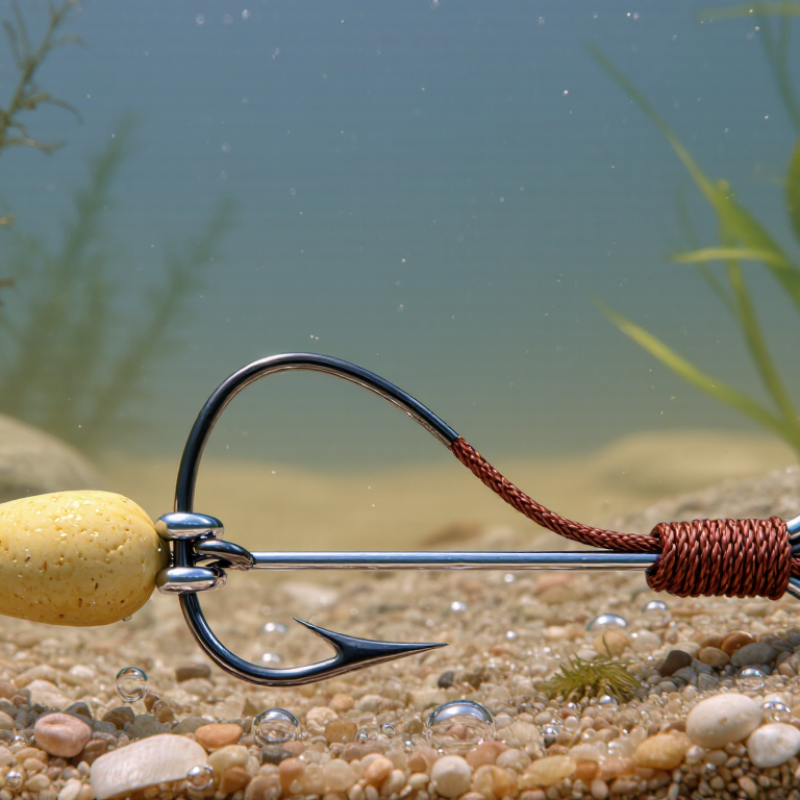
A bait bayonet rig is a hair rig with a short, pointed spike attached beside the hook. The angler pushes a suitable bait onto the spike, then secures it with a small bait stop. This keeps the bait close to the hook while leaving the hook point uncovered. That separation can help the hook move freely when a carp takes the bait, though presentation depends on bait shape and rig length.
Bayonets are commonly used with firm boilies or other compact hookbaits that hold their shape during casting. Soft or crumbly bait may split, slide off, or sit at an awkward angle. Check that the bait is secure with a gentle pull. Then inspect the hook point and make sure the bait does not mask it. Simple, but worth checking.
In clear, shallow water, testing the rig near the bank can show whether it hangs naturally or twists. I have found that a bait can look tidy in the hand yet behave differently in water. Bayonets also add a small piece of hardware, so they are not automatically better than other hair-rig attachments. Match the spike length to the bait, and replace damaged or bent components before fishing.

A carp bayonet rig is only as dependable as its small parts. The hook provides the hold; the hooklink controls separation from the lead, while a bait ring or swivel lets the hook move freely. A short bayonet pins a pop-up or wafter directly, avoiding bait floss and a separate stop. Match its length to the bait: too much exposed metal can split soft baits, while a poor fit may let them slip. Keep the hook point clear. Small details matter.
Choose hook size and pattern for the bait, fish, and venue rules, then check the finished rig in a tub of water. The bait should sit naturally, and the hook should turn without snagging the hooklink. An anti-tangle sleeve can help during casting, but it cannot correct a badly balanced setup. The Environment Agency’s National Angling Survey reported around 3.5 million adult anglers in England; that broad participation figure is not evidence that one rig catches more fish. Treat it as context, not proof. Recheck knots and bayonet after each cast. I still find this easy to overlook. Test it wet.
| Rig Style | Key Components | Bait Presentation | Typical Use | Important Checks |
|---|---|---|---|---|
| Bayonet Ronnie-Style Rig | Curved-shank or suitable wide-gape hook, rig swivel or ring, short hooklink section, bait bayonet, and hooklink swivel. | A pop-up is mounted on the bayonet near the hook; the hook can rotate freely when assembled correctly. | Pop-up presentations over relatively clear lake or gravel bottoms. | Check that the bait clears the hook point and that the rig turns freely without tangling. |
| Bayonet German-Style Rig | Wide-gape hook, hooklink, rig ring or swivel positioned on the hook shank, bayonet, and hooklink swivel. | A pop-up or balanced bait is attached to the bayonet and aligned close to the hook. | A neat, compact presentation on firm or lightly covered lake beds. | Position the ring or swivel so the hook can pivot; test the finished rig in the margin. |
| Bayonet Slip-D Rig | Straight or slightly curved hook, hooklink, hook-mounted ring or swivel that can slide along the shank, bayonet, and hooklink swivel. | A pop-up or balanced hookbait is fixed to the bayonet while the hook-mounted component remains mobile. | Situations where a mobile hookbait attachment is desired on a reasonably clean bottom. | Ensure the sliding component moves freely and cannot pass over the hook point or barb. |
| Bayonet Knotless-Knot Rig | Wide-gape or beaked-point hook, coated or uncoated hooklink, knotless-knot hair, bayonet, and a suitable terminal connection. | The bayonet is attached to the hair, placing a pop-up, wafter, or suitably balanced bait beneath the hook bend. | Versatile bottom-bait or balanced-bait fishing, depending on bait buoyancy and rig balance. | Match the hair length to the bait and confirm the hook point remains unobstructed. |
| Bayonet D-Rig | Suitable hook, hooklink, D-shaped attachment formed on the shank, small rig ring or swivel, and bayonet. | The bait is mounted on the bayonet attached to the ring or swivel on the D section. | A pop-up or wafter presentation where a bait attachment that can move on the D is preferred. | Keep the D neat and check that the attachment travels freely without catching on the hook. |
| Common Bayonet Setup | Bayonet matched to bait size, compatible hookbait, hook and hooklink, plus a lead or feeder arrangement suited to the venue. | Push the bayonet into the bait as designed; some models have a screw-style fitting, while others use a simple pin. | Useful when a compact, hair-mounted bait attachment is preferred over bait stops or bait floss. | Use tackle appropriate to local rules and conditions; test bait balance and rig presentation before casting. |
Bayonet size, hook size, and hooklink length should be chosen to suit the bait and fishing conditions. Rig names and details can vary between anglers, so check that the completed rig presents safely and effectively before use.
A bayonet rig holds a hookbait on a short metal pin attached to the hair. For a firm boilie, choose a pin that enters the bait securely without splitting it. A 12–15 mm bait usually pairs well with a compact pin and a size 6 or 8 hook, though hook patterns vary. Keep the hook point clear. Small detail, big difference.
Wafters suit a balanced setup. Use a pin short enough to keep the bait close to the hair, then test it in a tub of water. The hook should settle gently, not pull the bait down hard. If it tips sideways, adjust the bait size or hookbait balance. I still check this beside the bank; a quick test can catch a clumsy setup.
Pop-ups need a little more care because their buoyancy can lift the hook. Add a small shot or putty on the hook link, then check that the bait rises only as intended. Bayonets can also hold firm artificial corn, but very soft baits may tear during casting. With those, a bait band or another attachment may be more dependable. Wind, weed, and bottom texture all change how a rig presents, so a setup that worked yesterday may need adjustment today.
A bayonet rig keeps bait close to the hook while leaving the point clear. Start with a hooklink, a suitable hook, a small rig ring, and a bait bayonet. Tie the hooklink to the hook with a knotless knot, leaving a short hair beneath the shank. Attach the ring and bayonet to that hair, so the bait sits just beyond the bend. Keep the assembly neat. A long, tangled hair can dull the presentation.
Push the bayonet gently into a firm boilie or hookbait, then check that it holds without splitting. Wet the rig and lower it into a clear container to see how it settles. The hook should lie naturally, not perch awkwardly on the bait. I sometimes make the hair too short when rushing; the bait then crowds the hook. A small adjustment can help. Keep it simple. Before casting, check the knot, hook point, and bait grip, and use tackle suited to the fish and venue. Handle carp carefully, and follow local fishing rules.
A bayonet rig can hold a firm boilie securely while leaving the hook point free to catch. Match the bayonet length to the bait; a short fitting may not grip a large boilie well. Choose a hook size and pattern that suit the bait and the carp you expect, rather than simply using the largest hook available. Keep it simple.
Think about the lakebed before choosing how to present the rig. On clean gravel, a balanced bottom bait can sit neatly beside the hook. Over light weed or soft silt, a buoyant bait may help keep the hook from settling out of sight. Check the bait’s lift in a clear tub or shallow margin, then adjust the balance until the hook rests naturally. Small changes matter.
Before casting, inspect the knot, hook point, and bayonet’s grip. Press the bait on firmly, but do not split it; cracked bait can come loose during a cast. After landing, check that the rig has not picked up weed and that the hook remains exposed. I sometimes find a setup looks tidy in hand but lands awkwardly on the bottom, so a short test cast is worth the effort.
Content © 2025 Komatsu. All Rights Reserved