
Choosing reliable suppliers for a Drilling Rig API 6A Check Valve requires more than comparing prices or catalog photographs. These valves protect high-pressure systems during drilling, testing, and well-control operations. A dependable supplier should demonstrate API 6A compliance, traceable materials, controlled manufacturing, and practical field experience.
Dr. Maurice Dusseault, a respected petroleum engineering professor and well-integrity specialist, has often emphasized a central lesson: “Well integrity depends on disciplined design, verification, and maintenance.” That principle applies directly to check-valve sourcing. The valve may appear compact, yet its internal sealing surfaces face pressure shocks, abrasive fluids, vibration, and repeated cycling.
Look for suppliers that provide complete documentation. This includes pressure-test records, material certificates, heat-treatment data, and inspection reports. Confirm the valve’s pressure rating, bore size, trim selection, end connection, and sour-service suitability. Small details matter.
A serious supplier should explain how it controls spring quality, disc alignment, elastomer selection, and body machining. It should also support installation guidance and replacement parts. Fast delivery helps, but technical responsiveness matters more when a rig is waiting.
Some choices remain imperfect. Supplier websites may display broad certifications without showing product-specific evidence. Marketing language can also hide weak traceability. Buyers should ask difficult questions and compare written answers.
This guide examines leading Drilling Rig API 6A Check Valve suppliers through technical capability, certification transparency, delivery performance, customization, and after-sales support. The strongest candidates are not always the cheapest. They are the suppliers whose evidence remains clear when operating conditions become severe.
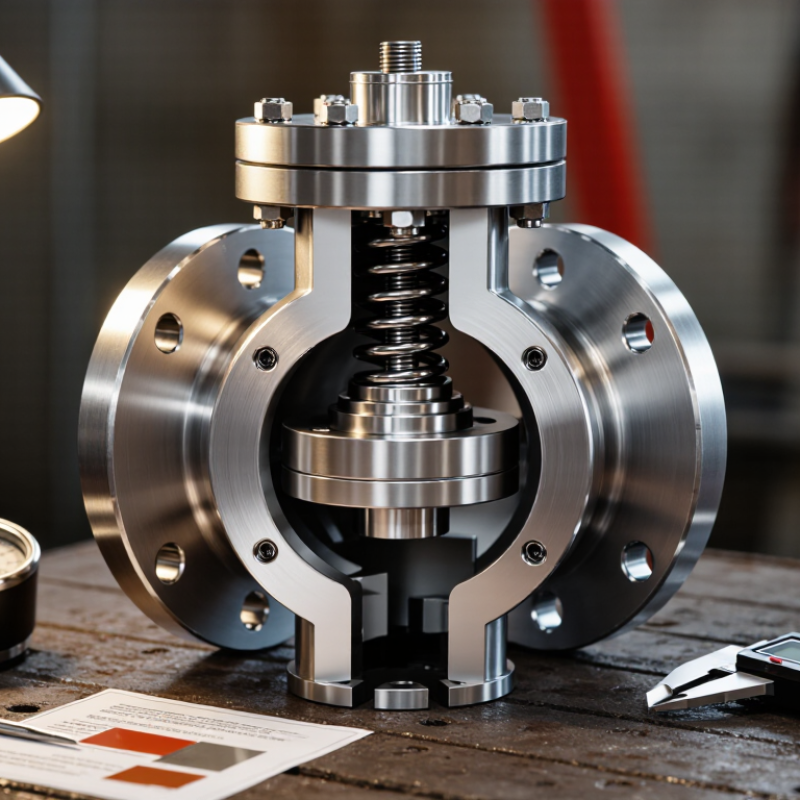
An API 6A check valve is a pressure-control component used in drilling and wellhead systems. It permits fluid flow in one direction and blocks reverse flow. This protection helps isolate pumps, pressure lines, and wellbore equipment during changing operating conditions.
Inside the valve, a flapper or piston moves when pressure changes. Forward pressure opens the passage. Backflow forces the closure member against its seat. The body, trim, seals, and end connections must match the required pressure rating, temperature range, fluid type, and bore size. For sour service, material selection becomes even more important. Small mistakes matter.
In practical rig maintenance, technicians inspect sealing surfaces, hinge movement, corrosion, and debris before installation. The valve should be mounted in the correct flow direction and supported against vibration. Pressure testing, material certificates, inspection records, and traceability should be reviewed before acceptance. A reliable supplier should provide clear API 6A compliance evidence, accurate drawings, replacement parts, and responsive technical support.
The fitting may look simple. It is not.
Supplier comparisons should include manufacturing controls, testing capacity, delivery consistency, and after-sales support, not only price. One overlooked seal or incorrect pressure class can delay operations and create serious control concerns. Specifications sometimes change during a project, so the final purchase order deserves another careful review.

Selecting an API 6A check valve supplier requires more than comparing prices. Confirm the required nominal bore, working pressure, temperature range, and connection type. Pressure ratings may range from 2,000 to 20,000 psi. The valve must match the wellhead system precisely. Material class, product specification level (PSL), and performance requirement (PR) also deserve careful review. Small mismatches can create serious installation problems.
Ask suppliers for current API 6A certification and complete manufacturing records. These should include material certificates, heat-treatment reports, dimensional inspection results, pressure-test charts, and non-destructive examination records. Traceability should reach the valve body, trim, seals, and major pressure-containing parts. A reliable supplier can explain sealing materials for sour, high-temperature, or abrasive service without vague promises. Request witnessed hydrostatic testing when project risk justifies it.
Review references from comparable drilling environments, not unrelated industries. Check whether the supplier supports installation guidance, spare parts, repair procedures, and realistic delivery schedules. A technically strong quotation should identify assumptions clearly. Some suppliers provide impressive test documents but overlook operating cycles or maintenance access. That gap deserves attention. I would also ask how failed valves are investigated and reported. No supplier is perfect; honest limitations often reveal better engineering discipline. Pricing still matters, but undocumented savings can become expensive downtime.
Top drilling rig API 6A check valve suppliers distinguish themselves through controlled manufacturing, traceability, and repeatable testing. They begin with pressure-rated forgings or castings, supported by certified material records. Each body receives heat treatment, dimensional inspection, and positive material identification.
API Specification 6A lists pressure classes from 2,000 to 20,000 psi.
That range demands disciplined process control, not attractive brochures.
Machining focuses on the seat pocket, hinge pin, closure member, and sealing surfaces. Tolerances are verified with calibrated gauges and coordinate measuring equipment.
Suppliers commonly apply non-destructive examination, including ultrasonic, magnetic particle, or liquid penetrant testing.
IOGP S-562 adds procurement expectations for documentation, inspection planning, and quality controls. Small details matter.
A rough seat can become a serious leak path.
Testing follows the selected product specification level and performance requirement. Hydrostatic shell and seat tests expose leakage before shipment. Higher testing levels require more demanding examination and traceability.
API 6A also separates product specification levels from performance ratings, which buyers should not confuse. Industry reliability reports repeatedly identify equipment integrity and maintenance quality as major operational concerns, including findings in the IOGP Safety Performance Indicators reports.
Suppliers should provide pressure charts, test records, material certificates, and serial-number traceability.
One weakness remains: paperwork can look complete while field installation is poorly controlled. That deserves honest review.
Top Drilling Rig API 6A Check Valve Suppliers
Comparing leading API 6A check valve suppliers requires more than checking price sheets. Experienced drilling teams examine pressure ratings, material classes, temperature ranges, and PSL requirements. A dependable supplier should provide clear API 6A compliance records and traceable material certificates. The valve body should also match the wellhead connection and service conditions. Small mismatches can create serious installation delays.
Supplier testing practices reveal practical differences. Ask for hydrostatic test procedures, seat leakage results, and documented inspection points. Strong manufacturers usually support factory acceptance testing with calibrated equipment and trained inspectors. Their check valves should respond smoothly under pressure changes. Some suppliers also offer repair guidance, spare seals, and technical support during commissioning. That support matters offshore.
Documentation must be complete.
Lead time deserves equal attention. A low-cost valve is not useful when critical seals arrive weeks later. Compare production capacity, inspection schedules, export packaging, and after-sales response. Ask whether technical staff can review fluid composition, sour-service exposure, and expected cycling. Some suppliers provide polished documents but vague answers during technical discussions. That is a warning sign. I have also seen evaluation teams focus too heavily on certification and overlook maintenance access. Certification helps, but field usability still needs direct review. No supplier is perfect. A careful comparison should include evidence, not confident promises.
Anonymous supplier capability comparison based on API 6A purchasing and qualification criteria
| Comparison Dimension | Supplier Profile A API-licensed manufacturer | Supplier Profile B Specialty valve manufacturer | Supplier Profile C Engineering-focused supplier | Supplier Profile D Qualified stocking supplier |
|---|---|---|---|---|
| Primary product scope | API 6A check valves for wellhead and Christmas-tree assemblies | Compact swing, axial-flow, or piston-style check valve designs | Application-specific valves for drilling, production, and testing packages | Standard API 6A configurations selected from available inventory |
| Applicable specification | API Specification 6A with documented product configuration | API 6A where the supplied model and manufacturing facility are within the applicable license scope | API 6A design basis, supported by project-specific engineering documentation | API 6A documentation supplied with the original product or verified source |
| Common working-pressure options | 2,000; 3,000; 5,000; 10,000; or 15,000 psi, subject to model size and design | Typically 2,000–10,000 psi; higher ratings require model-specific confirmation | Pressure rating selected against the project design pressure and API 6A configuration | Usually standard 2,000–5,000 psi inventory; 10,000 and 15,000 psi may require sourcing |
| Nominal bore availability | Multiple API 6A size families, subject to the certified product range | Most commonly used drilling and wellhead bores; large-bore availability varies | Standard and engineered sizes can be evaluated against piping and wellhead interfaces | Primarily fast-moving standard sizes rather than the complete API 6A size range |
| Pressure-temperature performance | Defined by the valve design, material class, temperature class, and API 6A rating | Standard temperature envelopes with engineering review for extreme service | Temperature, fluid, and pressure-cycle conditions reviewed during selection | Must be checked carefully against the original data sheet before shipment |
| Material options | Carbon steel, low-alloy steel, stainless steel, and corrosion-resistant trim options | Common forged or cast steel bodies with replaceable internal trim options | Material selection based on pressure, temperature, H2S exposure, CO2, and produced fluids | Standard material configurations; special metallurgy may require a factory order |
| Sour-service suitability | Can be specified for applicable sour-service requirements when materials and hardness controls are documented | Available only when the selected configuration includes suitable materials and qualification records | Requires fluid analysis, material review, and confirmation of the governing sour-service standard | Should not be assumed from the inventory description; verify certificates and material class |
| Product specification level | PSL 1–4 options may be available depending on the product and purchase specification | Commonly supplied at standard PSL configurations; higher PSL requires written confirmation | PSL selected according to well integrity, operating environment, and operator requirements | Usually limited to the PSL stated on the original manufacturer documentation |
| Performance requirement | PR 1 or PR 2 qualification may be available for applicable valve designs | Performance qualification depends on valve type, size, pressure class, and test records | PR requirements can be incorporated into the technical purchase specification | PR status must be verified from the exact model documentation |
| End connections | API 6A flanged connections and other approved configurations within the product range | Flanged ends are common; connection size, bore, and pressure rating require matching | Connection selection coordinated with the wellhead, manifold, and pipeline interface | Standard flanged configurations are most readily available |
| Testing and inspection records | Hydrostatic shell and seat testing, dimensional inspection, and material traceability records | Routine pressure testing and inspection records; extent depends on the purchase order | Inspection and testing plan can be aligned with project quality requirements | Documentation quality depends on the original manufacturer and chain of custody |
| Traceability documentation | Heat numbers, material certificates, pressure-test reports, and final data book commonly available | Traceability generally available when requested before production | Documentation package can include drawings, calculations, inspection plans, and certificates | Traceability must be checked before accepting stock for critical service |
| Best fit for drilling-rig procurement | High-criticality projects requiring direct manufacturing accountability and complete certification | Projects needing compact designs, competitive pricing, or specialized valve mechanisms | Non-standard layouts, harsh-service applications, and integrated engineering packages | Urgent replacements and standard configurations where documentation is fully verified |
| Recommended qualification check | Confirm API license scope, exact model, PSL/PR level, material class, and test documentation | Confirm design validation, pressure-cycle performance, spare-part support, and repair capability | Approve drawings, calculations, materials, inspection plan, and operating envelope before manufacture | Verify serial number, certificates, storage history, condition, and compatibility with the rig system |
Note: API 6A pressure ratings, nominal sizes, PSL/PR options, material classes, and test requirements are configuration-dependent. The exact valve model, manufacturing facility, certification scope, and purchase specification should be verified before order placement.
Top Drilling Rig API 6A Check Valve Suppliers?
Choosing an API 6A check valve supplier requires more than comparing prices. Confirm the valve’s pressure rating, temperature range, bore size, and service conditions. Ask for current API 6A certification and verify the certificate details independently. Material test reports should match the valve body, trim, and pressure-containing parts. Quality evidence matters.
Request hydrostatic and functional test records for each production batch. For demanding wellsite conditions, review NDE procedures, coating details, and sealing performance. A reliable supplier should provide serial-number traceability from raw material to final inspection. I have found that clear documentation often reveals production discipline. Still, paperwork alone cannot prove every field result.
Tips: Ask for sample certificates before issuing a purchase order. Check whether replacement seals are stocked locally. Confirm response times for technical questions, warranty claims, and emergency parts. Discuss installation guidance and inspection intervals in writing. A useful supplier should explain limitations, not promise perfect performance. This point is easy to overlook. After-sales support should include trained personnel, clear escalation channels, and practical troubleshooting instructions. Compare these details with actual customer references, preferably from similar drilling environments.
API 6A check valves are selected against standardized nominal working pressure classes ranging from 2,000 to 20,000 psi. During supplier evaluation, confirm that the proposed valve rating matches the well-control design, and verify API 6A compliance, pressure-test records, material traceability, inspection documentation, spare-parts availability, and documented after-sales response procedures.
Content © 2025 Komatsu. All Rights Reserved