three part picture of forklifts

Who Are the Top Lithium Battery Manufacturers in China?

China has become a major force in lithium-cell production, but “top” depends on what buyers value. Scale matters. So do safety testing, product consistency, chemistry, and long-term support. A large factory is not automatically the right partner for every project.

This guide examines leading Chinese Lithium Batteries manufacturers, including CATL, BYD, CALB, EVE Energy, and Gotion High-Tech. It considers their market positions, product focus, manufacturing strengths, and areas buyers should investigate. Some companies concentrate on electric vehicles; others also supply energy-storage systems or smaller battery formats. Those differences matter when comparing quotations, technical specifications, and delivery plans.

Battery pioneer John B. Goodenough was quoted as saying, “We are not going to run out of lithium.” That observation highlights an important point: raw-material availability alone does not determine a battery maker’s reliability. Cell design, production controls, testing, and supply-chain resilience all shape real-world performance. Look beyond a company’s headline capacity.

A practical comparison should ask specific questions. What chemistry does the manufacturer offer? How does it document cycle life and safety performance? Can it provide traceable test data and consistent technical support? These details can be less visible than a new factory or a record-breaking announcement. They deserve attention.

This overview is a starting point, not a substitute for supplier audits or independent verification. Company rankings can shift quickly. Claims also need context. The comparison that follows aims to separate public evidence from marketing language, while recognizing that no single manufacturer fits every application.
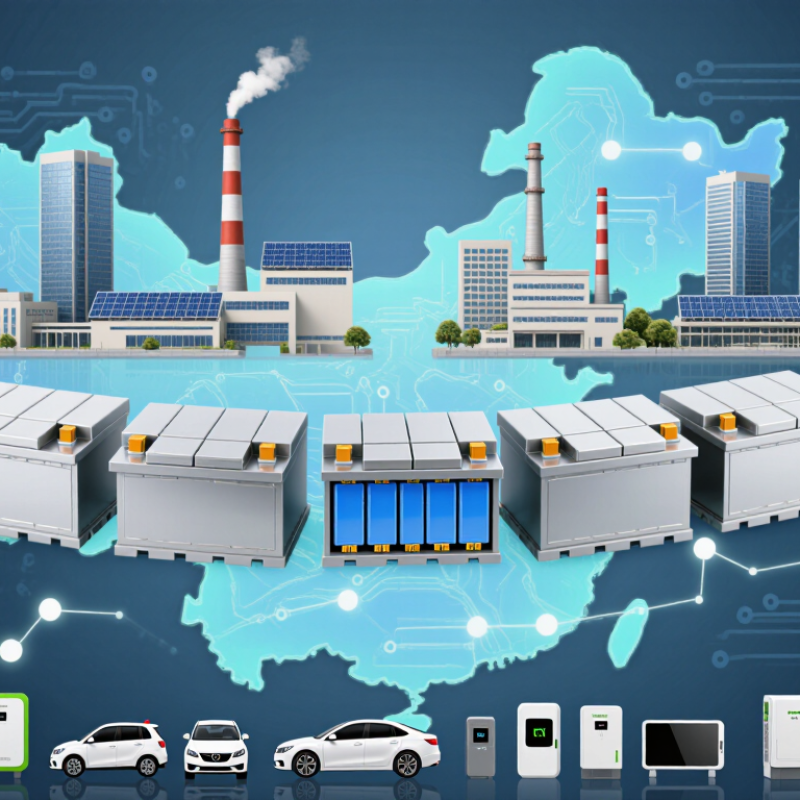
Who Are the Top Lithium Battery Manufacturers in China?

Types of Lithium Batteries Made in China

Lithium batteries made in China cover several chemistries, each suited to different operating needs. Lithium iron phosphate, or LFP, is widely selected for stationary storage and electric vehicles because it offers strong cycle life and thermal stability. Its energy density is generally lower than that of nickel-rich alternatives, so packs may be heavier or larger. Nickel-manganese-cobalt batteries can provide more energy in a compact space, which can help when weight and range matter. Their performance depends on cell design and operating conditions.

Lithium cobalt oxide is common in compact electronics, where high energy density is useful. Lithium titanate charges quickly and handles many cycles, but its lower energy density can limit its appeal for space-constrained products. These chemistries may come in cylindrical, prismatic, or pouch cells; those are physical formats, not battery chemistries. Chemistry alone never tells the whole story. Real-world life also depends on temperature, charging limits, cell matching, and battery management.

Tips: Compare usable capacity, cycle-life test conditions, and temperature limits—not just chemistry names. Ask for independent test data and clear warranty terms. A neat specification sheet helps, but it cannot replace checking how the battery performs in your actual application.

How China’s Lithium Battery Industry Developed

China’s lithium battery industry grew from supplying compact cells for phones, cameras, and laptops into a large-scale supplier for electric vehicles and energy storage. As demand shifted, manufacturers expanded cell production and local networks for refining lithium and making cathode and anode materials. The change was not a smooth climb: factories needed skilled workers, reliable power, and steady access to raw materials. Small process improvements mattered, from cleaner production lines to tighter control of electrode coatings.

The scale is measurable. The International Energy Agency’s 2022 report, Global Supply Chains of EV Batteries, estimated that China held about 75% of global battery-cell manufacturing capacity in 2021, alongside roughly 70% of cathode and 85% of anode material capacity. Domestic demand reinforced that industrial base: the IEA’s Global EV Outlook 2024 reported that China accounted for around 60% of global electric-car sales in 2023. That changed the scale. Still, capacity is not the same as output, and national averages can hide differences between plants. The industry’s growth reflects years of investment and learning, but its next gains depend on efficient production, material recovery, and dependable quality—not factory size alone.

China’s Lithium-Ion Battery Industry: Annual Output

China’s lithium-ion battery output rose sharply from 157.2 GWh in 2020 to about 940 GWh in 2023, reflecting the rapid expansion of the country’s battery industry. Figures are rounded where reported.

Source: China’s Ministry of Industry and Information Technology (MIIT), annual industry reports.

Leading Lithium Battery Manufacturers in China

Leading lithium battery manufacturers in China are best assessed by production scale, cell consistency, safety testing, and supply-chain control—not capacity announcements alone. The International Energy Agency’s 2022 report, Global Supply Chains of EV Batteries, estimated that China held about 75% of global battery-cell manufacturing capacity. It also reported roughly 70% of cathode material production and 85% of anode material production. These figures show why Chinese suppliers play a central role in the industry. But capacity is not the same as dependable output. A large factory matters only when its cells meet specifications batch after batch.

For buyers, useful checks include independently verified energy-density data, cycle-life testing, traceable material records, and clear warranty terms. Ask for test conditions, too. A cycle-life figure without temperature, charge rate, and depth of discharge tells only part of the story. Leading manufacturers typically serve several markets, from electric vehicles to stationary storage, where performance needs differ. The ranking is not perfectly tidy: public reports measure capacity, shipments, or revenue in different ways. Even experienced buyers can misread those comparisons. Factory audits and sample testing provide a more grounded view than a single league table.

Key Technologies and Applications of Chinese Battery Makers

Chinese battery manufacturers develop lithium-ion cells for electric vehicles, energy storage, and portable equipment. Their work combines chemistry, cell design, manufacturing controls, and battery-management software. Lithium iron phosphate cells are often selected for their thermal stability and long cycle life. Nickel-rich chemistries can offer higher energy density, though they require careful thermal and safety management. Neither option fits every application.

Cell-to-pack designs reduce unused space between cells, while battery-management systems monitor voltage, temperature, and charging conditions. In a storage installation, for example, sensors can track temperature changes across separate battery racks. Cooling systems then help keep operating conditions within the intended range. These technologies matter, but performance depends on design and quality control together. The comparison is not always tidy; published specifications may not reveal how a system performs after years of use.

Tips: Compare usable energy, cycle-life test conditions, operating temperature, and warranty terms—not just rated capacity. Ask how the system handles heat and cell imbalance. Check independent test data where available. Trade-offs remain.

Who Are the Top Lithium Battery Manufacturers in China? - Key Technologies and Applications of Chinese Battery Makers

The table summarizes major manufacturer profiles and commonly used technologies in China’s battery industry. Performance figures are indicative cell-level ranges, not guarantees for every product or manufacturer.

Manufacturer Profile Common Cell Technologies Indicative Cell-Level Energy Density Typical Applications Key Manufacturing Capabilities Technology and Market Notes
Large-scale electric-vehicle cell makers Lithium iron phosphate (LFP); nickel-rich ternary chemistries; prismatic, pouch, or cylindrical formats LFP: approximately 150–200 Wh/kg; nickel-rich cells: approximately 200–300 Wh/kg Passenger electric vehicles, commercial vehicles, and plug-in hybrid vehicles High-volume electrode coating, cell assembly, formation, testing, and battery-pack integration LFP prioritizes cost and thermal stability; nickel-rich chemistries generally offer higher energy density. Actual results depend on cell design and test conditions.
Energy-storage-focused cell makers LFP cells, commonly in large prismatic formats; integrated battery and control systems Typically around 150–190 Wh/kg for cell products, depending on format and design Grid-scale storage, renewable-energy projects, commercial buildings, and backup power Large-format cell production, battery management systems, thermal management, and system-level safety testing Stationary storage prioritizes service life, safety, and cost per delivered kilowatt-hour over maximum energy density.
Commercial-vehicle and industrial battery makers LFP and, for selected use cases, nickel-based lithium-ion cells Broadly about 150–250 Wh/kg, varying with chemistry and product format Electric buses, trucks, forklifts, port equipment, and industrial vehicles Robust pack design, vibration and environmental testing, high-current delivery, and fleet-service support Products are designed around duty cycle, operating temperature, charging frequency, and vehicle integration requirements.
Consumer-electronics battery makers Lithium-ion pouch and cylindrical cells, including graphite-based anodes and multiple cathode chemistries Often approximately 200–300 Wh/kg at cell level, depending on chemistry and format Smartphones, laptops, tablets, wearables, and other portable devices Thin-cell manufacturing, precision assembly, compact pack design, and stringent quality control Compact dimensions and high energy per unit of weight are important; product design must also meet device-specific safety requirements.
Emerging sodium-ion battery developers Sodium-ion cells using sodium-based cathodes and hard-carbon anodes; this is a non-lithium chemistry Approximately 100–160 Wh/kg for many announced or early commercial cell designs Stationary storage and selected low-speed or short-range mobility applications Pilot and commercial-scale cell development, materials processing, and adaptation of lithium-ion production methods Sodium-ion may reduce dependence on lithium-containing materials, but its energy density and market maturity differ from established lithium-ion products.

Note: Energy-density ranges are approximate and vary with chemistry, cell format, design generation, and measurement method. They should not be treated as rankings or as specifications for any individual manufacturer.

How to Compare China’s Lithium Battery Manufacturers

Comparing China’s lithium battery manufacturers starts with the battery’s intended job. A warehouse forklift, home storage system, and electric vehicle place different demands on a battery. Ask which cell chemistry is offered and why it suits your use. Then compare usable capacity, operating temperature range, cycle-life figures, and warranty terms. Details matter. A cycle-life claim means little without its test conditions, including charge rate, temperature, and remaining capacity threshold.

Look beyond the specification sheet. Ask how cells are matched, how batches are traced, and what checks happen before shipment. Request sample test reports and confirm that safety certifications apply to the exact product and destination market. If possible, review a sample’s labels, connectors, and communication interface against your system requirements. A polished factory video is not an audit. Compare production capacity with your forecast, but ask how lead times change during peak demand. Also assess technical support: who handles a fault, and how quickly can they provide diagnostic information? Price still matters, of course. Yet the cheapest quotation may omit integration work or after-sales support. Even careful comparisons leave uncertainty; I would treat unusually confident promises as a reason to ask for clearer evidence.