
three part picture of forklifts

Top 10 Toyota Yaris Mirrors for Global Buyers

Choosing a Toyota Yaris Mirror is not just a matter of matching the car’s color. Buyers must confirm the model year, market, body style, and whether the mirror has features such as electric adjustment, heating, or an indicator. A part that looks right in a product photo may still have the wrong connector or mounting points. Small details matter.

The global market makes careful identification especially important. OICA reported approximately 93.5 million motor vehicles produced worldwide in 2023, reflecting the scale and diversity of vehicle markets. Meanwhile, S&P Global Mobility estimated that the average age of light vehicles in the United States reached 12.6 years in 2024. That figure applies to the U.S., not every country, but it illustrates why replacement-part availability remains relevant. A damaged mirror can affect visibility and daily driving, so buyers should compare specifications—not just price.

This guide to the Top 10 Toyota Yaris Mirrors for Global Buyers focuses on practical checks: left- or right-hand fitment, glass type, adjustment method, wiring, and regional compatibility. Verify the vehicle identification details and the seller’s fitment notes before ordering. Keep the original mirror nearby for comparison. Even then, uncertainty can remain; trim names and equipment may vary between markets. That is worth checking with a qualified parts supplier or Toyota dealer.
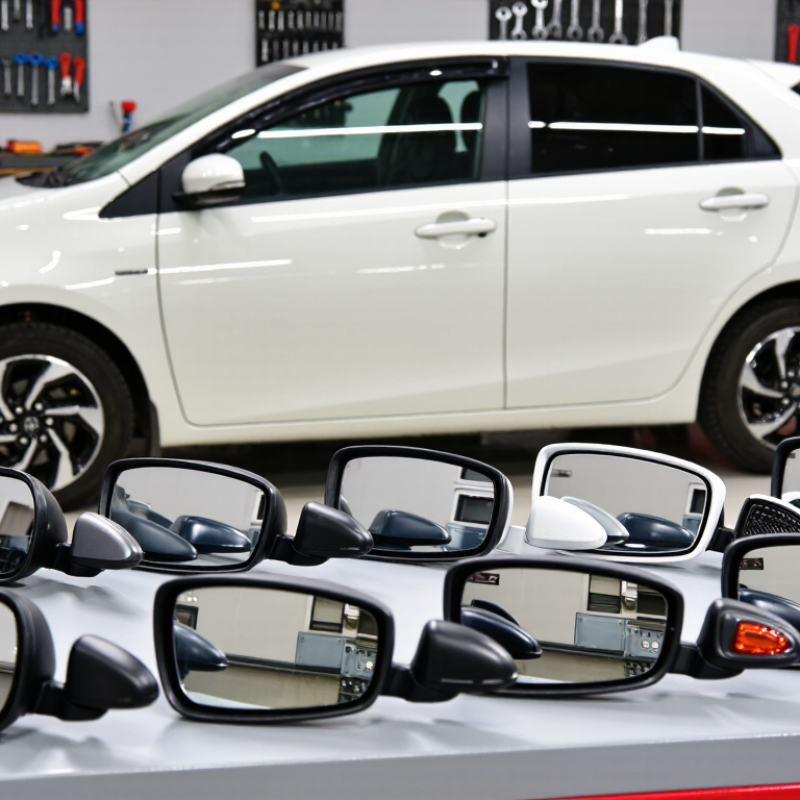
Top 10 Toyota Yaris Mirrors for Global Buyers

Toyota Yaris Mirror Types and Their Core Functions

A compact hatchback’s mirror set usually combines a flat driver-side mirror with a convex passenger-side mirror. The flat glass preserves distance more naturally. Convex glass widens the view, but vehicles can appear farther away. Check the outer edge before changing lanes. Small details matter.

Power adjustment helps drivers set the glass from the seated position, while heating can clear light frost and condensation. Folding housings reduce exposure in tight parking spaces; integrated indicators make a turn signal easier to notice from the side. These features are useful, but not every trim includes them, so buyers should verify the actual assembly and connector before ordering. The US National Highway Traffic Safety Administration’s FMVSS No. 111 sets rear-visibility requirements for mirrors, making field of view a practical selection point, not just a comfort feature. Its 2014 rear-visibility rulemaking estimated that camera systems could prevent 58–69 fatalities annually; that figure concerns camera systems, not mirrors alone. Mirrors still need careful adjustment. A blind spot can remain, and this is easy to forget.

Top 10 Toyota Yaris Mirrors for Global Buyers - Toyota Yaris Mirror Types and Their Core Functions

Mirror equipment varies by model year, trim, and market. The types below describe common mirror designs and functions; not every type is available on every Yaris.

Mirror type Core function Typical features Buyer considerations
1. Manual-adjustment side mirror Lets the driver set the mirror angle by hand to view traffic behind and beside the vehicle. Simple mechanical adjustment; commonly paired with a manual folding joint. Check whether adjustment is made at the mirror itself or through an interior control.
2. Electrically adjustable side mirror Moves the mirror glass using an electric motor controlled from inside the cabin. Cabin-mounted switch; may offer separate adjustment for left and right mirrors. Confirm connector, wiring, and control compatibility with the vehicle’s year and trim.
3. Heated side mirror Uses an electric heating element behind the glass to help clear light frost, condensation, or mist. Usually activated by a rear-window defogger control or a dedicated switch. Verify that the vehicle has the required wiring and control; heating does not replace manual snow removal.
4. Manually folding side mirror Folds inward by hand to reduce the mirror’s projection when parked or passing through a narrow space. Pivoting joint; may be combined with manual or electric glass adjustment. Check the folding direction and joint design against the original mirror assembly.
5. Power-folding side mirror Folds and unfolds electrically, typically using a cabin switch or vehicle locking controls. Electric folding motor; some versions combine folding with powered glass adjustment. Confirm the vehicle supports powered folding; the mirror may require matching switches and wiring.
6. Wide-angle or aspherical mirror glass Provides a wider view of adjacent lanes and can help reduce blind areas beside the vehicle. May use a curved outer section; some glass carries a small warning marking. Objects can appear smaller or farther away; check the glass shape and mounting points before purchase.
7. Side mirror with integrated turn signal Adds a visible indicator on the mirror housing to communicate a turn or lane-change intention. Typically uses an LED or bulb module connected to the vehicle’s indicator circuit. Check the electrical connector, lamp position, and local lighting requirements.
8. Side mirror with blind-spot indicator Displays a visual alert when a compatible driver-assistance system detects a vehicle in a monitored area. Indicator may be built into the glass or housing and depends on sensors and vehicle electronics. A mirror alone does not provide detection; confirm the complete system is installed and compatible.
9. Auto-dimming interior rear-view mirror Automatically reduces reflected glare from headlights behind the vehicle. Uses light sensors and a dimming element; some versions include a compass or other display. This is a cabin mirror, not a side mirror; check mounting and electrical connections.
10. Complete replacement mirror assembly Replaces a damaged mirror housing and may restore adjustment, folding, heating, or indicator functions. Can include housing, glass, mounting base, actuator, wiring, and optional lighting or heating components. Match the side, production year, body style, steering configuration, connector, and fitted options.

How Yaris Generations and Regional Specifications Affect Fit

A replacement mirror must match more than the hatchback’s nameplate. Production year, door shape, mounting points, and electrical connector can change between generations. A mirror may bolt on yet fail to connect to the adjustment motor or heating circuit. Check the original unit’s connector pins, folding function, and signal-light housing before ordering. Small differences matter.

Regional specifications complicate the choice. Left-hand-drive and right-hand-drive versions can use different glass curvature and viewing angles, while trim levels may add heating or power folding. UNECE Regulation No. 46 sets mirror classes and field-of-vision requirements; NHTSA’s FMVSS No. 111 addresses rear visibility in the United States. These are not interchangeable fitment guarantees. Compare the vehicle’s market, build year, and equipment code. Measure twice.

The replacement market also spans older vehicles. ACEA’s 2024 “Vehicles on European Roads” report puts the average EU passenger car age at 12.3 years in 2022. That long service life makes generation-specific checks especially useful. Still, catalog listings can be incomplete, and model-year labels sometimes overlap. Use the original mirror’s shape and connector as evidence, then confirm fitment with the supplier. A photo helps, but it is not proof.

Top 10 Toyota Yaris Mirrors for Global Buyers — How Yaris Generations and Regional Specifications Affect Fit

Approximate global debut year by Yaris platform generation

Platform generations provide a useful starting point for mirror searches, but they do not guarantee a match. Mirror shape, mounting points, wiring, and features can vary by model year and regional specification. Confirm the vehicle’s market, build year, and original mirror details before ordering.

Key Features to Compare When Choosing a Replacement Mirror

A replacement mirror should match the vehicle’s model year, trim, and installation side. Small differences matter. Check the mounting points and connector shape against the original part before ordering. A mirror that looks right may still use a different plug or bracket. Confirm whether the glass is heated, power-adjustable, or manually adjusted. These features affect compatibility and daily convenience.

Look closely at the mirror glass and housing. A clear, correctly curved lens helps preserve a useful view of nearby traffic. Some versions include a turn signal or power-folding function; others do not. Compare these details with the existing mirror and vehicle specifications. Also consider the housing finish and whether the replacement includes a painted cover. Not every listing explains this clearly, so ask for confirmation when details are missing. That extra check can feel tedious.

Tips: Photograph the old mirror’s connector, mounting area, and feature controls before shopping. Compare those images with the listing, and verify fitment using the vehicle identification details. After installation, adjust the glass from the driver’s seat and check for vibration or blind spots. If the view feels slightly different, pause and reassess rather than assuming it is normal.

Top 10 Toyota Yaris Mirrors for Global Buyers

For global buyers, the best replacement mirror is the one that matches the vehicle’s exact year, generation, and side. A useful top-ten shortlist should compare complete assemblies, glass-only replacements, heated units, power-adjustable versions, and manual options. Check the mounting points and connector before ordering. A plug that looks close may still be wrong.

OICA reported 92.7 million new vehicles sold worldwide in 2023, a reminder that replacement needs span many markets. That figure does not measure mirror demand, but it highlights why one fitment assumption rarely works everywhere. Left-hand-drive and right-hand-drive versions can differ in glass curvature and viewing angle. Check the part number against the vehicle identification details, then confirm functions such as heating, folding, and indicator lamps. UN Regulation No. 46 also sets requirements for indirect-vision devices, including mirrors; local specifications may vary.

For buyers comparing ten options, prioritize a clear field of view, secure housing, smooth adjustment, and documented fitment. Inspect product photos for the mounting base and wire count, not just the painted cover. One caveat: a perfect-looking assembly can still be incompatible. I would verify the return policy, too; it is easy to overlook until the box arrives. A slightly imperfect paint match may be acceptable, but loose adjustment or distorted glass is not.

Installation, Adjustment, and Care for Yaris Mirrors

Correct installation starts with a stable mirror housing and clean mounting surface. Follow the vehicle service manual’s fastener guidance; overtightening can crack a mount or distort its position. Sit in your normal driving posture, then adjust each side mirror until the vehicle’s flank just leaves the inner edge. A small overlap with the rearview mirror helps track vehicles changing lanes. Check the view from the driver’s seat, not while leaning toward the glass. Small shift. Check again.

Adjustment supports awareness, but it cannot remove every blind zone. A 2017 Insurance Institute for Highway Safety analysis found rearview cameras were associated with 17% fewer police-reported backing crashes. That figure concerns cameras, not side mirrors, yet it shows why checking several views matters. Before driving, look for loose joints, cracked glass, or vibration. If the image shakes over a smooth road, inspect the mount rather than repeatedly readjusting the glass.

Tips: Clean mirror glass with a soft microfiber cloth and a mild cleaner; gritty towels can leave fine scratches. In cold weather, clear ice gently instead of forcing a powered mirror to move. After replacement, compare both side views from the driver’s seat and ask someone to confirm the housing sits evenly. A quick driveway check can miss a blind spot, so verify again in a safe, stationary setting.