Choosing a fixed guards fence is not simply a matter of enclosing machinery. The guard must suit the equipment, the work area, and the way people move through it. A mesh panel may provide clear visibility, while a solid panel can offer a more complete physical barrier. Each design has practical trade-offs.
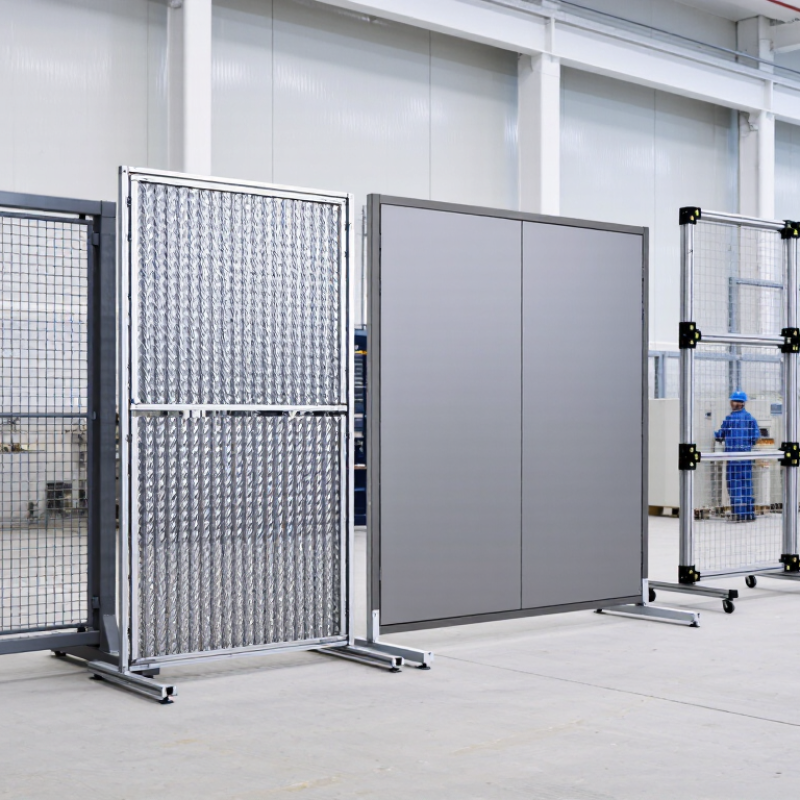
Common options include welded wire mesh, expanded-metal panels, solid steel panels, and modular framed fencing. Mesh guards let operators inspect equipment without opening an access point. Expanded metal offers a rigid surface with openings, while solid panels may help separate nearby work zones. Modular systems can be easier to reconfigure when a production line changes. Details matter.
Selection should begin with a site-specific risk assessment and the machine manufacturer’s guidance. Consider the size and position of openings, the strength of frames and fixings, and whether doors need monitored interlocks. A barrier that looks sturdy may still leave an awkward gap near a conveyor or moving component. That deserves a closer look.
This guide compares the main fixed guard types and explains where each may be useful. It also highlights installation, visibility, access, and maintenance considerations. No design fits every site. The best choice depends on documented hazards, operating conditions, and competent review—not appearance alone. A careful comparison can help teams ask better questions before specifying or installing a guard.
A fixed guard fence is a stationary barrier that keeps people away from hazardous machine areas. Under OSHA 29 CFR 1910.212, employers must use one or more guarding methods to protect workers from hazards such as points of operation, ingoing nip points, and rotating parts. The regulation does not prescribe one universal fence design. The right layout depends on the machine, its hazards, and how workers use it.
A fence should be secured and positioned so workers cannot reach the danger zone through or around it. OSHA says guards should be attached to the machine where possible, or secured elsewhere if that is not practical. Openings, gates, and the distance from moving parts all matter. A small gap can still be a reach-through hazard. Looks safe isn’t enough. Assess the full work area, including material-loading points and nearby walkways. If a gate allows access, consider whether an interlock or another safeguard is needed for the specific risk. Maintenance access deserves attention too; a fence that is frequently bypassed may signal a poor design. It’s worth checking, and checking again, after equipment or workflows change.
| Fixed Guard Configuration | Typical Use | How It Protects | Key Design Considerations | OSHA Reference and Practical Check |
|---|---|---|---|---|
| Perimeter fence enclosure | Robotic cells, automated production lines, and machinery with hazardous motion across a defined area. | Forms a physical boundary that helps prevent people from entering the hazard area during operation. | Secure the fence to a stable structure; consider openings, reach-through access, material flow, and foreseeable access routes. A fixed fence alone may not be suitable where frequent entry is needed. | OSHA 29 CFR 1910.212(a)(1) requires guarding against hazards such as points of operation, ingoing nip points, and rotating parts. Verify that the enclosure prevents access to the hazard. |
| Point-of-operation barrier guard | Presses, cutting equipment, and other machines where the main hazard is at the point where work is performed. | Separates the operator from the point of operation while the machine is running. | Provide protection against reaching over, under, around, or through the guard. The guard must not create a new hazard or unreasonably interfere with the work. | OSHA 29 CFR 1910.212(a)(3)(ii) requires the point-of-operation guard to prevent the operator from placing any part of the body in the danger zone during the operating cycle. |
| Fixed guard for belts, pulleys, and gears | Exposed power-transmission components, including belts, pulleys, gears, and sprockets. | Encloses or screens moving parts that could catch clothing, hair, or body parts. | Cover the hazardous moving components and secure the guard in position. Inspect for missing fasteners, damage, and gaps that could permit access. | OSHA 29 CFR 1910.212(a)(1) addresses hazards from rotating parts and ingoing nip points. Section 1910.219 contains additional requirements for mechanical power-transmission apparatus. |
| Fixed mesh or expanded-metal barrier | Equipment perimeters and machinery where visibility, ventilation, or material observation is useful. | Creates a physical barrier while allowing operators to see equipment through the panels. | Choose openings and positioning that prevent access to hazards. Mesh visibility does not itself make a guard safe; assess reach-through and access from every side. | OSHA 29 CFR 1910.212(a)(1) sets the general guarding requirement. Evaluate the installed barrier against the actual hazard and access conditions rather than relying on a material label. |
| Fixed access-side or rear guard panel | Non-operating sides of machines where a person could otherwise reach moving parts or enter a hazardous area. | Blocks access from sides or the rear that are not used for normal machine operation. | Secure panels against unintended removal and include all accessible sides in the risk assessment. If routine access is necessary, a fixed panel may not be the appropriate access-control method. | OSHA 29 CFR 1910.212(a)(1) requires guarding of hazardous machine areas. Confirm that the guard protects employees who may be exposed, not only the primary operator. |
| Fixed guard with a service opening | Machines that require occasional inspection or service access to an otherwise guarded hazard area. | Provides a barrier during normal operation; the opening must not permit exposure to hazardous motion while the machine is operating. | A removable or openable panel is not a fixed barrier while it is open. Establish safe shutdown and hazardous-energy-control procedures before access; do not treat the guard as a substitute for lockout/tagout. | OSHA 29 CFR 1910.212(a)(2) recognizes guarding methods, and 29 CFR 1910.147 addresses control of hazardous energy during servicing and maintenance. Select safeguards appropriate to the task and access frequency. |
Important: OSHA 29 CFR 1910.212 does not prescribe a universal list of fixed-fence designs or a single standard fence height for all machines. Guard selection and layout must address the specific hazards, access points, and work conditions. A fixed guard is secured in place and is not intended to provide routine access to the hazard area.