three part picture of forklifts

What Is an Aluminum Tube Evaporator?

An Aluminum Tube Evaporator is a heat exchanger that helps remove heat from air, liquid, or another process stream. Its aluminum tubes carry refrigerant or a secondary fluid, while heat passes through the tube walls. In refrigeration equipment, this process can cool the surrounding air as refrigerant evaporates inside the tubes. The exact design varies. Tube diameter, wall thickness, fin arrangement, and circuit layout all affect heat transfer and pressure drop. A compact coil behind a refrigerator panel may look simple, but its performance depends on careful design and assembly.

The term does not describe one universal product. Some units use bare tubes; others add closely spaced fins to increase the surface area exposed to air. Aluminum can offer low weight and useful thermal conductivity, but suitability depends on operating conditions, fluid compatibility, joint design, and maintenance needs. That detail matters. Buyers and engineers should review rated capacity, operating pressure, temperature range, and manufacturer documentation rather than choosing by material name alone. Installation and cleaning practices can also influence service life. Even a well-made evaporator may underperform if airflow is blocked or its system is poorly matched. That is easy to overlook. This guide explains how an Aluminum Tube Evaporator works, where it is commonly used, and which practical details deserve closer attention. Some specifications vary by model, so verify them before comparing products.
What Is an Aluminum Tube Evaporator?

Definition and Role of an Aluminum Tube Evaporator

An aluminum tube evaporator is a heat exchanger that uses aluminum tubing to absorb heat from air or another surrounding medium. Refrigerant flows through the tubes at low pressure and changes from liquid to vapor as it collects heat. That phase change is the core of its cooling role. In many designs, fins increase the surface area around the tubes, helping heat move into the refrigerant more efficiently.

In a refrigerator, display case, or cooling unit, the evaporator helps lower the temperature of the cabinet or process space. A fan may move air across its surface; in other systems, the surrounding fluid contacts the coil directly. Tube layout, fin spacing, and airflow all affect performance. The textbook picture is tidy. Real coils are less so: dust, frost, or uneven airflow can reduce heat transfer, and the right design depends on operating conditions.

Tips: Check that air can pass freely across the coil, and inspect for frost or dirt during routine maintenance. Do not assume every aluminum tube evaporator has the same construction or service needs. Consult its technical specifications before cleaning or adjusting it.

Key Components and Materials

An aluminum tube evaporator transfers heat from surrounding air into refrigerant flowing through its tubes. Its core usually includes aluminum tubes, closely spaced fins, inlet and outlet connections, and headers or manifolds. The headers distribute refrigerant through the tube circuits; the fins increase the surface area exposed to moving air. Small details matter. Uneven fin spacing can restrict airflow or reduce heat exchange.

Tube and fin alloys are selected for thermal performance, weight, formability, and resistance to the operating environment. Aluminum conducts heat efficiently and keeps the assembly relatively light, but it can be vulnerable to corrosion in some conditions. Tube-to-fin contact is also important: a poor bond can limit heat transfer even when the materials look sound. Depending on the design, components may be joined by brazing or another suitable process.

One trade-off is easy to overlook: tighter fins may add surface area, yet also make cleaning harder. Real systems involve compromises.

Tips: Check for blocked fins, damaged connections, and signs of corrosion during routine inspection. Keep fins straight; bent sections can impede airflow. Match replacement parts to the original design. A quick visual check helps, but it cannot confirm internal refrigerant flow.

How an Aluminum Tube Evaporator Works

An aluminum tube evaporator transfers heat from air or another fluid into refrigerant. In a common tube-and-fin design, refrigerant flows inside aluminum tubes while fins increase the surface area exposed to moving air. Low-pressure refrigerant enters the coil as a cold liquid-vapor mixture. As warmer air passes over the fins, heat crosses the metal wall and boils the remaining liquid. The refrigerant leaves as vapor and returns to the compressor. That is the basic cycle.

Small details matter. Airflow, refrigerant charge, tube geometry, and fin spacing all affect performance. If the coil surface falls below the air’s dew point, moisture condenses on the fins and drains away. In colder conditions, frost can restrict airflow. The IEA’s 2018 report, The Future of Cooling, projects that global air-conditioner stock will grow from 1.6 billion units to 5.6 billion by 2050, while cooling energy demand more than triples. Efficient heat exchange matters at that scale. Still, a neat diagram hides real operating variation: dust, uneven airflow, and changing loads can reduce heat transfer. Aluminum also varies by alloy and construction, so “aluminum tube” alone does not predict coil performance.

Common Designs and Applications

An aluminum tube evaporator is a heat exchanger in which refrigerant flows through aluminum tubing and absorbs heat from surrounding air. Its design depends on airflow, cooling capacity, available space, and the operating conditions of the system.

Small details matter.

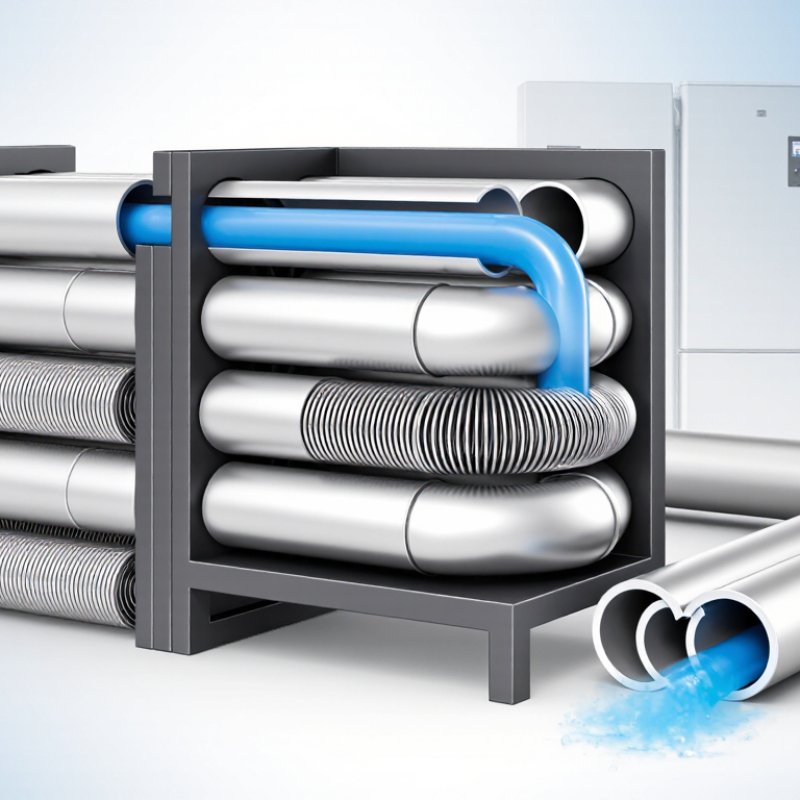
A common design uses straight tubes connected by return bends, forming a compact serpentine coil. Another uses multiple parallel tubes, often paired with fins that increase the surface area exposed to air. Fans move air across the fins in applications such as refrigerators, display coolers, and air-conditioning units.

Bare-tube versions can suit simpler systems where easy cleaning or low airflow resistance is important. Each layout trades space, heat transfer, and pressure drop differently.

These evaporators are used in household refrigeration, commercial cold storage, vehicle climate systems, and some industrial cooling equipment. In a walk-in cooler, for example, a finned coil can sit above the product area while a fan circulates chilled air.

Tube thickness, joint quality, and refrigerant compatibility affect performance and service life. Aluminum is lightweight and transfers heat effectively, but it is not ideal for every environment or system design.

Corrosion, vibration, and uneven airflow can become real problems. The neat drawings do not always show that.

Benefits, Limitations, and Maintenance Considerations

What Is an Aluminum Tube Evaporator?
Benefits, Limitations, and Maintenance Considerations

An aluminum tube evaporator moves heat from air or liquid into refrigerant through its tube-and-fin surface. Its low mass is a practical advantage: ASM Handbook data place aluminum’s density near 2.7 g/cm³, compared with about 8.96 g/cm³ for copper. Lighter assemblies can simplify handling and reduce equipment weight. There is a sustainability angle, too. The International Aluminium Institute reports that recycling aluminum uses roughly 5% of the energy needed for primary production. That benefit depends on recovering clean, recyclable material at end of life.

There are trade-offs. Aluminum’s thermal conductivity varies by alloy and is generally lower than copper’s, so tube geometry and surface area matter. In wet systems, contact with dissimilar metals can promote galvanic corrosion, especially where water collects around joints. Chloride exposure deserves attention. Not always. A light coil can still fail early if its materials and surroundings are poorly matched.

Keep the coil clean, but avoid hard tools that can crush fins or damage thin tube walls. Inspect for oily residue, which may indicate a refrigerant leak, and check drain pans for standing water. Follow the equipment maker’s approved cleaning method and use compatible repair materials; aluminum repairs may require specialized joining skills. ASHRAE’s refrigeration guidance emphasizes sound system operation and maintenance, but inspection intervals should reflect dust, moisture, and operating hours. A spotless coil is not proof of a sound system. Look closely at joints and supports, too.

What Is an Aluminum Tube Evaporator? - Benefits, Limitations, and Maintenance Considerations

Aspect What It Is or Does Benefits Limitations Maintenance Considerations
Basic design An evaporator is the part of a refrigeration system where refrigerant absorbs heat as it evaporates. An aluminum tube evaporator uses aluminum tubing, often combined with fins, to transfer heat between the refrigerant and the surrounding air or fluid. Aluminum components can provide a practical balance of low weight, heat-transfer capability, and material cost. Performance depends on the complete design, including tube dimensions, fin spacing, airflow, refrigerant, and operating conditions—not just the tube material. Keep the unit’s air passages clear and check that fans, drains, and controls operate as specified for the equipment.
Heat transfer Heat passes through the tube wall from the warmer air or fluid to the colder refrigerant inside the evaporator. Aluminum conducts heat well and can be formed into lightweight heat-exchanger components. Actual heat-transfer performance also depends on surface area, airflow, frost buildup, refrigerant distribution, and system design. Remove dust and debris using cleaning methods approved for the coil. Avoid bending fins, which can restrict airflow.
Weight and handling Aluminum is less dense than copper, so aluminum tubing and components can help reduce heat-exchanger weight. Lower component weight can make handling and installation easier and may reduce the weight of the overall assembly. Thin-walled tubing and fins can be vulnerable to dents or mechanical damage during shipping, installation, or cleaning. Use suitable lifting and handling practices. Protect tubing and fins from tools, impact, and excessive contact.
Corrosion behavior Aluminum forms a naturally occurring oxide layer that can help protect its surface in many environments. It can perform well when the alloy, surface treatment, and operating environment are appropriately matched. Corrosion resistance is not universal. Moisture, salts, some chemicals, and contact with dissimilar metals in a conductive environment can increase corrosion risk. Inspect for corrosion, damaged coatings, and persistent moisture. Use only cleaners and protective treatments approved for the specific coil.
Refrigerant and system compatibility The tubing, joints, lubricant, refrigerant, and other system materials must be compatible as part of the complete refrigeration circuit. A correctly engineered aluminum evaporator can be used in systems designed for its materials and operating conditions. Not every aluminum coil is suitable for every refrigerant, pressure range, lubricant, or connection method. Compatibility must be confirmed from the equipment specifications. Use the specified refrigerant and follow the equipment manufacturer’s service procedures. Do not assume that components are interchangeable.
Pressure and mechanical loading The evaporator must withstand its rated operating pressure, temperature changes, vibration, and installation loads. A properly designed and tested assembly can provide reliable service within its rated limits. Pressure capacity depends on the specific design, alloy, wall thickness, joints, and manufacturing quality; it cannot be inferred from the material alone. Do not exceed the unit’s rated limits. Have pressure testing and leak checks performed by qualified personnel using approved procedures.
Cleaning and airflow Dust, grease, and other deposits on the air-side surface can reduce airflow and heat transfer. Routine inspection and suitable cleaning can help maintain airflow and operating efficiency. Strong chemicals, high-pressure water, or rough brushing may damage aluminum surfaces, fins, coatings, or joints. Follow the equipment instructions. Isolate power where required, use a non-damaging cleaning method, and keep drain paths clear.
Frost and defrost Moisture can freeze on a cold evaporator surface when operating conditions allow frost to form. Correct airflow and a properly functioning defrost system help the evaporator maintain its intended heat-transfer performance. Excessive frost can restrict airflow and reduce capacity. Defrost requirements vary by application and control strategy. Check for unusual frost patterns and confirm that defrost controls, heaters or other defrost equipment, and drains function as designed.
Leak detection and repair A leak can result from corrosion, vibration, impact, a defective joint, or other damage. Prompt diagnosis can limit refrigerant loss and help prevent further system problems. Repairing aluminum tubing generally requires appropriate materials, equipment, and technician skill. Some damage may require component replacement rather than repair. Have suspected leaks handled by a qualified refrigeration technician. Do not use unapproved sealants or attempt repairs on a charged system.
Inspection schedule Inspection frequency depends on the application, operating environment, equipment instructions, and service requirements. Regular checks can identify blocked airflow, corrosion, physical damage, unusual frost, or drainage problems early. A single fixed interval is not appropriate for every installation, especially where dust, grease, salt, or moisture levels differ. Follow the equipment’s maintenance schedule and adjust inspections to operating conditions. Record findings and any corrective work.