What Are Industrial Printing Systems?
Industrial Printing Systems are production technologies that place text, graphics, codes, or functional coatings onto materials at commercial scale. They work on more than paper. A packaging line may print color onto flexible film, while a factory printer marks serial numbers on metal parts. The equipment, ink, substrate, and curing method must suit the job. Small changes matter. A glossy surface can resist ink; a fast conveyor can leave marks blurred.
A useful industry perspective comes from Frank Romano, a printing-industry analyst and educator. His work treats printing as both manufacturing and communication. Put simply, industrial printing must make an image and make it reliably, shift after shift. This introduction examines the main system types, including inkjet, flexographic, screen, and digital presses. It also looks at substrates, inks, workflow controls, and common quality checks. Readers will see how line speed, resolution, drying time, and maintenance affect the final result. These details are not glamorous. They determine whether a label stays legible or a code scans correctly. The comparison is not always neat: one system can excel on speed but struggle with frequent design changes. Real production involves trade-offs, and specifications alone do not tell the whole story. A careful assessment starts with the material, output requirements, and operating environment—not with a printer brochure.
Definition and Scope of Industrial Printing Systems
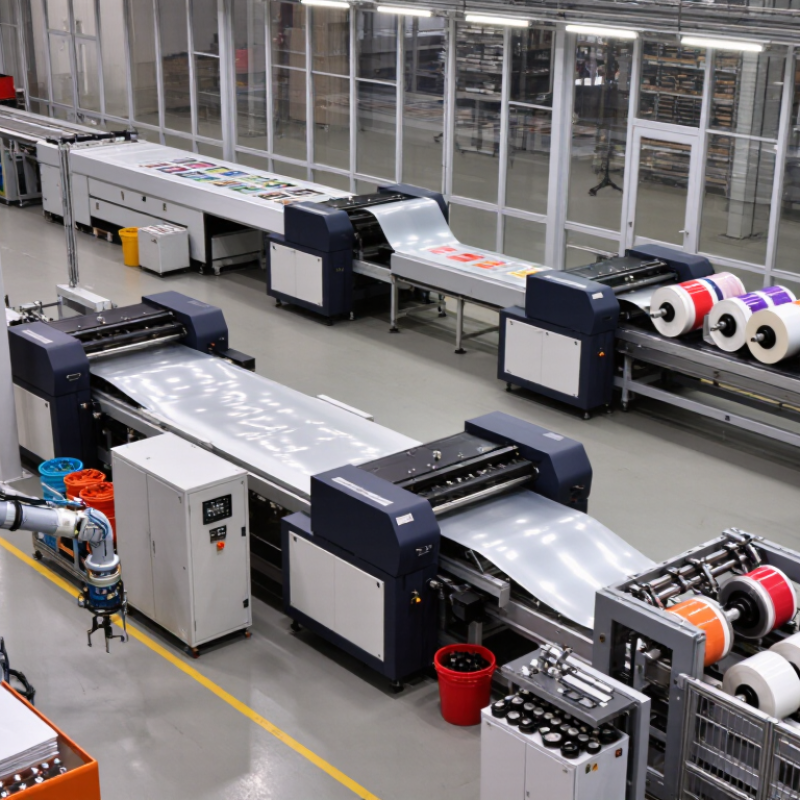
Industrial printing systems are production tools designed to place text, graphics, or functional patterns onto materials at repeatable speed and scale. Unlike office printers, they are built to work within manufacturing or packaging processes, often alongside conveyors, cutters, curing units, and inspection equipment. The printed surface might be a carton, a roll of film, a textile, or a shaped component. That distinction matters.
The term covers several technologies, including inkjet, screen, flexographic, and toner-based processes. Each suits different materials, image requirements, production volumes, and operating conditions. A roll-fed film line, for example, may need precise web tension and fast-drying ink. A carton line may prioritize clear codes and consistent placement as boxes pass beneath a printhead. These systems can also include software for preparing artwork, managing job data, and checking print quality. Small details count.
Scope depends on the application. Some installations print only; others connect printing with material handling, drying, curing, or automated inspection. Specifying a system therefore means considering substrate, throughput, durability, maintenance access, and the surrounding line—not just resolution. A high-resolution sample can look impressive, yet prove impractical at production speed. Requirements also change as materials and products change, so early assumptions deserve review. There is no universal setup.
Core Components and How They Work
Industrial printing systems combine material handling, image control, ink delivery, and finishing equipment. The feed mechanism moves paper, film, labels, or rigid panels through the machine at a controlled speed. Rollers, belts, or vacuum tables help keep the material flat. Even a slight skew can blur fine text or shift colors.
A printhead places ink in precise patterns; in some systems, toner or another marking process forms the image instead. A controller translates the job file into instructions for print position, color, and speed. Sensors monitor registration and material movement, while operators check samples for streaks, missing dots, or color drift. Small shifts matter. After printing, heat, ultraviolet light, or airflow may dry or cure the image, depending on the ink and substrate. These settings need testing: too little heat can leave a surface tacky, while too much may warp thin film. That sounds tidy on paper; production lines are less predictable. Dust, humidity, and changing material batches can still affect results, so regular inspection remains part of the process.
Major Printing Technologies Used in Industry
Industrial printing systems use different methods to place text, images, or functional coatings on materials at production scale. Flexography is common for labels, films, and cartons. Its flexible plates transfer ink quickly, while drying stations help prevent smearing on moving webs. Offset printing suits high-volume paper products, where consistent color and fine detail matter. It usually requires setup time, so short runs may cost more per item.
Inkjet systems send tiny droplets directly onto a surface. They can handle changing codes, serial numbers, and graphics without a printing plate. That flexibility is useful on production lines, though nozzle condition and ink compatibility need regular checks. Electrophotographic systems use toner and heat, often for short-run packaging or documents. On heat-sensitive materials, the fusing stage can be a limitation.
Screen printing lays down a thicker ink layer, making it useful for signs, panels, and some printed electronics. Gravure uses engraved cylinders and is suited to very long runs, but cylinder preparation adds cost. No method wins every time. In practice, substrate texture, line speed, curing needs, and acceptable setup waste all shape the choice. A sample run can reveal problems that a specification sheet misses. That step is sometimes skipped.
Materials and Products Suitable for Industrial Printing
Industrial printing is selected by the material and the job, not by the machine alone. Packaging films and paperboard need legible graphics that survive handling. Metal panels, glass, ceramics, and molded plastic parts may need durable markings, control symbols, or decorative finishes. Textiles bring different demands: ink must remain flexible and resist washing. The substrate matters.
Smithers’ report The Future of Functional and Industrial Print to 2026 valued this market at $76.9 billion in 2021 and projected $114.8 billion by 2026. That growth spans varied applications, not one universal process. A porous carton absorbs ink differently from a smooth metal housing. Surface treatment, curing temperature, part shape, and exposure to abrasion or chemicals all influence results. Small details count.
Additive manufacturing extends the material range to printed polymer and metal parts. Wohlers Report 2024 estimated additive manufacturing industry revenue at $20.0 billion in 2023, covering equipment, materials, and services. That figure is not a measure of every industrial printing method, but it shows the scale of production-oriented applications. Samples can mislead. A clean test print may fail after heat, friction, or repeated cleaning; real-use testing is essential, and sometimes the first material choice is simply wrong.
What Are Industrial Printing Systems?
Typical Printing Substrates: Material Density
Industrial printing systems apply text, graphics, or functional coatings to materials such as plastics, glass, and metals. This chart compares the approximate density of common substrate materials; density alone does not determine printability, which also depends on surface energy, preparation, and ink compatibility.
Common Applications Across Manufacturing Sectors
Industrial printing systems place text, codes, graphics, or functional layers directly onto products and packaging. In manufacturing, that can mean batch numbers on a plastic housing, warning symbols on a metal panel, or a barcode on a carton moving down a line. The print method depends on the surface, production speed, and how long the mark must last. Inkjet supports variable data at high speed; screen printing can apply durable, thicker layers. It is not one-size-fits-all.
Applications span automotive parts, electronics, building materials, food packaging, and medical-device components. Electronics plants may print conductive traces or small labels; building-product makers mark pipes and tiles for identification. In food packaging, printers add lot codes that help workers trace a run when a quality issue arises. Deloitte’s 2024 Smart Manufacturing and Operations Survey found that 86% of surveyed manufacturing executives viewed smart manufacturing as a competitiveness driver over the next five years. That makes print integration with production data increasingly useful, though a connected system still needs careful setup. A missed code can slow a line.
Grand View Research estimated the global industrial printing market at about US$20.3 billion in 2022, with projected growth through 2030. The figure signals broad adoption, not guaranteed results for every factory. Operators still need to test adhesion, legibility, and wear on actual materials. A label that looks clear under bright inspection lights may fade after heat, dust, or handling. The fit is not always clean.