How to Use Cold Rolled Coil in Manufacturing Processes?
Cold Rolled Coil plays a significant role in modern manufacturing processes. This versatile material is popular in various industries. It features enhanced surface finish and tighter tolerances compared to hot-rolled metal. Manufacturers utilize Cold Rolled Coil for products like automotive parts, appliances, and furniture.
The process of cold rolling improves the mechanical properties of metal. It increases strength and hardness while making the material easier to shape. However, using Cold Rolled Coil is not without challenges. Manufacturers must carefully manage factors like thickness and surface quality. Mistakes can lead to defects that affect the final product.
Understanding how to effectively implement Cold Rolled Coil is crucial. It requires constant evaluation of production techniques and quality control measures. This exploration will guide manufacturers in optimizing their processes.
Understanding Cold Rolled Coil: Definition and Properties
Cold rolled coil (CRC) is a widely used material in manufacturing. Understanding its properties is crucial for effective application. Cold rolled steel is produced by further processing hot rolled steel. This process improves dimensional accuracy and surface finish. The yield strength of CRC can reach up to 250 MPa or more. This strength makes it suitable for various structural applications.
One key advantage is its smooth surface. It provides excellent paint adhesion and corrosion resistance. However, CRC may not be suitable for all applications. For instance, when welded, it might require additional processing to avoid warping. The thickness of cold rolled coils typically ranges from 0.2 mm to 4.5 mm. This range offers versatility in production.
Additional data shows that the global cold rolled steel market is projected to grow significantly. Reports indicate a growth rate of around 4.5% annually through 2028. This growth highlights the ongoing demand for CRC in automotive, construction, and appliance sectors. Yet, manufacturers must remain aware of fluctuating raw material prices. This can impact production costs and overall profitability. These factors necessitate continuous evaluation of manufacturing processes.
Key Manufacturing Processes Utilizing Cold Rolled Coil
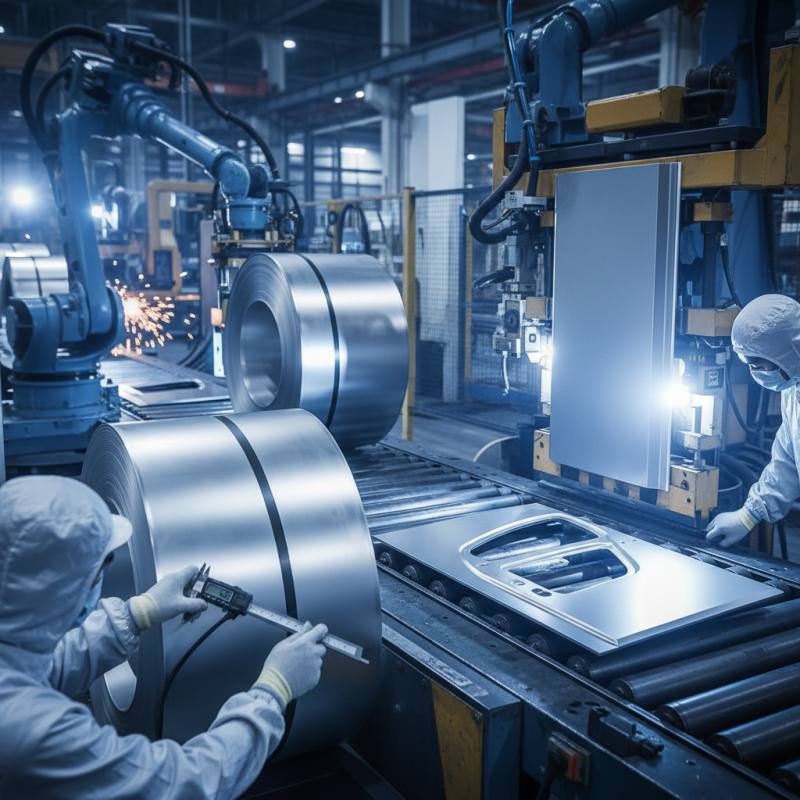
Cold rolled coil is a vital material in various manufacturing processes. It is known for its smooth surface and enhanced strength. Many industries, including automotive and construction, rely on cold rolled coil for their needs. The manufacturing of components such as car bodies and structural beams often utilizes this material due to its durability.
In the automotive sector, cold rolled coil is often used to create precision parts. These parts must meet strict tolerances. The manufacturing process can sometimes lead to defects, like warping or surface imperfections. Regular quality checks are crucial to ensure the final product meets industry standards. In construction, cold rolled coil aids in the production of steel frames and supports, providing robustness.
Another area of usage is in appliance manufacturing. Here, it is essential for components that require both aesthetic appeal and strength. Yet, some manufacturers struggle with effectively transforming cold rolled coil into finished products. They face challenges in metalworking processes, which can result in material wastage. Addressing these inefficiencies is key for better production outcomes.
Advantages of Cold Rolled Coil in Production Efficiency
Cold rolled coil (CRC) is essential in many manufacturing sectors. It offers numerous advantages that significantly boost production efficiency. One key benefit is its smooth surface finish, which allows for better paint adhesion and welding. Manufacturers value this feature when creating products that require aesthetics and durability.
Another advantage of cold rolled coil is its precise dimensions. The manufacturing process ensures tight tolerances, making it ideal for parts that need to fit together perfectly. Reducing the need for secondary operations can save both time and costs. However, this precision requires careful monitoring to maintain quality. Occasionally, variations can occur, necessitating adjustments in the production line.
Cold rolled coil also improves strength and hardness through the cold working process. This enhances the material's performance in various applications. Yet, one must consider the trade-off between ductility and strength. While increased hardness is beneficial, it can make further processing challenging. A balance must be found to avoid production delays. Overall, the advantages of cold rolled coil contribute to improved efficiency, but manufacturers must remain vigilant in managing potential drawbacks.
Applications of Cold Rolled Coil in Different Industries
Cold rolled coil (CRC) plays a significant role in diverse industries. It is mainly used in construction, automotive, and appliance sectors. According to industry reports, the global cold rolled steel market will reach $280 billion by 2026. This growth highlights the importance of CRC in manufacturing.
In construction, cold rolled coil is valued for its strength and durability. It is often utilized in beams, columns, and panels. For instance, CRC can be found in light gauge steel framing. In the automotive sector, CRC is crucial for producing body panels and structural components. The automotive industry demands high-quality steel with precise thickness for safety. Each vehicle produced requires an average of 900 kg of steel, making CRC indispensable.
Tips: Always consider the specifications of the cold rolled coil you are using. Ensure it meets the standards required for your specific application. Understanding the thickness and finish can prevent future issues.
Cold rolled coils are also prevalent in manufacturing appliances. They are used in washing machines and refrigerators. However, not every application is suitable for CRC. Some products may require hot rolled steel instead. Evaluating the requirements before selection is essential to avoid costly mistakes.
Industry Trends and Future Outlook for Cold Rolled Coil Usage
The use of cold rolled coil in manufacturing is gaining traction. It benefits many sectors, including automotive and construction. This material provides excellent surface finish and precise dimensions. As industries push for lighter yet stronger materials, cold rolled coil becomes increasingly essential. Its ability to enhance product longevity cannot be overlooked.
Sustainability is a growing concern in manufacturing. Companies are looking for methods to reduce waste. Cold rolled coil is recyclable and has a lower environmental impact compared to other materials. However, challenges exist. The manufacturing process can be energy-intensive. Critics argue that manufacturers must improve energy efficiency.
The future outlook appears promising. Advanced technologies, like automation and AI, show potential in optimizing production processes. However, the industry must also address fluctuating raw material costs. Creating a balance between innovation and cost-effectiveness is another hurdle. As demand increases, manufacturers must adapt quickly. The landscape will continue to evolve.