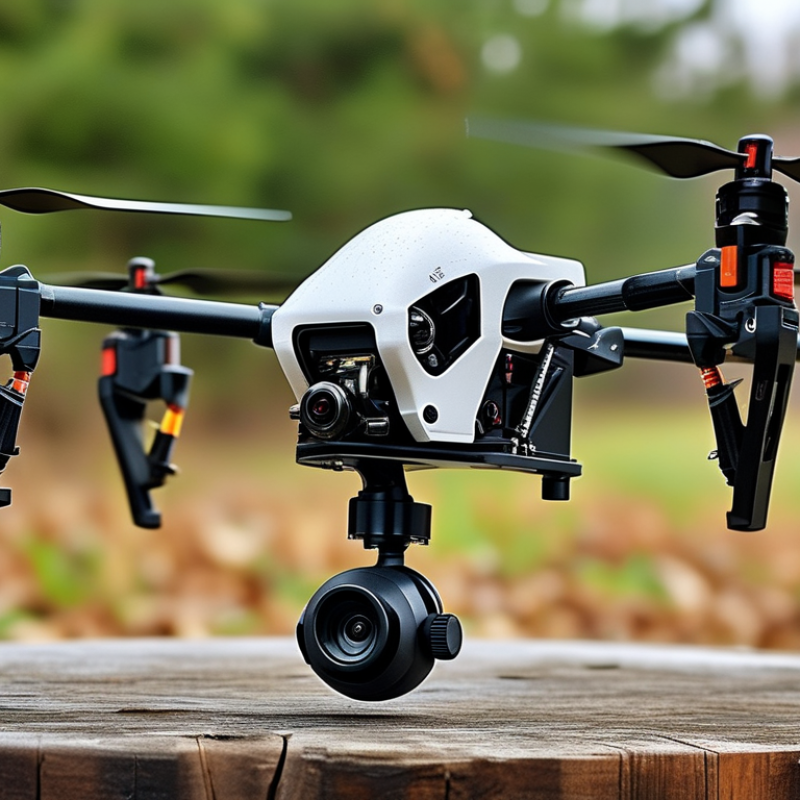
Why Is Drone Gimbal Price So Different? The answer rarely sits on the price tag alone. A lightweight two-axis gimbal may cost less than a professional three-axis system, but the difference becomes obvious in the air. Wind shakes the drone. Motors correct tiny movements. Software reads the camera’s position several hundred times each second. Every correction demands engineering, testing, and power.
Drone industry expert Colin Guinn has said, “The camera is only as good as the platform carrying it.” That idea explains why Drone Gimbal Price varies so widely. A low-cost model may use weaker motors, basic sensors, and limited stabilization software. It can work for short outdoor flights. However, sudden turns may create visible vibration, tilted horizons, or delayed movement. I have seen this difference clearly when comparing footage from a compact travel drone and a cinema-focused platform.
The expensive option is not automatically better. That is the uncomfortable part. A larger gimbal can add weight, shorten flight time, and increase maintenance costs. Buyers should examine payload capacity, sensor accuracy, motor response, vibration isolation, and repair support. Look beyond the first invoice. Ask how the gimbal performs after months of dust, heat, and repeated transport.
Price reflects more than materials. It reflects reliability under pressure. Still, specifications can mislead. A polished product page cannot replace field testing. The best choice depends on the camera, flight conditions, shooting goals, and tolerance for imperfect footage. That last factor matters. Even a premium gimbal cannot rescue careless setup or poor balancing.
Why Is Drone Gimbal Price So Different?
What Is a Drone Gimbal and How Does It Work?
A drone gimbal is a mechanical camera mount that keeps footage steady during flight. It usually moves across three axes: pitch, roll, and yaw. When the drone tilts, tiny sensors detect the change immediately. A control board sends new commands to brushless motors. These motors adjust the camera several times each second. The result is smoother video, even when the aircraft turns or faces light wind. Almost invisible movement is the goal.
Gimbal prices differ because precision, weight, materials, and software vary widely. A basic model may use smaller motors and simpler sensors. It can still work. However, vibration may appear during fast movement or sudden braking. Higher-priced systems often include stronger motors, better balancing, and more accurate calibration. These features matter when a camera carries a heavy lens or flies in unstable air. The price is not only for the metal frame.
Before takeoff, the camera should sit naturally on the gimbal. If it leans, the motors work harder and battery life may decrease. Rubber damping parts also reduce vibration from the propellers. In practical testing, poor balance can ruin otherwise clear footage. I have also found that automatic calibration is not always perfect. A quiet hover may reveal a slow horizon drift. That weakness deserves attention, because a gimbal stabilizes movement, but it cannot correct every flying mistake.
A drone gimbal is a motorized stabilization system that keeps a camera level while the aircraft moves. An inertial measurement unit detects angular movement, and brushless motors make rapid corrections across one, two, or three axes. The chart shows typical non-brand retail price bands by gimbal configuration.
Prices rise with the number of stabilization axes, camera and sensor quality, payload capacity, control precision, and features such as optical zoom, low-light imaging, thermal sensing, vibration isolation, and integrated flight-control software. The figures are indicative USD market ranges for comparable non-brand products.
A gimbal’s price usually follows its imaging hardware, not its appearance. Larger sensors capture cleaner details in low light and support higher dynamic range. According to MarketsandMarkets’ 2024 Drone Camera Market analysis, sensor type, resolution, and stabilization are major market segments. A one-inch sensor can cost far more than a small sensor. Thermal and multispectral modules increase the price again. They require specialized calibration, processing, and testing.
Stabilization also changes the bill. Two-axis systems suit basic inspection work, while three-axis systems maintain smoother footage during wind and sharp turns. Professional units may add horizon correction, vibration isolation, and position accuracy below one degree. The 2024 Drone Market Report from Drone Industry Insights identifies payload capability and sensor integration as key commercial value drivers. That matters in practice. A sealed gimbal surviving dust, rain, and temperature changes needs better materials and tighter manufacturing.
Software is easy to underestimate. Real-time tracking, image fusion, metadata recording, and low-latency transmission can require stronger processors. Grand View Research reported continued double-digit growth in commercial drone demand through 2030, increasing expectations for reliable payloads. Still, higher specifications do not always create better results. I have seen expensive systems produce soft images after poor calibration. The overlooked factor is workflow compatibility. A modest gimbal may be the smarter choice when its data integrates cleanly.
Why Is Drone Gimbal Price So Different?
Material selection strongly affects a drone gimbal’s price. Lightweight magnesium alloy can reduce vibration without adding much mass. Aluminum costs less, but it may transmit more motor noise. Carbon fiber is stiff and light, yet difficult machining can raise production costs. Bearings, motor magnets, wiring, and position sensors also influence the final price. Small differences matter.
Manufacturing quality often separates a reliable gimbal from a fragile one. Precise CNC machining keeps the camera mount balanced. Careful assembly reduces unwanted shaking during slow pans. Better units usually receive motor calibration, vibration testing, and repeated temperature checks. Sealed connectors can protect electronics from dust and light moisture. These steps require skilled workers and additional inspection time. That expense appears in the final price.
Tips: Check the frame material, bearing smoothness, payload rating, and calibration process. Ask whether each unit is tested before shipping. A low price is not automatically poor quality. An expensive gimbal is not automatically excellent, either. I have found that specifications can look impressive while real footage still shows drifting horizons. Small errors grow. Compare sample videos, repair access, spare-part availability, and warranty terms. Also consider your camera’s exact weight. A gimbal that works well under one load may struggle after adding a lens, filter, or protective cage.
Drone gimbal prices differ because stabilization, camera support, and control systems are not built to the same standard. In field testing, a basic gimbal may reduce visible shaking during slow flight, but quick turns can still create tilted horizons. A higher-priced system often uses stronger motors, better position sensors, and faster control loops. These parts react within fractions of a second. Small differences become obvious in windy conditions.
Camera support also affects the cost. A lightweight camera needs less motor power and a simpler mounting plate. Larger cameras require stronger arms, balanced weight distribution, and vibration isolation. Some systems support interchangeable lenses, while others fit only one camera shape. That flexibility adds engineering work. It also adds weight. More weight can reduce flight time, which buyers sometimes overlook. I have made that mistake myself.
Control systems create another price gap. Entry-level models may offer basic pitch control through a remote controller. Advanced systems can manage smooth movement, follow programmed angles, and compensate for sudden changes in speed. Reliable control depends on software tuning, sensor calibration, and careful testing. A cheap gimbal may look impressive indoors. Outdoors, wind exposes its weaknesses. Still, expensive equipment is not automatically better for every operator. A compact setup may be more practical for short inspections, although I sometimes underestimate how quickly its limits appear. Comparing payload, motor capacity, stabilization accuracy, control response, and maintenance needs gives a more honest view of the price.
| Gimbal Configuration | Stabilization System | Typical Payload Capacity | Camera Support | Control and Integration | Indicative Price Range* | Main Cost Drivers |
|---|---|---|---|---|---|---|
| Single-axis lightweight | One brushless motor; limited vibration compensation | Up to approximately 0.25 kg | Small fixed-focus or action cameras | Basic tilt control; minimal flight-controller integration | US$40–150 | Simple mechanics, low payload, limited electronics, and basic calibration |
| Three-axis compact | Roll, pitch, and yaw stabilization with brushless motors | Approximately 0.2–0.6 kg | Compact interchangeable-lens or integrated cameras | Remote tilt, yaw, shutter, and digital video connection | US$150–600 | Three motors, inertial sensors, balancing accuracy, control firmware, and vibration isolation |
| Three-axis professional | High-torque three-axis stabilization with tuned feedback control | Approximately 0.6–1.5 kg | Mirrorless and compact cinema cameras with interchangeable lenses | Serial, CAN, or Ethernet control; camera metadata and exposure functions | US$600–2,000 | Higher motor torque, precision bearings, stronger frames, advanced tuning, and broader camera compatibility |
| Heavy-lift three-axis | High-capacity three-axis system with active vibration isolation | Approximately 1.5–5 kg | Cinema cameras, zoom lenses, and customized imaging payloads | Multi-operator control, lens functions, position feedback, and integration with professional flight systems | US$2,000–8,000 | Large motors, reinforced structures, precise counterbalancing, high-current electronics, and extensive testing |
| Dual-sensor optical payload | Two- or three-axis stabilization for visible and thermal imaging modules | Approximately 0.5–2 kg | Daylight camera combined with a thermal or low-light sensor | Live sensor switching, digital zoom, geolocation data, and mission-software interfaces | US$2,000–12,000 | Multiple sensors, optical alignment, thermal calibration, image processing, and specialized software |
| Survey and mapping payload | Stabilized nadir or oblique mount with precise angular control | Approximately 0.5–3 kg | High-resolution mapping camera, multispectral sensor, or LiDAR-related payload | Time synchronization, trigger signals, geotagging, and survey-software compatibility | US$1,500–10,000 | Angular accuracy, synchronized data capture, sensor mounting precision, and calibration requirements |
| Custom industrial gimbal | Application-specific stabilization, isolation, and environmental protection | More than 3 kg, depending on aircraft capacity | Customized visible, thermal, multispectral, or inspection equipment | Custom communication protocols, redundancy, diagnostics, and mission-system integration | US$8,000–30,000+ | Engineering design, environmental sealing, certification work, custom interfaces, low-volume production, and field validation |
Why Is Drone Gimbal Price So Different?
How Can Buyers Compare Drone Gimbals by Value and Intended Use?
A drone gimbal should be judged by the work it must perform, not its price tag alone. A survey team may need precise mapping images, while a filmmaker may prioritize smooth movement and color quality. These needs create very different value calculations. A three-axis gimbal can reduce horizon drift during sudden turns. However, stabilization cannot fix poor lighting, weak lenses, or excessive vibration from the aircraft.
Compare the payload limit, sensor compatibility, control range, and response speed. Check how quickly the gimbal starts, locks, and returns to center. In practical testing, small delays become obvious when tracking a moving vehicle. Weather resistance also matters. A unit used near dust, light rain, or coastal air needs stronger protection than an indoor inspection model. Ask for calibration procedures, replacement parts, software support, and service terms. These details often explain a higher price more clearly than a feature list.
A field mistake is choosing the lightest model without checking balance. The drone may fly longer, yet the camera can shake during acceleration. Another common error is paying for advanced functions that the operator never uses. The best comparison includes the full operating cost, including batteries, mounting hardware, maintenance, and training. Price per flight hour may reveal more than the initial invoice. Still, specifications do not tell the entire story. Real footage, test logs, and independent user reports can expose weaknesses that product sheets quietly miss.
Content © 2025 Komatsu. All Rights Reserved