Choosing a Rubber Track Tractor can make sense when field conditions challenge a wheeled machine. Wide tracks distribute the tractor’s weight across a larger contact area, which may reduce soil pressure and improve flotation. On damp ground, a machine that keeps moving without deep ruts can help protect the field and keep work on schedule. That matters.
Traction is another reason growers consider tracks. During planting, tillage, or hauling, steady contact with the ground can help limit wheel slip, especially on soft or uneven surfaces. The benefit depends on track design, machine weight, soil type, and how the tractor is operated. No setup suits every farm. A dry, firm field may offer little advantage, while tight turns on sensitive ground can still disturb soil.
There are trade-offs worth weighing before purchase. Track systems need regular checks for wear, alignment, tension, and debris, and repairs may cost more than routine tire service. Transport width, turning habits, and the availability of local support also deserve attention. Small details matter. A track that is poorly maintained can undermine the performance an operator expects.
The right decision starts with the work, not the brochure. Compare the tractor’s rated power and track configuration with your implements, typical soil conditions, and annual operating hours. If possible, test a machine on your own ground and inspect the field afterward. The results may not be perfect, but they can reveal whether a Rubber Track Tractor genuinely fits your operation.
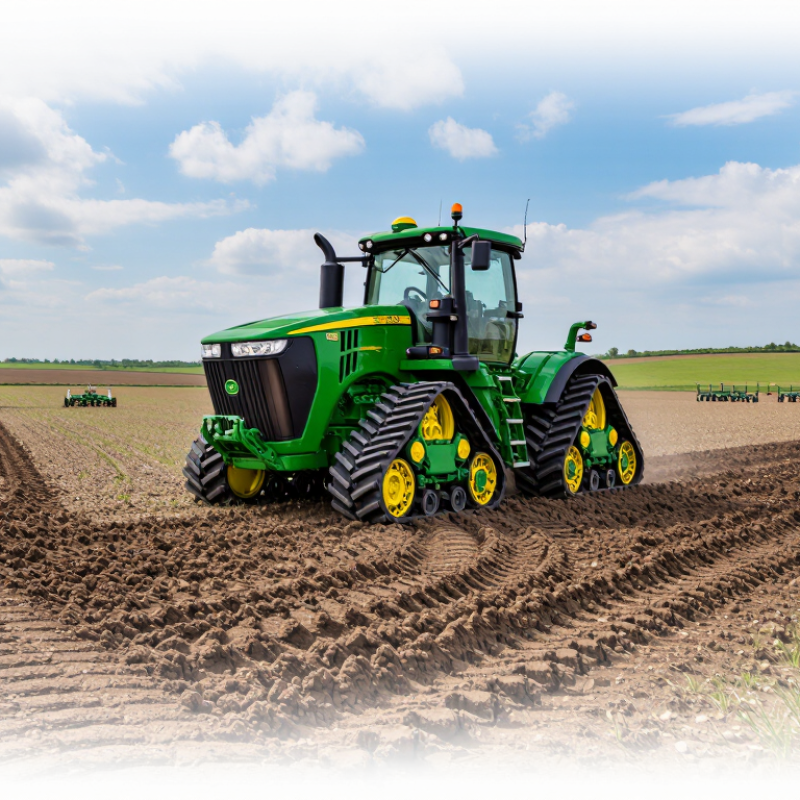
A rubber track tractor is a tractor that moves on continuous rubber belts instead of conventional wheels. Each track runs around rollers and a drive sprocket, creating a broad contact area with the ground. That wider footprint can help spread the machine’s weight and reduce pressure on soft soil. In practice, this may mean less sinking on damp fields or loose ground.
Not magic, though.
The design can also provide steady traction when pulling equipment across uneven terrain. Rubber tracks are often chosen for agricultural work where protecting the soil and maintaining grip both matter. The right choice depends on the tractor’s weight, the implement being pulled, and the ground conditions. A track system may be less convenient on long paved journeys, and worn belts or damaged rollers can affect performance. It is easy to focus on traction and overlook daily checks. Look for cuts, embedded stones, uneven wear, and material packed around the rollers. Even a small tear deserves attention before it grows.

Why Choose a Rubber Track Tractor?
How Does Its Rubber Track System Work?
A rubber track system transfers engine power into steady contact with the ground. The transmission turns a drive sprocket, whose teeth engage molded lugs inside the track. The track loops around front idlers and lower rollers. These components guide its path and support the tractor’s weight. Reinforcing cords help limit stretching, while rubber layers cushion repeated contact. Construction varies by design.
As the sprocket pulls the track, its tread presses into soil, gravel, or crop residue. A long contact patch spreads the tractor’s weight over more ground than many narrow tires. This can improve flotation and traction in soft fields, though it cannot prevent sinking in every condition. The steering system adjusts power to each side, helping the tractor turn. Turns still disturb soil.
Track tension matters. If it is too loose, the belt may wander or collect debris; if too tight, components can wear faster. Follow the manual’s tension procedure, and inspect tread lugs, guide areas, and rollers for cuts, packed mud, or uneven wear. Small cracks deserve attention. It is easy to treat maintenance as an afterthought, especially during muddy work, but wear patterns can reveal problems a quick glance misses.
Rubber tracks form a continuous contact surface around the drive sprocket, idler, and rollers. Spreading the tractor’s weight over a larger footprint can reduce average ground pressure.
Illustrative estimate for the same 6,000 kg tractor: wheeled footprint 0.20 m²; rubber-track footprint 1.80 m². Average pressure is calculated as weight divided by contact area. Actual values vary by machine, tires, tracks, and soil conditions.
A rubber track tractor spreads its weight across a longer contact area than a wheeled tractor. On soft soil, that can reduce ground pressure and help limit deep ruts. Useful after rain. The broad tracks also provide steady traction on slopes, loose earth, and uneven field edges, where tires may slip or dig in. With less wheel spin, operators can maintain a more consistent pace during tillage or planting. This may help protect soil structure, though results depend on moisture, track width, machine weight, and driving habits.
Tracks can feel more stable when pulling heavy implements across rough ground. They may also leave fewer sharp tire marks in a prepared seedbed. Still, a track tractor is not automatically the better choice. Tracks can wear faster on abrasive surfaces, and sharp turns on firm ground may scuff the soil. Undercarriage checks also take time. The practical difference varies by field: wet clay may reward flotation, while a dry, compact lane may suit wheels. That trade-off is easy to overlook when comparing traction alone.
Rubber track tractors are most effective where soil is soft, damp, or easily compacted. Their wider footprint spreads the machine’s weight across more ground than many standard tires do. After rain, that can help a tractor cross a field without sinking deeply or leaving severe ruts. It can also protect prepared seedbeds. That matters.
They are useful for tillage, planting, and hauling implements across large fields, especially when traction is inconsistent. On gentle slopes, tracks can provide a steady grip and help reduce wheel slip. In orchards or other narrow work areas, their usefulness depends on track width and turning space. A careful operator should still check soil conditions; tracks do not make every wet field safe to enter.
The choice is less compelling on abrasive, rocky ground, where sharp stones may accelerate track wear. Frequent travel on hard surfaces can also add wear and may feel less comfortable than expected. Not everywhere. I would compare the field’s soil, slope, and typical loads before choosing. A track tractor can be an excellent fit for soft ground, but it is not a cure for poor timing or overly wet soil.
Why Choose a Rubber Track Tractor?
What Factors Should Guide Your Choice?
Start with the ground, not the machine’s appearance. Rubber tracks spread weight across a longer footprint, which can help maintain traction on soft or uneven fields. But track design alone cannot prevent compaction. Soil moisture, axle load, and repeated passes matter too. The USDA NRCS Soil Quality Test Kit Guide places root-restricting bulk density near 1.47 g/cm³ for clay and 1.63 g/cm³ for silt loam. Those figures are not universal limits; soil texture changes the picture. A wet headland can still rut badly.
Match tractor weight and power to your implements, slopes, and typical field conditions. Nebraska Tractor Test Laboratory reports provide comparable drawbar power, fuel-use, and slip measurements; check these rather than relying only on engine horsepower. Inspect track width, length, tread pattern, and undercarriage clearance. A wider footprint may reduce ground pressure, while tight turns on abrasive surfaces can accelerate wear. That trade-off is easy to miss. Consider transport distance, replacement cost, cleaning time, and local service support as well. If most work happens on firm ground, the added track expense may not pay back. Soil tests and a field trial help, though neither removes every uncertainty.
| Decision factor | Rubber track tractor | Wheeled tractor | What to consider |
|---|---|---|---|
| Traction and slip | Tracks provide a long ground-contact area and can improve traction in soft or loose conditions. Actual performance depends on track design, soil, load, and setup. | Can provide strong traction on firm ground, especially with suitable tires, ballast, and tire pressure. | Consider the soil types, slopes, pulling loads, and frequency of work in wet or loose fields. |
| Ground pressure and compaction | The larger contact area can help distribute machine weight and reduce ground pressure, depending on machine weight and track configuration. | Tire pressure, tire size, axle load, and ballast all affect ground pressure and compaction risk. | Compare the complete machine setup and expected axle loads; track type alone does not determine compaction. |
| Ride and field comfort | Ride quality varies by undercarriage design, track tension, speed, and surface. Some configurations can feel firm on rough ground. | Pneumatic tires can absorb bumps, with ride comfort affected by tire pressure, speed, and suspension. | If long hours are spent on uneven ground, assess the cab, seat, suspension, and actual ride at working speeds. |
| Road travel | May have lower practical road speeds or additional restrictions depending on the machine and local regulations. Track wear can increase on abrasive surfaces. | Often well suited to frequent travel between fields and on public roads, subject to local rules and machine specifications. | Estimate road distance, travel frequency, permitted speeds, and any transport requirements. |
| Turning and headlands | Turning behavior depends on the steering system and track configuration. Tight turns can increase soil disturbance or track wear in some conditions. | Generally offers familiar steering and maneuverability; tight turns can still scuff soil or stress tires. | Consider field layout, headland width, crop sensitivity, and the turning method recommended by the manufacturer. |
| Maintenance and wear | Requires inspection of tracks, rollers, idlers, drive components, and correct track tension. Abrasive surfaces and improper tension can accelerate wear. | Requires tire-pressure checks and inspection for cuts, punctures, wear, and wheel or axle issues. | Compare maintenance intervals, local service availability, replacement-part access, and expected operating conditions. |
| Operating cost | Costs depend on purchase price, track life, undercarriage maintenance, fuel use, and the work performed. | Costs depend on purchase price, tire life, repairs, fuel use, and the work performed. | Use a total-cost estimate for your expected annual hours rather than comparing purchase price alone. |
| Best-fit conditions | Often worth considering for frequent work on soft soils, where traction and reduced ground pressure are priorities. | Often worth considering when road travel, versatility, and operation on firm surfaces are major priorities. | Match the configuration to your soils, implements, annual workload, travel needs, and service support. |
Selection tip: Compare machines at the same operating weight and with suitable tires or tracks, ballast, and settings. Soil moisture, machine load, and operator practices can substantially affect traction, compaction, wear, and fuel use.
Content © 2025 Komatsu. All Rights Reserved