three part picture of forklifts

Why Choose a Screw Centrifuge for Sludge Dewatering?

Why Choose a Screw Centrifuge for Sludge Dewatering?

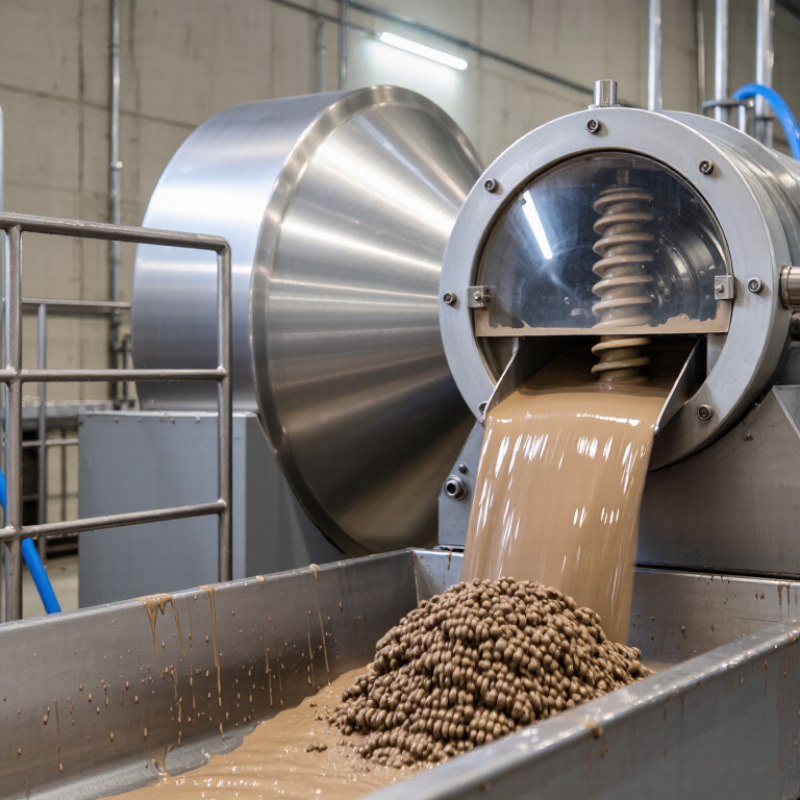
Wastewater plants face a simple problem with complicated consequences: sludge contains too much water. According to the U.S. Environmental Protection Agency’s Biosolids Technology Fact Sheet: Centrifuge Dewatering, centrifuges can commonly produce cake containing approximately 15–35% total solids. They may also achieve solids capture rates near 95–98%, depending on sludge characteristics and polymer conditioning. Less water means fewer truckloads, smaller storage areas, and lower handling costs. The difference is visible. A properly adjusted Screw Centrifuge can turn a thin, pumpable feed into a dense cake within minutes.

Dr. George Tchobanoglous, a widely cited wastewater-treatment authority, has emphasized that “there is no single best sludge-dewatering technology for every plant.” That warning matters. A Screw Centrifuge is compact, enclosed, and suitable for continuous operation, but it is not automatically the cheapest choice. Operators must examine polymer demand, abrasive content, torque, noise, power consumption, and cake dryness. The Water Environment Federation’s dewatering guidance also stresses process testing before equipment selection. Real sludge is rarely consistent. Rainfall changes it. Industrial discharge changes it. Age changes it.

The practical advantage is control. Operators can adjust differential speed, feed rate, and polymer dosage while monitoring torque and centrate clarity. Small mistakes remain expensive. A few minutes of poor conditioning can produce wet cake, cloudy centrate, and unnecessary maintenance. Choosing a Screw Centrifuge requires data, trials, and honest evaluation—not impressive specifications alone.

Why Choose a Screw Centrifuge for Sludge Dewatering?

How a Screw Centrifuge Works in Sludge Dewatering

Why Choose a Screw Centrifuge for Sludge Dewatering?

A screw centrifuge separates sludge by combining controlled rotation, gravity, and compression. Sludge enters the rotating bowl through a central feed pipe. Inside, centrifugal force pushes heavier solids against the bowl wall. The liquid moves inward and exits through adjustable outlets.

A slowly turning screw conveyor moves the captured solids toward the discharge end. Its speed differs slightly from the bowl speed. This differential motion transports sludge while limiting turbulence. As solids travel forward, the pond depth decreases and compression increases. The discharged cake often feels firm but still contains measurable moisture.

Not magic.

Good conditioning matters. Polymer dosage should match the sludge’s chemistry, temperature, and solids concentration. Poor floc formation can produce cloudy centrate and a weak cake, even with correct machine settings. Operators should monitor torque, vibration, feed pressure, centrate clarity, and cake texture during actual operation.

In field service, small adjustments often change performance noticeably. A slower differential speed may improve dryness, but excessive torque can increase wear. Higher bowl speed can clarify liquid, yet it may raise energy use and damage fragile flocs. These trade-offs require testing, not guesswork.

The enclosed design reduces splashing and supports continuous operation. It also needs less floor space than many traditional systems. However, regular inspection remains essential. Screen wear, blocked outlets, or unstable polymer feed can quietly reduce capacity.

Watch the centrate. It often reveals problems before the cake does.

Sludge Characteristics That Suit Screw Centrifuge Treatment

Why Choose a Screw Centrifuge for Sludge Dewatering?

Sludge Characteristics That Suit Screw Centrifuge Treatment

A screw centrifuge suits sludge with high moisture and changing solids content. Its rotating bowl separates water from solids through controlled centrifugal force. This makes it practical for municipal, industrial, and food-processing sludge.

Sludge with fine particles often responds well to polymer conditioning before dewatering. Fibrous material can also move steadily along the screw conveyor. In operating plants, this can reduce manual handling around the dewatering area. The discharged cake commonly appears damp, dense, and easy to transport.

Variable feed conditions are another reason to consider this equipment. A stable control system can adjust speed, torque, and feed rate during production. However, the fit is not automatic. Excessive grit may increase wear, while oily sludge may require careful chemical adjustment. Operators should test samples across several operating days, not only one fresh batch. Small changes in polymer dose can affect cake dryness and centrate clarity.

Maintenance experience matters. Regular checks of bearings, differential speed, and screen condition help prevent avoidable downtime. Noise or rising torque can reveal process problems early. Still, a screw centrifuge is not perfect for every sludge. Very dilute feeds may need thickening first, and poorly conditioned sludge can leave watery cake behind. Real performance depends on sludge age, temperature, particle size, and daily operating discipline.

The Main Stages of Screw Centrifuge Dewatering

Why Choose a Screw Centrifuge for Sludge Dewatering?

The dewatering process begins with controlled sludge feeding. A steady feed protects separation performance and reduces vibration. Polymer conditioning follows, helping fine solids gather into larger flocs. Small dosing changes can affect cake dryness significantly. Jar testing and routine sampling provide practical control.

Inside the bowl, centrifugal force separates water from heavier solids. The liquid moves toward the clarified-water outlet, while solids settle against the rotating wall. A screw conveyor slowly transports the settled sludge toward the discharge end. During this movement, the sludge passes through a compression zone. Pressure increases as the available space narrows, removing more water before cake discharge. Operators should monitor torque, differential speed, feed rate, and centrate clarity. These readings reveal process changes earlier than visual inspection alone.

Tips: Keep polymer solution fresh and fully mixed. Adjust one operating variable at a time. Check the cake texture by hand, but use laboratory moisture testing for dependable records. Excessive torque may indicate overfeeding or poor conditioning. I have found that stable operation often matters more than chasing the driest cake. That approach is not perfect, because sludge characteristics can change within hours. Weather, upstream treatment, and biological activity may all require slower, careful adjustments. Rinse the conveyor and bowl after operation. Dried deposits can disturb balance and complicate the next startup.

Why Choose a Screw Centrifuge for Sludge Dewatering?

A screw centrifuge progressively increases sludge solids concentration through flocculation, sedimentation, compaction, and cake discharge. The representative values show a typical increase from approximately 2% solids in the feed sludge to about 25% solids in the dewatered cake, reducing the volume of material that must be handled and transported.

Key Advantages Over Alternative Dewatering Equipment

Why Choose a Screw Centrifuge for Sludge Dewatering?

Key Advantages Over Alternative Dewatering Equipment

A screw centrifuge offers a practical route for continuous sludge dewatering. Unlike belt presses, it operates within an enclosed bowl, helping control splashing, odor, and aerosol release. Compared with filter presses, it avoids repeated plate opening and cloth handling. The process runs steadily, even when sludge arrives at changing flow rates. That matters in wastewater plants with uneven daily loading.

Small footprint matters.

A screw centrifuge usually needs less floor space than drying beds or large settling systems. It also reduces dependence on weather, which can delay outdoor drying. Automated feed control, torque monitoring, and polymer dosing can reduce routine labor. Operators can spend more time checking performance than moving wet sludge by hand. The equipment may also produce a drier cake than some belt presses, although results depend strongly on sludge type and operating settings.

No machine is perfect.

A centrifuge can consume significant electrical energy and may require careful polymer adjustment. Excessive shear can affect floc structure, while poor feed preparation may reduce centrate clarity. Reliable selection should include pilot testing with actual sludge. Measure cake dryness, centrate quality, torque, noise, wash-water demand, and energy use. In field work, the best result is not always the driest cake. It may be the most stable balance between disposal cost, maintenance time, and daily operating conditions.

Factors for Selecting and Operating a Screw Centrifuge

Why Choose a Screw Centrifuge for Sludge Dewatering?

Factors for Selecting and Operating a Screw Centrifuge

Selecting a screw centrifuge starts with the sludge, not the machine catalogue. Measure feed flow, solids concentration, particle size, and organic content across several days. Sludge changes.

A unit should match the required dry solids output and available floor space. Check torque capacity, wear protection, access for maintenance, and expected polymer demand. Polymer preparation matters greatly. Poor mixing can produce cloudy centrate and weak sludge cakes, even with correct settings. A pilot trial is valuable because laboratory results rarely show every operating problem.

During operation, monitor differential speed, bowl speed, feed rate, torque, vibration, and centrate clarity. Small adjustments can change cake dryness within minutes. Higher differential speed may improve conveying, but it can also reduce cake dryness. Lowering feed flow sometimes helps, although it may increase energy use per tonne. Operators should record each adjustment and its result.

The feed zone deserves close attention. Grit can accelerate wear on the conveyor and discharge nozzles. Regular inspections reveal damage before performance drops sharply. Keep an eye on abnormal noise and rising vibration. These signs should not be ignored. Automatic controls are useful, but they do not replace trained judgment. One practical weakness remains: a centrifuge can respond poorly when sludge characteristics change suddenly. Conservative settings are often safer during unstable loading.

Why Choose a Screw Centrifuge for Sludge Dewatering? - Factors for Selecting and Operating a Screw Centrifuge
Category Selection or Operating Parameter Typical Reference Range Practical Guidance
Why a Screw Centrifuge Is Considered
Process suitability Sludge types Municipal, industrial, biological, chemical, and mixed sludge A screw centrifuge can handle continuously fed sludge streams, provided the feed characteristics are evaluated through testing and the equipment is correctly configured.
Footprint Installation area Generally compact compared with many gravity-based systems The compact, enclosed layout can be useful where floor space is limited. Allow additional room for polymer preparation, conveyors, maintenance access, and lifting equipment.
Operation Continuous dewatering Suitable for steady, automated operation Continuous feeding and automatic torque or differential-speed control can reduce the need for frequent manual intervention, although routine inspection remains necessary.
Environmental control Enclosed construction Enclosed bowl and conveyor assembly The enclosed design can help control splashing and odors compared with open dewatering equipment. Ventilation and odor treatment may still be required.
Key Factors for Selecting a Screw Centrifuge
Feed characteristics Feed solids concentration Often about 0.5%–8% total solids The actual acceptable range depends on sludge type, viscosity, particle size, polymer performance, and machine design. Confirm the range with pilot testing or supplier process data.
Feed characteristics Feed flow rate Project-specific; commonly measured in m³/h Select capacity using both hydraulic flow and dry-solids loading. A machine that handles the liquid flow may still be undersized for the required dry-solids throughput.
Feed characteristics Total solids loading Expressed as kg of dry solids per hour Use average and peak loading values. Consider seasonal changes, storm flow, process upsets, and future expansion when determining the design capacity.
Dewatering target Cake solids Often about 15%–30% total solids The result varies significantly with sludge type, organic content, polymer selection, centrifuge settings, and the required solids capture. The target should be established through testing.
Liquid quality Solids capture Frequently targeted above 95% with optimized operation High capture is not automatic. It depends on polymer conditioning, feed stability, bowl speed, differential speed, pond depth, and hydraulic loading.
Sludge properties Particle size and grit content Must be evaluated before final selection Abrasion from grit can increase wear on the bowl, conveyor flights, feed zone, and discharge components. Upstream screening or grit removal may be necessary.
Material selection Wetted-part materials Stainless steel and wear-resistant components are commonly considered Material selection should reflect chloride concentration, pH, temperature, abrasive solids, and cleaning chemicals. Corrosion and wear requirements should be specified separately.
Automation Control functions Torque, vibration, speed, flow, and polymer-dose monitoring Automatic control can stabilize operation and protect the machine, but alarms, interlocks, and control limits must be commissioned for the actual sludge characteristics.
Utilities Power, water, and polymer requirements Depends on capacity and process configuration Estimate electrical demand, dilution or flushing water, polymer consumption, compressed air if used, and the availability of drainage and washdown facilities.
Important Operating Parameters
Centrifuge setting Bowl speed Commonly about 1,500–3,500 rpm, depending on equipment size Higher speed generally increases centrifugal force and may improve clarification, but it can also increase power use, wear, and shear. Adjust within the manufacturer’s permitted range.
Centrifuge setting Differential speed Often about 1–20 rpm A lower differential speed usually provides longer solids residence time and may produce drier cake, while a higher speed can increase solids conveying capacity. Monitor torque and centrate clarity.
Centrifuge setting Pond depth Adjusted according to cake dryness and centrate clarity A deeper pond can improve liquid clarification but may reduce cake dryness. A shallower pond can increase beach length and drainage, but may affect capture and torque.
Feed control Hydraulic feed rate Set below the tested maximum for stable operation Excessive flow can reduce residence time, worsen centrate quality, and overload the conveyor. Increase flow gradually while observing torque, vibration, and liquid quality.
Chemical conditioning Polymer dose Often approximately 1–10 kg active polymer per tonne of dry solids The required dose depends on sludge chemistry and polymer type. Use jar testing or pilot trials, and avoid overdosing because it can increase cost and produce sticky cake or poor centrate quality.
Chemical conditioning Polymer maturation Commonly about 30–60 minutes for many polymer systems Follow the polymer supplier’s preparation requirements. Incorrect concentration, inadequate aging, or excessive shear can reduce floc strength and dewatering performance.
Performance monitoring Torque Maintain within the equipment’s normal operating band A rising torque trend may indicate excessive solids loading, poor polymer conditioning, high differential speed, blocked discharge, or abnormal sludge properties.
Performance monitoring Vibration and bearing temperature Trend against the machine’s commissioned baseline Unexpected increases can indicate imbalance, wear, misalignment, bearing problems, or foreign material. Investigate abnormal trends before continuing at full load.
Operating and Maintenance Practices
Start-up Pre-start inspection Before every operating shift or automatic start Check guards, lubrication status, polymer availability, feed and discharge paths, wash-water supply, emergency stops, vibration alarms, and equipment cleanliness.
Start-up Clean-water or low-load start Use the equipment’s approved start-up sequence Allow the bowl to reach operating speed before introducing sludge, then introduce feed gradually. This reduces the risk of sudden torque spikes and unstable separation.
Normal operation Parameter adjustment Change one major variable at a time Make small, controlled adjustments to feed rate, polymer dose, differential speed, or pond depth. Allow sufficient stabilization time before judging the result.
Shutdown Flushing and cleaning After each operating cycle or as required by sludge type Flush residual solids from the feed zone, bowl, conveyor, and discharge areas according to the operating manual. Proper cleaning helps prevent hard deposits and imbalance.
Maintenance Wear-part inspection Based on hours, grit loading, vibration, and observed wear Inspect conveyor flights, wear tiles, feed components, discharge nozzles, seals, bearings, and lubrication systems. Abrasive sludge may require shorter inspection intervals.
Safety Lockout and guarding Required before maintenance or entry into hazardous areas Isolate electrical and mechanical energy, verify zero energy, and prevent access to rotating equipment. Only trained personnel should operate or service the centrifuge.
How to Compare a Screw Centrifuge with Other Dewatering Options
Compared with belt filter presses Space and enclosure Usually more compact and more enclosed A screw centrifuge may be preferred where footprint and odor containment are important. A belt press may offer simpler visual inspection and lower rotational speed.
Compared with filter presses Process mode Continuous rather than batch operation A screw centrifuge supports continuous throughput, while a filter press can produce higher cake solids for some sludges but requires batch cycles and cloth maintenance.
Compared with screw presses Separation mechanism Centrifugal separation with a rotating bowl A centrifuge can provide strong clarification and compact installation, but it may require more electrical power and closer monitoring of vibration, torque, and wear.
Lifecycle evaluation Total cost of ownership Capital, power, polymer, water, labor, maintenance, and disposal Do not select equipment based only on purchase price. Compare energy consumption, polymer demand, expected cake solids, centrate treatment, wear-part life, service requirements, and operator workload.

Note: The numerical values shown are general engineering reference ranges rather than guaranteed performance figures. Final equipment selection and operating settings should be confirmed through representative sludge testing, pilot trials, process design, and the applicable equipment operating manual.