three part picture of forklifts

What Are the 7 Best Forklift Warranty Plans?

A forklift warranty can look generous on a sales sheet: five years, a long hour limit, and a promise of “full coverage.” The details matter more. Does the plan cover parts and labor? Travel to your site? The battery, mast, and controller? A single excluded component can turn a reassuring promise into an unexpected repair bill.

The stakes are practical. OSHA’s powered industrial truck guidance cites an often-repeated estimate of about 85 forklift-related deaths and 34,900 serious injuries each year in the United States. These figures are not a measure of warranty claims, but they underline why dependable service and preventive maintenance matter. The Industrial Truck Association’s shipment reporting also offers useful market context; it tracks new truck deliveries, not warranty quality. Those distinctions are easy to miss.

Brian Feehan, president of the Industrial Truck Association, has emphasized safe forklift operation and operator training. The takeaway for buyers is straightforward: warranty coverage supports ownership, but it cannot replace proper training or maintenance. And no plan removes every risk.

This guide compares seven forklift warranty plans by term, covered components, exclusions, service access, and likely ownership needs. A warehouse running two shifts may value fast on-site repairs more than an extra year of limited parts coverage. Another buyer may prefer a shorter plan with clearer terms. The right choice is not always the longest one. Read the fine print, ask who performs repairs, and check what happens when the truck is down on a busy loading dock.
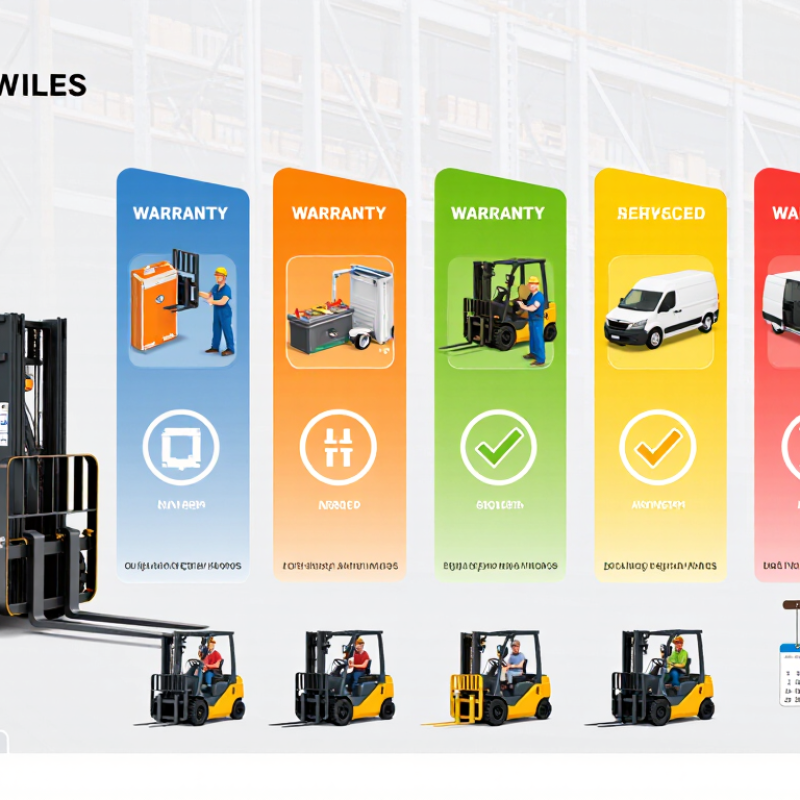
What Are the 7 Best Forklift Warranty Plans?

How Forklift Warranty Plans Work

A forklift warranty is a written promise to repair or replace specified parts when covered failures occur during a defined period. Coverage may be measured in months, operating hours, or both. For example, a plan might end after two years or 2,000 hours, whichever comes first. Read that detail carefully.

Plans differ in what they cover. A basic warranty may include major components, while broader coverage can include labor, travel, or selected wear-related parts. Damage from misuse, missed maintenance, or unauthorized repairs may be excluded. The exact terms matter more than the plan’s label. Keep service records and note when a warning light appears; small paperwork gaps can complicate a claim. The process can feel tedious, and coverage is not always as broad as buyers expect.

Tips: Before purchase, ask who handles claims, where repairs can be done, and whether labor or transport is covered. Keep the answer in writing. Check whether routine inspections are required, and log the forklift’s hours consistently. If a part fails, stop using the machine when continued operation could worsen damage, then follow the warranty’s reporting instructions. Do not assume every repair will be approved; confirm coverage before authorizing work.
Key Criteria for Evaluating Forklift Warranty Coverage

A forklift warranty is only useful when its boundaries are clear. Check the coverage period and any hour limit; some plans end when either threshold is reached. Read which parts are covered, including the mast, hydraulics, transmission, and electrical system. Wear items such as tires, forks, and brake pads may be excluded. So may damage linked to heavy use, poor maintenance, or unsuitable operating conditions. The details matter. Ask for exclusions and required service intervals in writing, then compare them with the maintenance schedule your team can realistically follow.

Response time deserves equal attention. A covered repair can still sideline a forklift if parts or technicians take days to arrive. Confirm whether labor, diagnostic work, travel, and replacement parts are included, and ask how claims are documented. Keep service records, hour-meter readings, and repair notes; missing paperwork can complicate a claim. Check whether coverage transfers to a new owner and whether batteries and chargers have separate terms. No plan is perfect. A long warranty may cost more while excluding the failures most likely in your work environment, so match the wording to actual shift length, load weight, and site conditions.

Seven Forklift Warranty Plans to Compare

Comparing seven forklift warranty plans starts with the equipment’s daily workload, not just the coverage period. A full-machine plan may cover major systems, while a powertrain plan focuses on components such as the motor, transmission, or drive axle. Battery coverage deserves separate review, especially for electric forklifts; check whether capacity loss is included or only sudden failure. Hours matter. A mast-and-hydraulic plan can address lift cylinders, hoses, and related parts, but exclusions may limit what counts as a covered failure.

A parts-only plan may supply replacement components without paying for technician time. A parts-and-labor plan can reduce repair bills, though travel charges or after-hours service may remain your responsibility. An extended warranty adds coverage beyond the original term, but its value depends on price, deductible, and approved repair locations. These are useful categories to compare, not guaranteed standard packages. Read the exclusions.

Ask how claims work in practice. If a forklift runs two shifts in a dusty warehouse, a short downtime window may matter more than a longer term with slow service. Compare coverage limits, response times, maintenance requirements, and transfer rules in writing. One detail is easy to miss: skipped service records can affect a claim. Plan names can sound reassuring; the contract language is what counts. A careful comparison still cannot predict every repair.

Coverage Limits, Exclusions, and Costs Across Plans

Forklift warranty plans differ more by exclusions than by headline length. The seven common choices are basic, powertrain, full-machine, battery, major-component, extended, and service-backed coverage. A basic plan usually protects against defects for a short period; powertrain cover may exclude hydraulics, electronics, and wear parts. Full-machine cover sounds broad, but tires, forks, seals, operator damage, and missed maintenance are often excluded. Battery plans may cap capacity loss or require approved charging records. Read the limit per repair, not just the total limit.

Cost depends on term, operating hours, truck type, and service response. Ask whether labor, travel, diagnostics, and freight count toward the cap. Compare the quote with likely out-of-pocket repairs, and request a sample claim decision in writing. OSHA’s powered-industrial-truck safety materials cite estimates of roughly 85 deaths and 34,900 serious injuries annually from forklift incidents; warranty coverage cannot replace inspections or competent maintenance. That distinction matters. A low-priced plan with strict service conditions may cost more in practice. I’d also question any offer that promises “bumper-to-bumper” protection without listing exclusions. A neat phrase is not a coverage limit.

What Are the 7 Best Forklift Warranty Plans? — Coverage Limits, Exclusions, and Costs Across Plans

Plan type Typical coverage and limits Common exclusions Indicative cost per forklift Best suited to
1. Basic factory warranty Usually covers defects in materials or workmanship for a stated period. A sample term is 12 months or a specified operating-hour limit, whichever comes first; exact limits vary by contract. Routine maintenance, wear items, damage from misuse or accidents, and failures caused by unapproved modifications are commonly excluded. Often included in the original purchase price. No separate premium may apply. New forklifts used in normal operating conditions.
2. Powertrain warranty Focuses on major drive components such as the engine or traction motor, transmission, and drive axle. Coverage is limited to listed parts and the contract term or hour cap. Hydraulics, tires, brakes, electrical accessories, routine service, and damage from contamination or inadequate maintenance are often excluded. Planning estimate: about $400–$1,200 per forklift per year when purchased separately. High-use trucks where a major drive-system repair would be costly.
3. Comprehensive machine warranty May cover a broader list of mechanical, electrical, and hydraulic components. Limits are defined by the covered-parts schedule, term, hour cap, and any per-repair maximum. Wear-and-tear parts, damage from impact or overloading, consumables, scheduled maintenance, and excluded attachments are commonly outside coverage. Planning estimate: about $800–$2,500 per forklift per year, depending on age, hours, and coverage scope. Operations that prioritize predictable repair costs and broad component protection.
4. Extended warranty Extends eligible factory coverage beyond its original term, often with a defined end date or maximum operating hours. It may be component-only or comprehensive. Pre-existing faults, claims after the term or hour cap, missed maintenance requirements, and components not named in the contract may be excluded. Planning estimate: about $500–$2,000 per forklift per added year; multi-year contracts may be priced differently. Owners who want protection to continue after the initial warranty expires.
5. Used-forklift limited warranty Typically covers selected major components for a shorter period, such as several months or a stated number of operating hours. Coverage may depend on an inspection or service history. Existing defects, neglected maintenance, cosmetic issues, normal wear, and items identified during the pre-sale inspection are often excluded. Planning estimate: about $300–$1,500 per forklift for a limited-term plan. Buyers of used equipment who want protection against certain early major failures.
6. Battery and electrical-system warranty May cover a battery, charger, or specified electrical components. Battery coverage can use a time limit, an operating-hour limit, or a minimum retained-capacity threshold. Capacity loss within the stated tolerance, improper charging, unsuitable storage, physical damage, and non-covered charger or wiring issues may be excluded. Planning estimate: about $300–$1,500 per year; battery replacement coverage can cost substantially more and is contract-specific. Electric fleets where battery performance and replacement exposure are significant concerns.
7. Major-component protection plan Covers selected high-cost assemblies, such as a hydraulic pump, motor, controller, or transmission. Each covered component may have its own limits, deductible, or claim cap. Components not specifically listed, seals and hoses, contamination, routine adjustments, and consequential damage may be excluded. Planning estimate: about $250–$1,000 per forklift per year, depending on the components selected. Businesses seeking targeted protection rather than full-machine coverage.

Important: These are generic plan categories, not offers from specific providers. Cost figures are illustrative U.S. budgeting estimates—not standardized market prices or quotes. Actual premiums, coverage periods, hour limits, deductibles, and exclusions vary by forklift type, age, usage, location, and contract. Review the written terms, maintenance requirements, claim limits, and covered-parts list before purchasing.

How to Choose the Right Warranty for Your Fleet

Choosing a forklift warranty starts with how each truck works, not the length of the sales sheet. A unit moving pallets indoors for one shift faces different wear than a truck handling heavy loads outdoors all day. Compare coverage for the components most likely to affect your operation, such as the powertrain, hydraulics, electrical system, and battery. Check whether labor and travel costs are included, too. Small print matters.

Build a simple fleet profile: hours per week, load weights, shifts, and operating conditions. Then compare those details with each plan’s time limit, hour limit, and exclusions. Some warranties exclude wear items, batteries, or damage linked to misuse. Ask for examples of common claims and the documents needed to file one. Get the answers in writing.

Downtime has a cost. A plan with broader coverage may still be a poor fit if repairs take days or service is hard to schedule. Ask how repairs are authorized, where work can be completed, and whether loaner equipment is available. Review the terms with your maintenance lead, who knows recurring faults and service history. I’d avoid choosing by price alone; still, a costly plan is not automatically better. The right choice depends on your fleet’s risks, repair capacity, and budget.

What Are the 7 Best Forklift Warranty Plans?

Compare warranty options against the factors that matter most to your fleet.

Suggested evaluation weights for comparing warranty plans—not market survey results. Review the written terms for coverage scope, time and hour limits, exclusions, labor and parts, service support, transferability, and claim requirements. Adjust the weights to fit your fleet.